
Beautiful Plants For Your Interior
Beautiful Plants For Your Interior
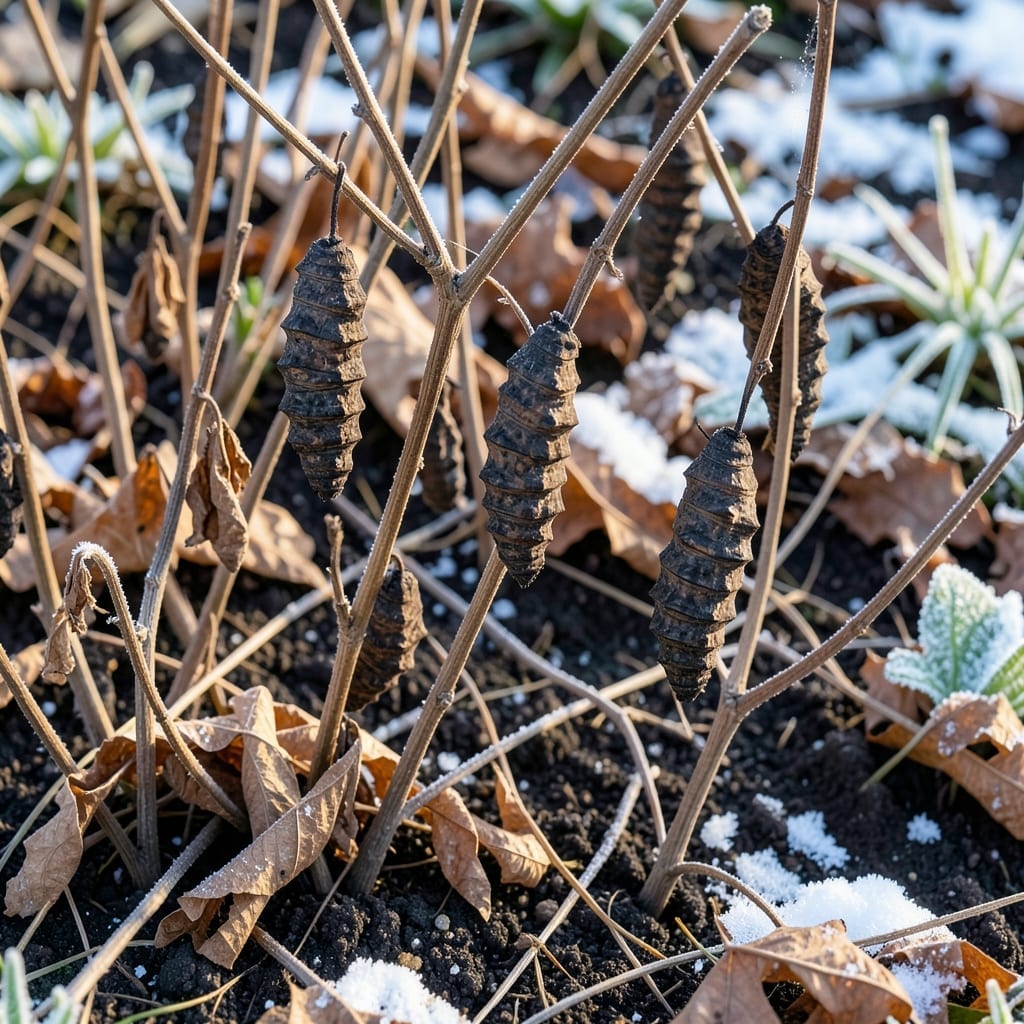
Black swallowtail chrysalises survive winter by entering diapause, a dormant state where metabolism slows. They attach to branches or stems, camouflaged as dried leaves, emerging in spring when temperatures rise.
This survival strategy is nature’s way of hitting pause on development. I find it fascinating how the chrysalis can endure freezing temperatures while appearing completely lifeless, only to transform when conditions improve. Their brown and gray coloring blends perfectly with winter twigs, making them nearly invisible to predators. 💫
💡 In This Article
Diapause is a survival superpower triggered by environmental cues. When daylight shortens and temperatures drop below 50°F, the chrysalis enters this state. Hormonal shifts signal the insect to halt development, reducing its metabolic rate to just 5-10% of normal. This conservation mode prevents energy depletion during scarce winter months. ✨
The chrysalis produces cryoprotectants—natural antifreeze compounds like glycerol—that prevent ice crystal formation in its cells. These molecules lower the freezing point of its body fluids, allowing survival in temperatures as low as -4°F. The protective outer shell also thickens, adding insulation against harsh conditions. 💫
This adaptation buys time for the chrysalis to wait out winter. Instead of trying to grow in adverse conditions, it essentially pauses its life cycle. The process is so efficient that some chrysalises can remain in diapause for 5-6 months without any harm, emerging only when spring warmth signals it’s safe to continue development. ⚡
What’s remarkable is how precisely this system works. The chrysalis doesn’t just survive—it thrives by timing its emergence with the return of host plants like dill, parsley, and carrot. This synchronization ensures food availability for the emerging butterfly, a clever evolutionary advantage that increases survival rates. 🌟
The brown and gray coloration isn’t just camouflage—it’s part of the survival strategy. By blending with dried leaves and bark, the chrysalis avoids predators while in its vulnerable dormant state. This visual deception works so well that even experienced naturalists often overlook them during winter walks. 🔥
Diapause typically lasts 4-6 months, from late fall through early spring. The exact duration depends on local temperatures, with emergence usually triggered when daytime highs consistently reach 55-60°F.
Leave it undisturbed! Relocating it risks damaging the delicate structure or disrupting diapause. If it’s in harm’s way, gently move the entire branch to a sheltered spot, keeping it in the same orientation.
Yes! They produce natural antifreeze compounds that protect their cells, allowing survival in temperatures as low as -4°F. Their thickened outer shell provides additional insulation against extreme cold.
Check for firmness—a healthy chrysalis feels solid. Dead ones often appear shriveled or discolored. If unsure, wait for consistent warm weather; live chrysalises will eventually show movement or color changes.