
Beautiful Plants For Your Interior
Beautiful Plants For Your Interior
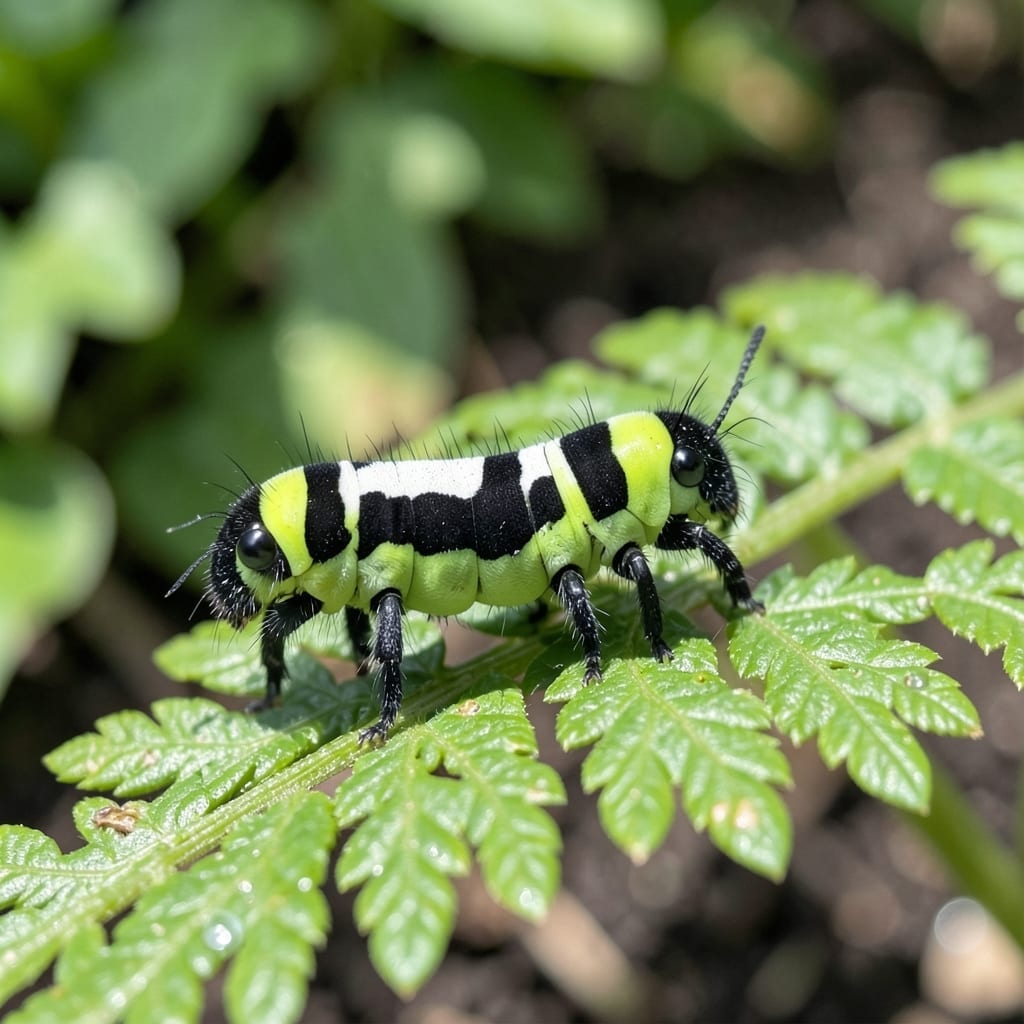
Tiny black dots on your dill aren’t dirt—they’re future butterflies. The first instar stage of black swallowtail caterpillars looks like bird droppings, a clever disguise that keeps them safe from predators.
These mini mimics hatch from pinhead-sized eggs and immediately start munching on parsley, dill, or carrot leaves. Their leaf-like appearance makes them nearly invisible, but you’ll spot the damage before you see the caterpillars themselves.
Supporting them means resisting the urge to squish what looks like pest damage. Instead, plant extra host plants and accept some leaf loss as the price of hosting these pollinator all-stars.
Within days, they’ll molt into the next stage—brighter and bolder. Watching this transformation up close is one of the most rewarding parts of a butterfly-friendly garden.
The first instar stage of the Papilio polyxenes (black swallowtail caterpillar) is a fascinating example of evolutionary adaptation. This tiny, bird-dropping-like phase isn’t random—it’s a survival strategy shaped by millions of years of natural selection. Below are the key reasons this transformation occurs.
Newly hatched black swallowtail caterpillars resemble bird droppings, a classic case of masquerade camouflage. This mimicry deters predators like birds and spiders, which avoid consuming what appears to be waste. The dark, irregular shape and white saddle marking on the first instar enhance this deception, making it nearly invisible on leaves.
The first instar is tiny (2–3 mm) but highly mobile. This stage prioritizes rapid leaf consumption to fuel growth. The caterpillar’s small size allows it to feed on tender new leaves, which are easier to digest and rich in nutrients. This efficiency is critical before molting into the more voracious later instars.
Natural selection favors traits that improve survival. The first instar’s appearance and behavior—staying motionless and blending into foliage—reduce predation risk. Over generations, caterpillars with better camouflage had higher survival rates, passing on these traits. This explains why the mimicry is so precise.
First instar black swallowtail caterpillars look like tiny bird droppings, which helps them avoid predators. But if you’re trying to attract these pollinators, you’ll want to ensure they survive this vulnerable stage. Here’s how to address common issues and keep them thriving.
If your first instar caterpillars vanish overnight, they may have been eaten by predators like ants, spiders, or birds. Fix: Place a fine mesh cage or row cover over host plants (dill, parsley, or carrot greens) to shield them. Ensure the cover is breathable and allows sunlight to reach the leaves.
Prevention tip: 💡 Avoid pesticides, even organic ones, as they can harm caterpillars. Instead, handpick pests like aphids that might attract predators.
First instar caterpillars rely on tender, healthy leaves for food. If the host plant wilts or dries out, they’ll starve. Fix: Water the plants regularly, especially during hot weather, and mulch around the base to retain moisture. If growing in pots, ensure they have drainage holes to prevent root rot.
Prevention tip: ✨ Rotate host plants every few weeks to provide a steady supply of fresh foliage.
Ants love the honeydew produced by aphids and may disturb caterpillar eggs or young larvae. Fix: Apply a sticky barrier (like Tanglefoot) around the base of the plant or use diatomaceous earth to deter ants without harming caterpillars.
Prevention tip: 🎯 Plant companion flowers like marigolds, which repel ants naturally.
First instar caterpillars are tiny and can dry out quickly in direct sunlight. Fix: If your garden lacks natural shade, use shade cloth (30-40% density) during the hottest part of the day. Alternatively, place potted host plants in a partially shaded area.
Prevention tip: 🌡️ Monitor temperatures—if it’s above 90°F (32°C), provide extra shade or mist the leaves lightly to increase humidity.
First instar caterpillars are incredibly tiny, about 2-3 mm long. They look like miniature bird droppings, complete with a white saddle marking that enhances their disguise.
They start feeding on their host plant right away—usually dill, parsley, or carrot leaves. Their small size lets them nibble on tender new growth that’s easier to digest.
The first instar lasts about 5-10 days, depending on temperature and food availability. During this time, they’ll molt once before entering the next stage.
It’s a survival trick! This camouflage deters predators like birds and spiders, which avoid what appears to be waste. The disguise helps them blend into leaves perfectly.