
Beautiful Plants For Your Interior
Beautiful Plants For Your Interior
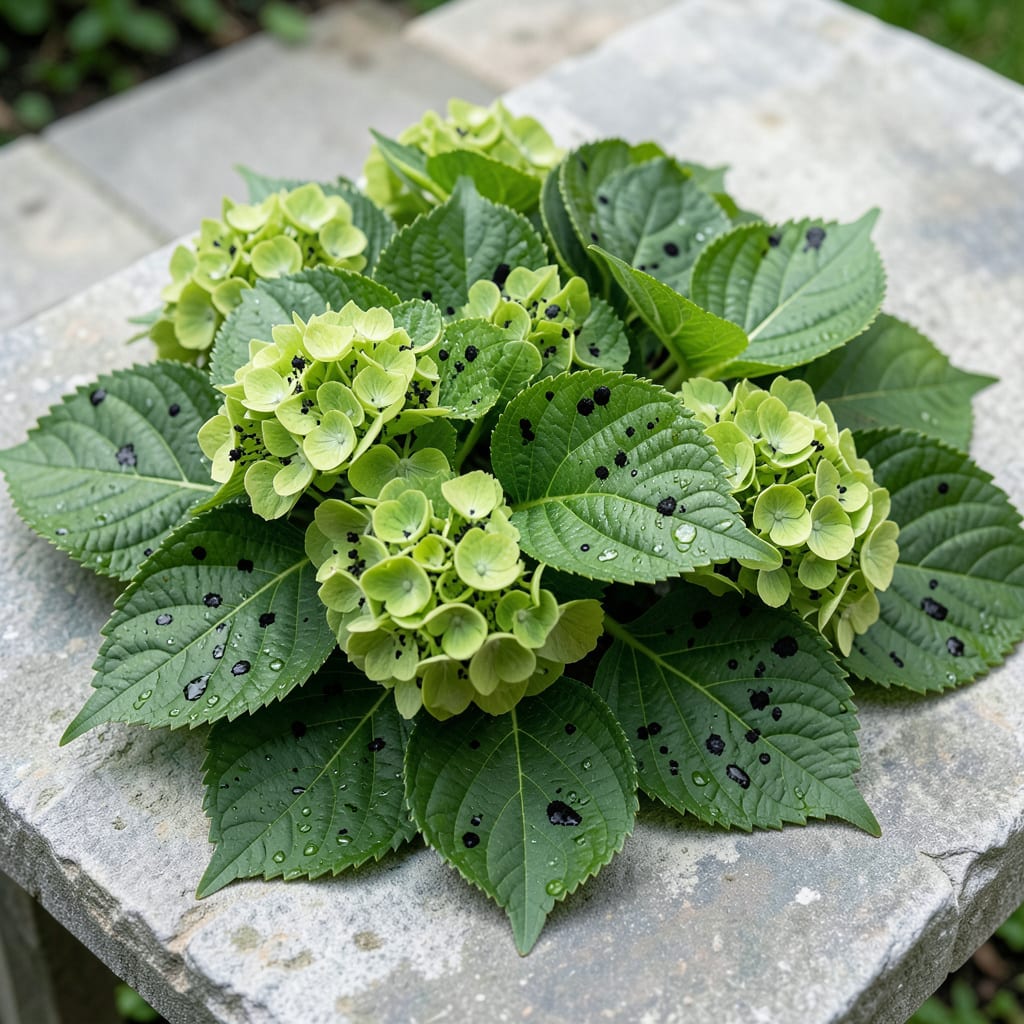
Those black dots on your hydrangea leaves caught my eye first. Tiny, scattered, or clustered—they’re your plants crying for help, not just beauty marks.
I’ve seen this before, and the usual culprits are fungal infections or pests throwing a party on your leaves. The good news? You can tackle this without harsh chemicals. A little observation and the right organic approach turn the tide quickly.
Within a week or two of treatment, new growth comes in clean. No more unsightly spots, just healthy green leaves and those gorgeous blooms you planted them for.
Works for all hydrangea varieties, from bigleaf to oakleaf. Here’s how to diagnose and fix it for good.
Those unsightly black dots on your hydrangea leaves are rarely random. They’re usually a sign your plant is under siege from one of these specific stressors.
Several fungi—Cercospora, Alternaria, and Phyllosticta—produce dark, pinpoint lesions. These pathogens thrive in high humidity and poor air circulation, germinating on wet foliage and penetrating the leaf cuticle. Once inside, they disrupt cell function, creating the characteristic black specks often surrounded by yellow halos.
When you water from above, droplets linger on the leaves for hours, creating the perfect moist environment for fungal spores to settle and germinate. Evening watering is especially risky because cooler night temperatures slow evaporation, extending the wet period that fungi need to infect.
Hydrangeas stressed by drought, heat, or nutrient deficiencies become more susceptible to secondary infections. Stress weakens the plant’s natural defenses, allowing opportunistic fungi to colonize the leaves more easily, leading to the formation of black dots.
Tackle those unsightly black dots on your hydrangea leaves with these targeted solutions. Each fix addresses a specific cause, ensuring your plants stay healthy and vibrant. 🌿
If the black dots are caused by Cercospora or Anthracnose fungi:
Prevention tip 💡: Water at the base of the plant (not overhead) to keep leaves dry, and avoid late-evening watering.
For black dots caused by pests like aphids, scale, or spider mites:
Prevention tip 🎯: Regularly inspect the undersides of leaves for early signs of pests.
If poor growing conditions are to blame:
Prevention tip ✨: Mulch around the base to retain moisture and regulate soil temperature.
They won’t kill the plant quickly but can weaken it over time. Left untreated, fungal infections spread and reduce blooming. Early action prevents long-term damage.
A baking soda spray (1 teaspoon per quart of water) can help mild cases. Mix with a drop of dish soap and spray weekly. Works best as prevention or early treatment.
Clean up fallen leaves in autumn to remove fungal spores. Space plants for airflow and water at the base. These steps break the disease cycle effectively.
