
Beautiful Plants For Your Interior
Beautiful Plants For Your Interior
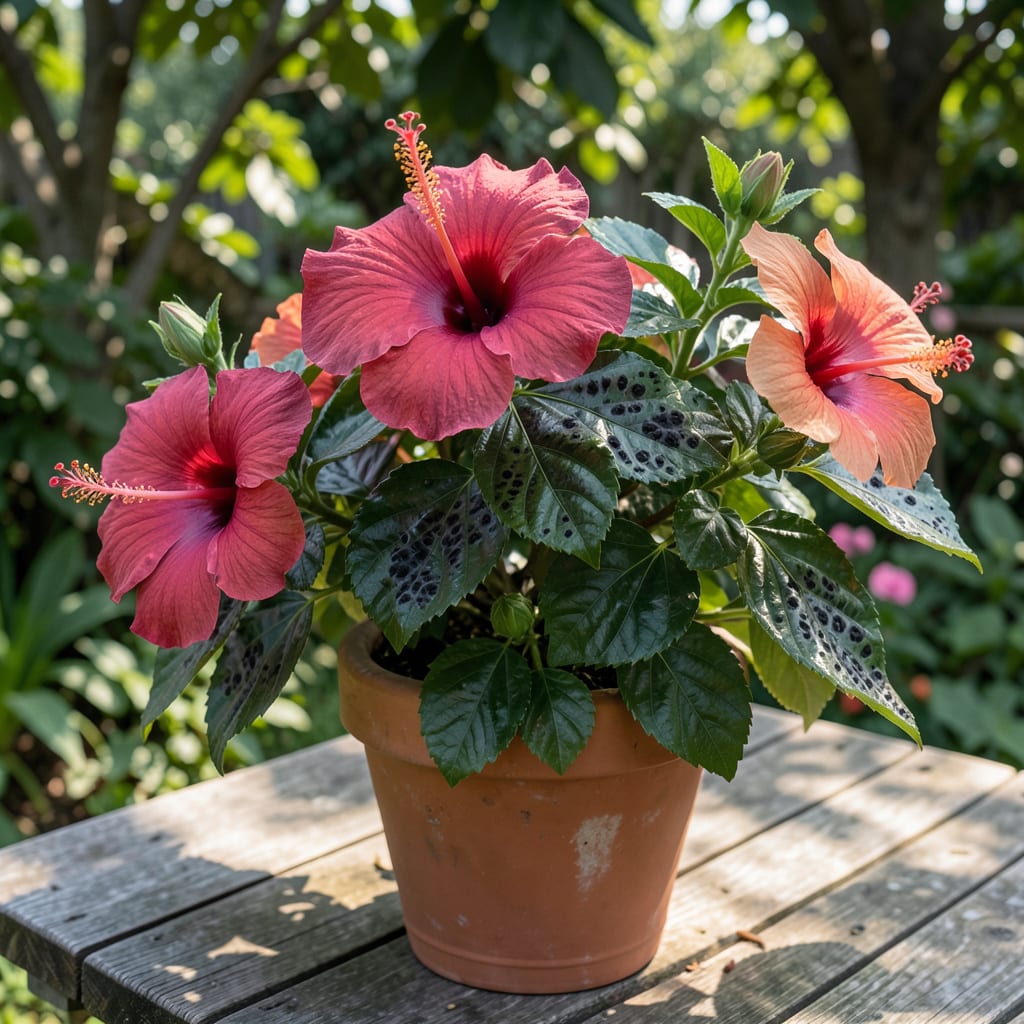
Those black spots on your hibiscus aren’t just ugly—they’re a warning sign. I learned this the hard way after losing two plants to untreated fungal infections.
The culprits are usually overwatering, poor air circulation, or splashing water on leaves. Sometimes pests like aphids spread sooty mold that looks similar but wipes off easily.
Catching it early means the difference between saving your plant and watching it decline. The good news? Organic fixes work if you start before the spots spread to stems.
With the right approach, you can restore healthy growth and prevent future outbreaks. Here’s how to diagnose and treat it properly.
Black spots on hibiscus leaves are usually a sign of underlying stress or infection. Here are the most common causes, explained simply:
Pathogens like Cercospora or Alternaria thrive in warm, humid conditions. They produce dark, circular lesions as they feed on plant tissues. Overhead watering or poor air circulation accelerates their spread.
Excess moisture in the soil or on foliage creates a breeding ground for fungi and bacteria. Hibiscus roots suffocate in soggy soil, weakening the plant and making it vulnerable to leaf spot diseases.
Insects like aphids, thrips, or spider mites pierce leaf cells, leaving wounds that turn black as they dry. Their sticky honeydew also attracts sooty mold, which appears as dark, dusty patches.
Extreme heat, cold drafts, or sudden temperature swings can cause leaf scorching. These stress-induced spots often have a crispy texture and appear along leaf edges or tips.
A lack of essential nutrients like magnesium or potassium can manifest as black or brown spots, often accompanied by yellowing. This typically starts on older leaves first.
Tackling black spots on your hibiscus starts with identifying the cause and applying the right fix. Here’s a practical, step-by-step guide to restore your plant’s health:
Fungal issues like leaf spot thrive in damp, stagnant conditions. Remove infected leaves immediately to prevent spreading. Then, prune nearby branches to improve airflow. Apply a copper fungicide or a DIY mix of 1 tsp baking soda + 1 quart water + a drop of dish soap every 7–10 days until spots disappear.
Prevention tip: 💡 Water at the base (not overhead) and space plants 3–4 feet apart.
Aphids, thrips, and whiteflies leave behind sticky residue that turns into sooty mold (black spots). Blast pests off with a strong stream of water, then apply neem oil or insecticidal soap weekly. For severe cases, use horticultural oil at dusk.
Prevention tip: 🎯 Introduce beneficial insects like ladybugs or use yellow sticky traps.
Root rot from soggy soil causes stress, leading to blackened leaves. Let the top 1–2 inches of soil dry out between waterings. Ensure pots have drainage holes, and use a well-draining potting mix with perlite.
Prevention tip: ✨ Use a moisture meter to avoid guessing—hibiscus prefers slightly dry conditions over wet.
Extreme heat, cold drafts, or poor light can weaken hibiscus, making them prone to spots. Move potted plants to a spot with 6+ hours of sunlight and stable temperatures (60–90°F). Shield from harsh winds or AC vents.
Prevention tip: 🌡️ Acclimate plants gradually to new conditions to avoid shock.
Consistency is key—monitor your hibiscus after treatment and adjust care as needed. Healthy plants bounce back fast!
Yes, fungal spores can travel through air or water splashes. Isolate affected hibiscus and avoid overhead watering to prevent spreading.
Only if the flowers show no spots. Discard any discolored blooms, as fungal or bacterial issues can affect edibility.
With proper treatment, new growth appears in 2-3 weeks. Recovery speed depends on the cause and how early you intervene.
Pruning helps but isn’t always enough. Combine it with airflow improvements and fungicides for fungal issues.
