
Beautiful Plants For Your Interior
Beautiful Plants For Your Interior
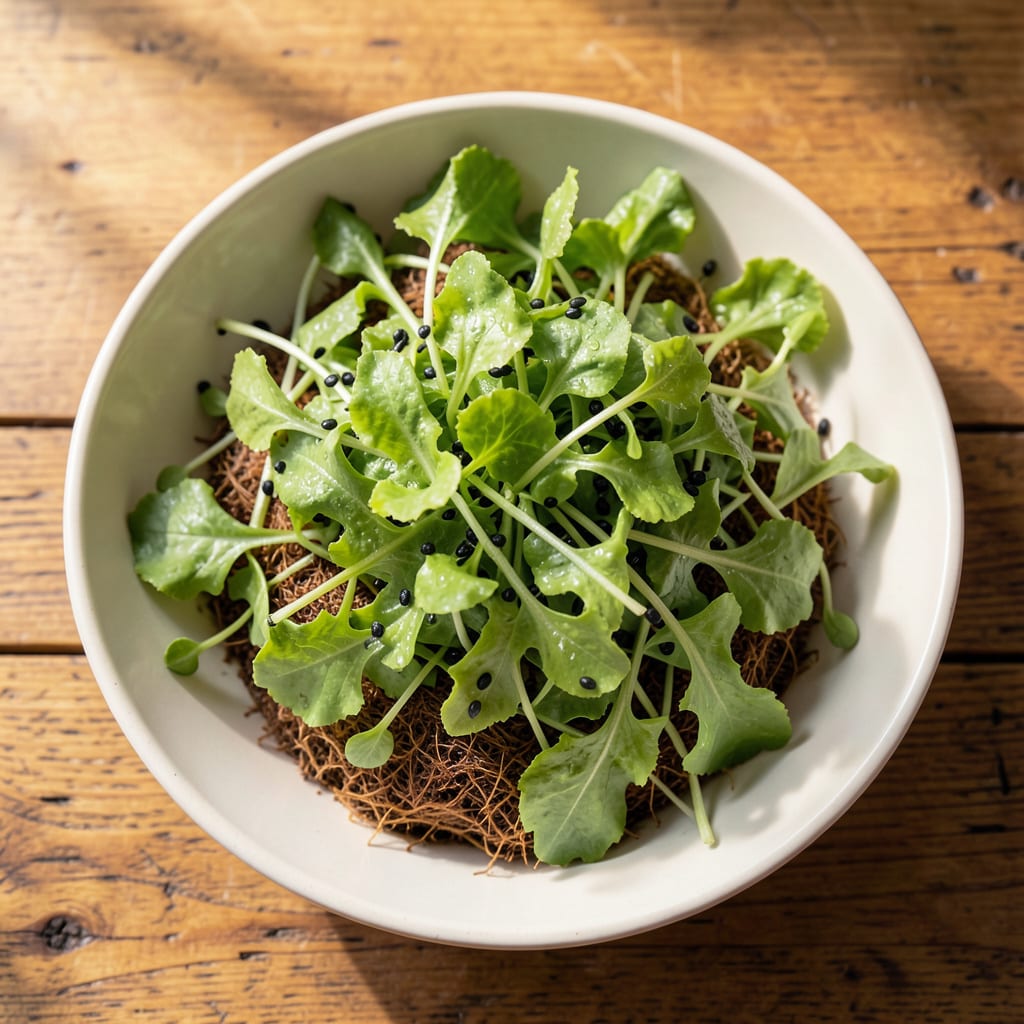
Black Seeded Simpson sprouts deliver fresh greens in 2-3 weeks. I started growing these for their quick turnaround and tender leaves that keep coming back after cutting.
This variety thrives in cool weather and partial shade, making it perfect for spring and fall gardens. The seeds germinate reliably, and the plants resist bolting longer than most lettuces.
📚 In This Guide
Here’s the foolproof method I use to get crisp, flavorful greens in record time.
Begin by placing your seeds in a shallow bowl and covering them with room temperature water. Let them soak for 4-6 hours to soften the outer coating. This simple step cuts germination time nearly in half compared to dry seeds.
Drain the seeds thoroughly after soaking—they should be plump but not waterlogged. I spread them on a clean paper towel to absorb excess moisture before planting. You’ll notice the seeds swell slightly, which is your sign they’re ready.
Fill a shallow tray (about 2 inches deep) with a layer of moistened seed-starting mix or fine potting soil. Press the soil down lightly to create a smooth, even surface without compacting it too tightly.
Spritz the soil with water until it’s evenly damp but not soggy. The surface should glisten slightly but not pool. This ensures the seeds make good contact with the soil for steady moisture uptake as they sprout.
Scatter the soaked seeds densely across the soil surface—they should be close but not overlapping. Black Seeded Simpson sprouts well when crowded, as you’ll harvest the greens young. Press the seeds gently into the soil to secure them.
Cover the tray with a thin layer of additional soil, no more than 1/8 inch deep. Light is crucial for germination, so a heavy covering will block it. Mist the surface again lightly, then cover the tray with a clear lid or plastic wrap to retain humidity.
Place the tray in a spot with bright, indirect light or under a grow light for 12-14 hours daily. Keep the soil consistently moist by misting with water whenever the surface looks dry. Sprouts typically appear within 3-5 days if conditions are right.
Once sprouts emerge, remove the cover immediately to allow for air circulation. You’ll see tiny green loops pushing through the soil—this is your cue to keep the light steady and the soil damp but not waterlogged.
Your sprouts will be ready to harvest in 7-10 days when they reach about 1-2 inches tall. Use clean scissors to snip just above the soil line. This method allows the plants to regrow for a second, smaller harvest.
Rinse the sprouts gently to remove any soil before eating. Store them in the refrigerator in a sealed container with a paper towel to absorb moisture—they’ll stay fresh for up to a week. For continuous greens, start a new tray every 5-7 days.
These small adjustments can make a big difference in your harvest.
The Soaking Advantage: Don’t skip the 4-6 hour soak in Step 1—it softens the seed coat so moisture can penetrate faster. I’ve found seeds soaked exactly 6 hours tend to sprout a day earlier than those soaked for just 4. Spread them on a paper towel afterward to absorb excess water without crushing them.
Light Depth Matters: In Step 3, that 1/8 inch soil covering is non-negotiable. Any thicker and you’ll block light, which these sprouts need to germinate. I use the back of a spoon to spread it evenly. Press the seeds gently into the soil first so they don’t shift when you add the covering layer.
Moisture Balance: In Step 4, mist the soil surface whenever it looks dry, but avoid creating puddles. Soggy soil leads to mold, while dry soil delays sprouting. I check mine twice daily under the 12-14 hours of light exposure, especially if using a grow light which can dry things out faster than indirect sunlight.
Harvest Timing: Those 7-10 days in Step 5 go quickly. Start checking at day 7 when sprouts hit 1 inch tall. I harvest in the morning when the plants are most hydrated. Use sharp scissors to make clean cuts just above the soil—this encourages that second harvest mentioned in the instructions.
Black Seeded Simpson lettuce sprouts typically appear in 5-10 days. You can start harvesting baby greens in about 3-4 weeks for a quick, continuous supply.
Rinse and dry sprouts thoroughly, then store them in an airtight container with a paper towel to absorb moisture. They’ll stay fresh in the fridge for 5-7 days.
Yes! Use a hydroponic system or a shallow tray with water and a growing medium like peat moss or coconut coir for soil-free sprouting.
Overwatering or poor airflow often causes mold or yellowing. Ensure proper drainage, avoid overcrowding, and keep humidity in check.
Try other loose-leaf lettuce varieties like Oakleaf or Red Sails. They sprout similarly and offer great flavor and texture!
