
Beautiful Plants For Your Interior
Beautiful Plants For Your Interior
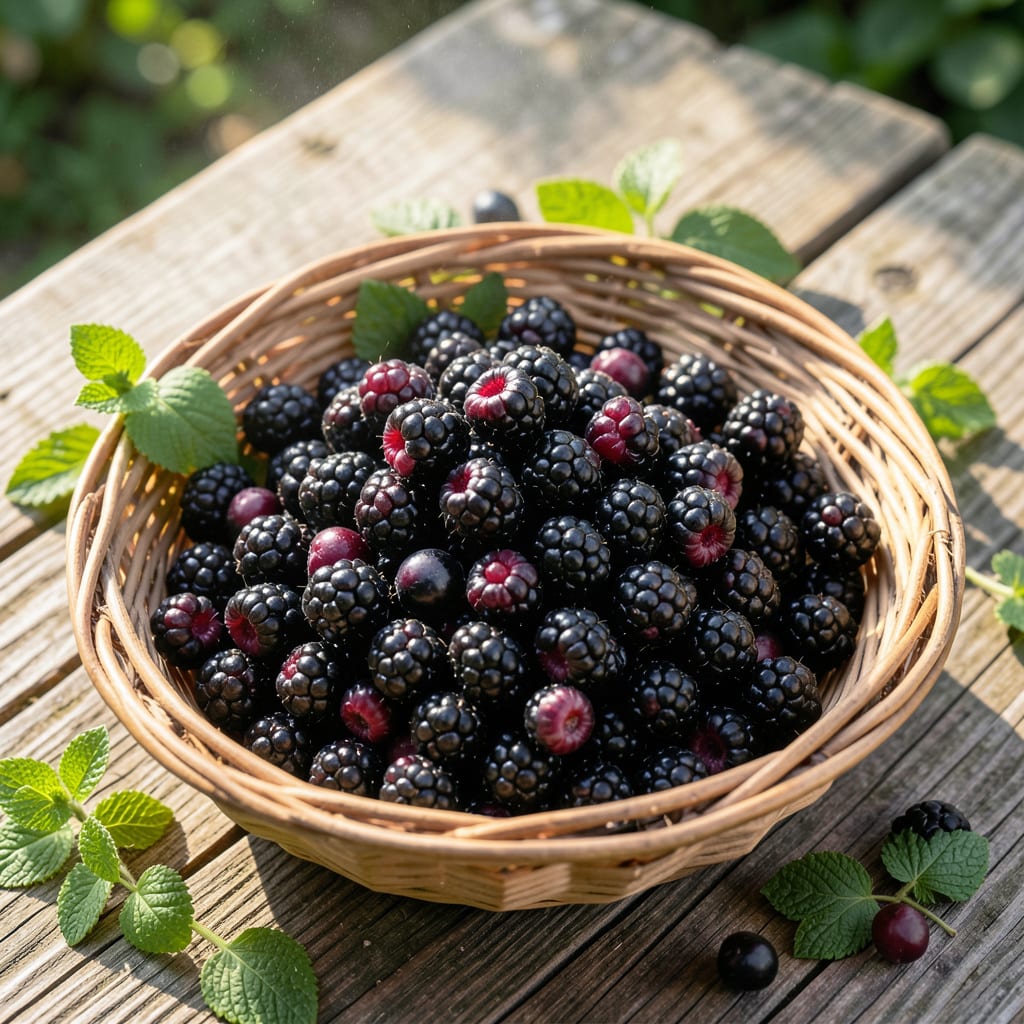
I planted my first Black Satin thornless blackberry five years ago—best decision for my backyard. No thorns mean pain-free harvesting, and the berries taste sweeter than any store-bought variety I’ve tried.
These plants are foolproof with minimal care. Give them full sun, well-draining soil, and a sturdy trellis, and they’ll reward you with pint after pint of glossy, juicy fruit from midsummer to early fall.
📚 In This Guide
Here’s the method I trust to establish healthy, productive canes that yield for years.
Choose a location with full sun—at least 6-8 hours of direct light daily—and well-draining soil with a pH between 5.5 and 6.5. Black Satin tolerates a range of soil types but thrives in loamy, fertile ground. I avoid low-lying areas where cold air or water pools, as this can damage roots or delay spring growth.
Test drainage by digging a 12-inch hole and filling it with water. If it drains within 3-4 hours, you’re set. If not, amend with compost or build a raised bed. Clear the area of weeds and debris, then till the soil to 18 inches deep to loosen compacted layers and encourage root penetration.
For bare-root plants, soak the roots in lukewarm water for 1-2 hours before planting to rehydrate them. Dig a hole wide enough to spread the roots outward without bending and deep enough so the crown sits 1-2 inches above soil level—this prevents rot. Backfill with native soil, tampling gently to eliminate air pockets.
If planting potted canes, loosen the root ball slightly before setting it in the hole at the same depth it grew in the container. Space plants 3-4 feet apart in rows 6-8 feet apart to allow for airflow and future growth. Water thoroughly after planting to settle the soil, using 1-2 gallons per plant.
Black Satin is a semi-erect variety, so it needs support to keep canes off the ground. Install a trellis or wire system at planting—5-6 feet tall is ideal. I use a T-post and high-tensile wire setup with wires spaced 2 feet apart, starting 2 feet above the ground.
Train the canes as they grow, loosely tying them to the wires with soft twine or plant tape. Avoid tight bindings, which can girdle stems. For the first year, focus on encouraging strong root and cane development rather than fruit production. Remove any flowers that appear to redirect energy toward growth.
Apply a 3-4 inch layer of organic mulch, such as wood chips or straw, around the base of each plant to retain moisture, suppress weeds, and regulate soil temperature. Keep mulch 6 inches away from the crown to prevent rot and pest issues.
Fertilize in early spring with a balanced 10-10-10 or 16-16-16 fertilizer, applying 1 cup per plant and scattering it 12 inches away from the base. Water deeply after fertilizing to help nutrients reach the root zone. Repeat with a ½ cup in early summer, but avoid late-season fertilization, which can stimulate tender growth vulnerable to frost.
After the first growing season, prune out weak or damaged canes in late winter while the plant is still dormant. Black Satin produces fruit on second-year canes (floricanes), so identify and retain the healthiest 4-6 canes per plant. Remove all other canes at ground level to focus energy on fruit production.
During the growing season, prune off any suckers that emerge outside the designated row to keep the patch tidy. After harvest, cut back the floricanes that just fruited to make room for new primocanes. Always sterilize pruning tools between cuts with rubbing alcohol to prevent disease spread.
Took me a few seasons to learn these, so let me save you the trial and error.
Sunlight Priority: That 6-8 hours of direct light daily in Step 1 isn’t just a suggestion—it’s non-negotiable for maximum fruit production. I learned the hard way that even partial shade significantly reduces yield. If your yard doesn’t get full sun, consider container planting so you can move the canes to follow the light.
Drainage Test: The 3-4 hours drainage test in Step 1 is your best insurance against root rot. If water lingers longer, don’t just amend the soil—build that raised bed. Black Satin’s roots hate wet feet more than almost any other blackberry variety I’ve grown.
Planting Depth: That 1-2 inches above soil level for the crown in Step 2 is critical. I’ve lost two plants to crown rot by setting them too deep. When in doubt, err on the higher side—you can always mound soil up later if needed.
Support System Timing: Install that 5-6 feet tall trellis in Step 3 at planting, not later. The canes grow surprisingly fast, and trying to retrofit support around established plants damages the roots and stresses the canes. Trust me, do this first.
This vigorous variety typically reaches 4–6 feet in height within its first growing season. With proper care, it can produce fruit as early as the second year. Expect full maturity and peak yields by the third year.
Early spring (after the last frost) or late fall (4–6 weeks before the first frost) is ideal. Planting during these times allows roots to establish before extreme heat or cold sets in.
Yes! While thornless, the canes are long and heavy when fruiting. A trellis or support system keeps them upright, improves air circulation, and makes harvesting easier.
Watch for raspberry borers, aphids, or fungal diseases like anthracnose. Prune old canes, remove debris, and use organic sprays if needed to keep plants healthy.
Yes! Try Natchez or Ouachita for similar thornless, high-yielding blackberries. Both are disease-resistant and produce large, sweet berries.
