
Beautiful Plants For Your Interior
Beautiful Plants For Your Interior
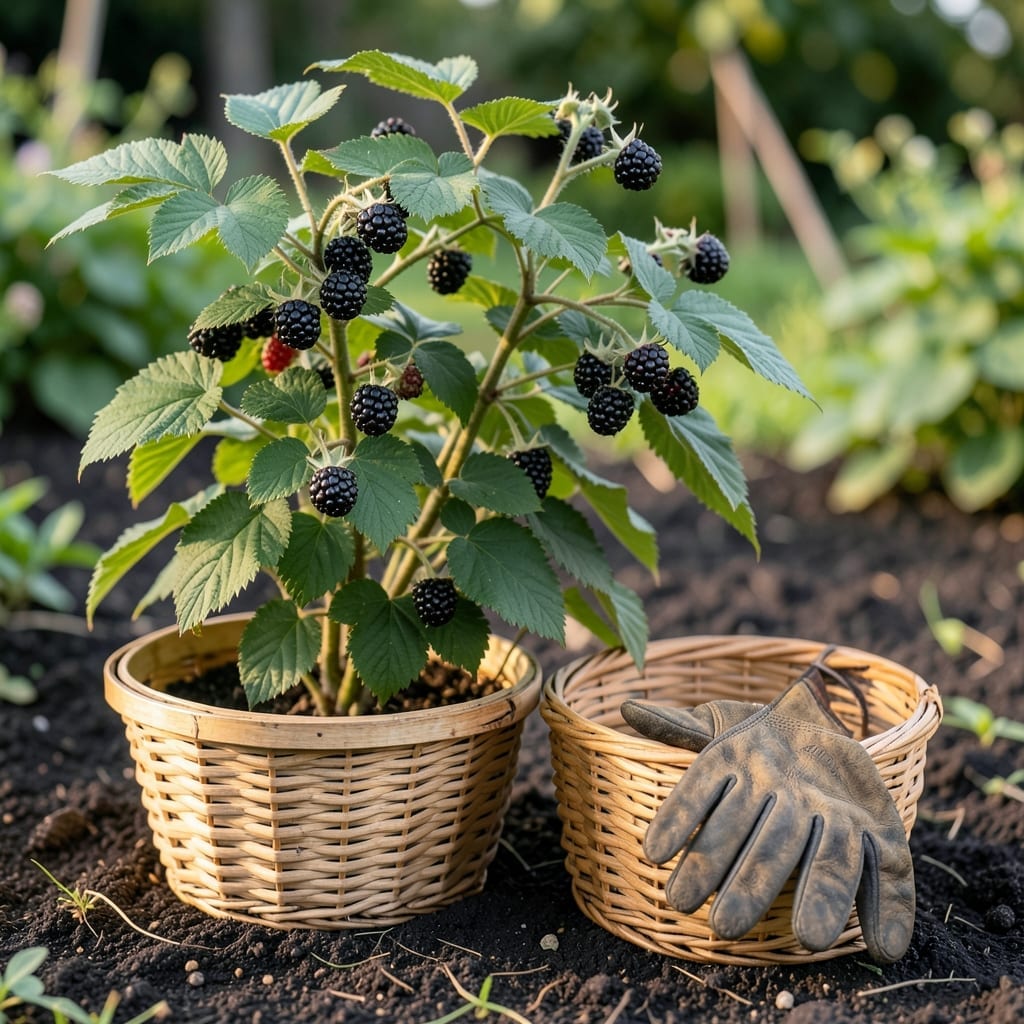
Black raspberries changed how I think about homegrown fruit. Rich flavor, deep color, and disease-resistant plants that keep producing for 10+ years with minimal effort.
They thrive in zones 4-8 with full sun and well-draining soil. The canes spread politely, not invasively, and the fruit ripens in early summer with a harvest window that lasts for weeks.
📚 In This Guide
Here’s the method I trust to produce the most flavorful, productive black raspberry canes every season.
Choose a location with full sun exposure (at least 6-8 hours of direct light daily) and well-draining soil. Black raspberries thrive in slightly acidic to neutral soil (pH 5.5-7.0). I always test the soil first—amending with compost or sulfur if needed to hit the right range.
Clear the area of weeds and debris, then loosen the soil to a depth of 12-18 inches. This encourages deep root growth. Space rows 6-8 feet apart to allow for air circulation and future cane management. A trellis or support system should be installed now to avoid disturbing roots later.
Dig a hole just large enough to accommodate the root ball, keeping the crown 1-2 inches above soil level. Planting too deep suffocates the crown and leads to rot. Space individual canes 2-3 feet apart within the row to prevent overcrowding as they mature.
Backfill the hole with native soil, gently firming it around the base to eliminate air pockets. Water each plant thoroughly with 1-2 gallons of water to settle the soil. I’ve found that a slow, deep soak at planting establishes roots faster than light, frequent watering.
Prune all canes back to 6 inches immediately after planting. This seems drastic, but it forces the plant to focus energy on root development rather than top growth. Remove any weak or damaged canes entirely—they’ll only drain resources from healthier ones.
As new canes (primocanes) emerge, train them to the trellis in a fan shape, spacing them 4-6 inches apart. This improves air flow and reduces disease pressure. Tie canes loosely with soft twine—too tight, and it’ll girdle the stem as it thickens.
Black raspberries need 1-1.5 inches of water weekly, especially during fruit development. I use drip irrigation to keep foliage dry and prevent fungal issues. Mulch with 2-3 inches of straw or wood chips to retain moisture and suppress weeds.
Fertilize in early spring with a balanced 10-10-10 or organic equivalent, applying 1/2 cup per plant. Avoid high-nitrogen fertilizers after midsummer, as they promote leafy growth at the expense of fruit production. Watch for yellowing leaves, a sign of nutrient deficiency or overwatering.
Fruit is ready when it turns deep black and detaches easily from the core with a gentle tug. Harvest every 2-3 days during peak season, as berries ripen unevenly. Pick in the morning when temperatures are cool to preserve freshness.
Use two hands—one to hold the cane, the other to pluck—to avoid damaging the plant. Overripe berries turn dull and soft, so timing is critical. A single cane can produce 1-2 quarts of fruit per season with proper care.
Small details make the difference between a struggling patch and a bounty of sweet berries.
The Sunlight Factor: That 6-8 hours of daily sun in Step 1 isn’t just a suggestion—it’s critical for maximum fruit production. I learned this the hard way when my first patch under a shady tree produced sparse, tart berries. Full sun exposure ensures proper sugar development in the fruit.
Soil Preparation Wisdom: When loosening soil to 12-18 inches deep as mentioned in Step 1, don’t cut corners. Shallow preparation leads to weak root systems that can’t support heavy fruit loads. I use a garden fork to break up compacted soil without disturbing the natural layers.
Planting Depth Secret: The 1-2 inches above soil level crown placement in Step 2 prevents the most common cause of black raspberry failure. Planting too deep causes crown rot, while too shallow exposes roots. I measure twice before backfilling to ensure perfect placement.
Watering Technique: The 1-2 gallons of water per plant at planting in Step 2 needs to be slow and deep. I create a small berm around each plant to help contain the water and ensure it soaks down to the root zone rather than running off.
Harvest black raspberries in early to mid-summer (June–July), when they easily pull from the vine and are deep black in color. Pick them in the morning for the best flavor.
Keep plants spaced for airflow, remove old canes, and avoid overhead watering. Prune regularly and use fungicides if needed to combat common issues like anthracnose or cane blight.
Yes! Use a large pot (at least 5 gallons) with well-draining soil. Ensure full sun and consistent watering, but container-grown plants may yield smaller harvests.
Black raspberries are hollow inside when picked, while blackberries have a solid core. Raspberries also have a sweeter, more delicate flavor and are smaller.
Insufficient sunlight, poor pollination, or over-fertilization (especially with nitrogen) can delay ripening. Ensure 6–8 hours of sun daily and balanced care.