
Beautiful Plants For Your Interior
Beautiful Plants For Your Interior
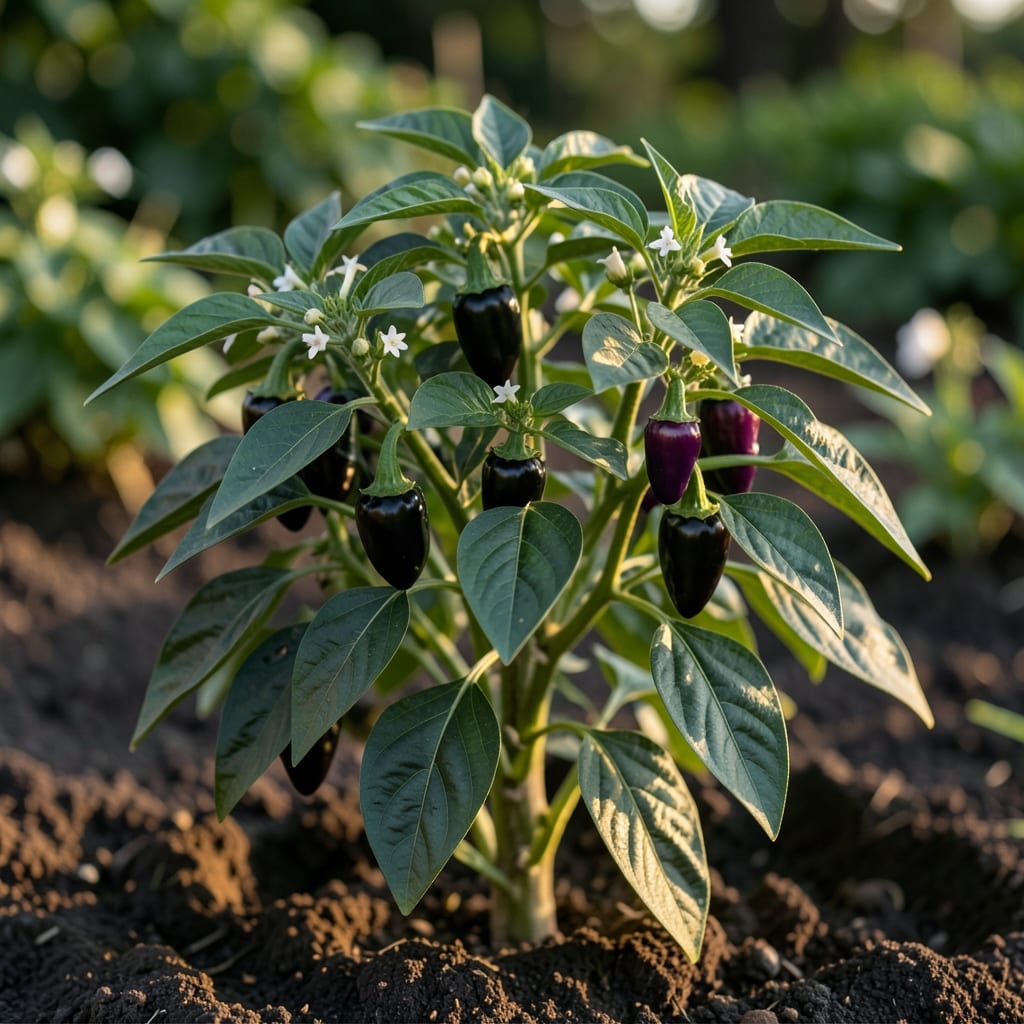
The Black Panther pepper ranks between 50,000 and 100,000 Scoville Heat Units, offering a medium to hot heat level with a fruity, slightly smoky flavor profile.
I find this pepper’s heat range fascinating because it sits right between jalapeños and habaneros on the scale. 🔥 The 50,000-100,000 SHU range means it delivers serious warmth while still being approachable for most chili enthusiasts. What makes it special is how the heat builds gradually, allowing the complex flavors to shine through before the spice kicks in.
💡 In This Article
The Scoville scale quantifies heat through capsaicin concentration, measured in parts per million. For Black Panthers, this translates to 50,000-100,000 SHU, putting them between serranos and Scotch bonnets. The test uses high-performance liquid chromatography to isolate capsaicinoids, which bind to TRPV1 receptors in your mouth, triggering that characteristic burning sensation. 🔥
What’s fascinating is how capsaicin distribution varies within the pepper. The placenta (white membrane) holds the highest concentration, while the flesh contains less. This means removing seeds and membranes can reduce heat by 30-50%. The Black Panther’s thick walls actually contain more capsaicin than thinner-walled varieties, contributing to its consistent heat level.
This pepper’s heat builds gradually, unlike habaneros that hit immediately. The delay comes from capsaicin’s fat solubility – it takes time to dissolve in mouth oils. That’s why dairy (casein protein) works so well to neutralize the burn.
The fruity notes you taste first come from volatile compounds like pyrazines, which evaporate at different rates than capsaicin.
Environmental factors can shift the Scoville range too. Peppers grown in hotter climates or with less water often test higher. I’ve seen Black Panthers from arid regions reach 120,000 SHU, while those from cooler areas might stay closer to 60,000 SHU. The plant produces more capsaicin as a defense mechanism against predators when stressed. ⚡
For comparison, this puts Black Panthers at about 1/10th the heat of the Carolina Reaper but 10-20 times hotter than jalapeños. The heat lingers for 5-10 minutes, making it perfect for salsas where you want lasting warmth without overwhelming spice. The smoky undertones develop during ripening as chlorophyll breaks down into flavor compounds.
It packs 10-20 times more heat than a jalapeño. While jalapeños average 2,500-8,000 SHU, Black Panthers start at 50,000 SHU and can reach 100,000 SHU. The heat builds gradually, giving you time to enjoy the fruity notes.
Growing conditions affect capsaicin production. Hotter climates and less water can push it toward 120,000 SHU, while cooler areas may keep it near 60,000 SHU. The plant creates more capsaicin as a defense when stressed.
Remove the white membranes and seeds, where most capsaicin concentrates. This can cut heat by 30-50%. For milder flavor, use only the flesh and avoid the placenta entirely.
The heat typically lingers for 5-10 minutes. Dairy products like milk or yogurt work best to neutralize it, thanks to casein protein binding with capsaicin. Water alone won’t help.