
Beautiful Plants For Your Interior
Beautiful Plants For Your Interior
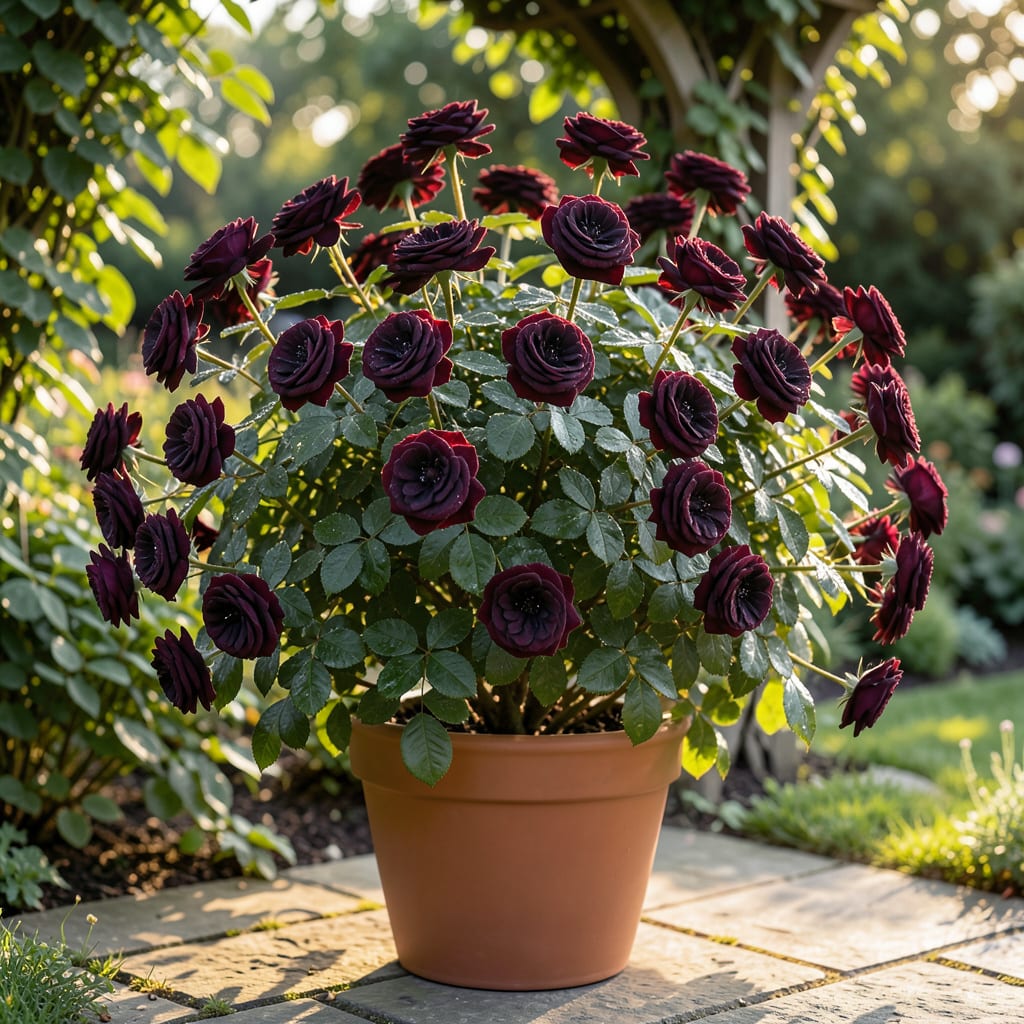
This rose stopped me in my tracks the first time I saw it. The deep burgundy blooms look almost black in certain light, creating a drama most gardens only dream of.
It’s surprisingly low-maintenance for such a showstopper. With the right spot and simple care, you’ll get velvety flowers all season long that smell as rich as they look.
📚 In This Guide
This method ensures deep, velvety blooms that thrive in your garden for years to come.
Select a spot with full sun (at least 6-8 hours of direct sunlight daily). Roses love morning sun and need protection from harsh afternoon heat in warmer climates. Avoid low-lying areas where cold air or water might pool.
Soil should be well-draining and rich in organic matter. Test drainage by digging a 12-inch-deep hole and filling it with water—if it drains within 1 hour, you’re good to go. Heavy clay or sandy soil will need amending with compost before planting.
Dig a hole that’s twice as wide and just as deep as the root ball. Loosen the soil at the sides of the hole to encourage roots to spread outward. If your soil is poor, mix in a few handfuls of compost or well-rotted manure to give the plant a nutrient boost.
Place the rose bush in the hole, ensuring the graft union (the swollen area near the base) sits 1-2 inches above soil level in cold climates or at soil level in warmer areas. This prevents disease and protects the graft from freezing.
After planting, water deeply until the soil is thoroughly moist but not soggy. I like to create a small watering basin around the base to help direct moisture to the roots. Apply a 2-3 inch layer of organic mulch, such as wood chips or straw, to retain moisture and suppress weeds.
Keep the mulch 2-3 inches away from the stem to prevent rot. For the first week, water every 2-3 days unless rain provides at least 1 inch of moisture. After that, water weekly during dry spells.
Prune in early spring, just as new growth begins. Remove any dead, diseased, or crossing branches first. Cut back remaining canes by about one-third to encourage strong, healthy growth. Always use clean, sharp pruners to make 45-degree cuts just above an outward-facing bud.
After the first flush of blooms, deadhead spent flowers by cutting just above a 5-leaflet leaf. This promotes continuous blooming throughout the season. Real talk: skipping this step means fewer blooms and a leggy, unruly bush.
Feed your rose bush with a balanced, slow-release fertilizer in early spring and again after the first bloom cycle. Follow package instructions for amounts, but avoid over-fertilizing—it leads to weak growth and fewer blooms. I’ve found that organic options like fish emulsion or compost tea work beautifully.
Keep an eye out for common pests like aphids or black spot fungus. Treat aphids with a strong spray of water or insecticidal soap. For black spot, remove affected leaves immediately and improve air circulation around the plant. Regularly inspecting leaves and stems catches problems early.
A few thoughtful adjustments can make all the difference in your garden’s success.
Sunlight Essentials: The 6-8 hours of daily sunlight mentioned in Step 1 isn’t just a suggestion—it’s critical for those deep, velvety blooms. Morning sun is especially valuable, as it helps dry dew from the leaves, reducing the risk of fungal diseases.
Drainage Test: In Step 1, the 1-hour drainage test for your 12-inch-deep hole is your best indicator of soil quality. If water stands longer than an hour, amend with compost or consider raised beds to prevent root rot.
Planting Depth: In Step 2, placing the graft union 1-2 inches above soil level in cold climates is non-negotiable. This small detail protects the graft from freezing temperatures and prevents disease from splashing soil.
Watering Wisdom: The 2-3 day watering schedule in Step 3 during the first week ensures roots establish properly. After that, the 1 inch of weekly moisture (from rain or watering) keeps your rose bush thriving without overwatering.
Water deeply 1-2 times per week, depending on rainfall. Ensure the soil stays moist but not soggy, especially during hot, dry spells. Mulch helps retain moisture!
Early spring or fall is ideal, giving roots time to establish before extreme temperatures. Avoid planting in summer heat or winter frost for best results.
Watch for aphids, thrips, and black spot fungus. Use neem oil or insecticidal soap for pests, and prune affected leaves to prevent disease spread.
Yes! Choose a large pot (at least 18 inches wide) with good drainage. Use quality potting mix and fertilize regularly for vibrant blooms.
Yellow leaves often signal overwatering, nutrient deficiency, or poor drainage. Test soil pH (aim for 6.0-6.5) and adjust care as needed.
