
Beautiful Plants For Your Interior
Beautiful Plants For Your Interior
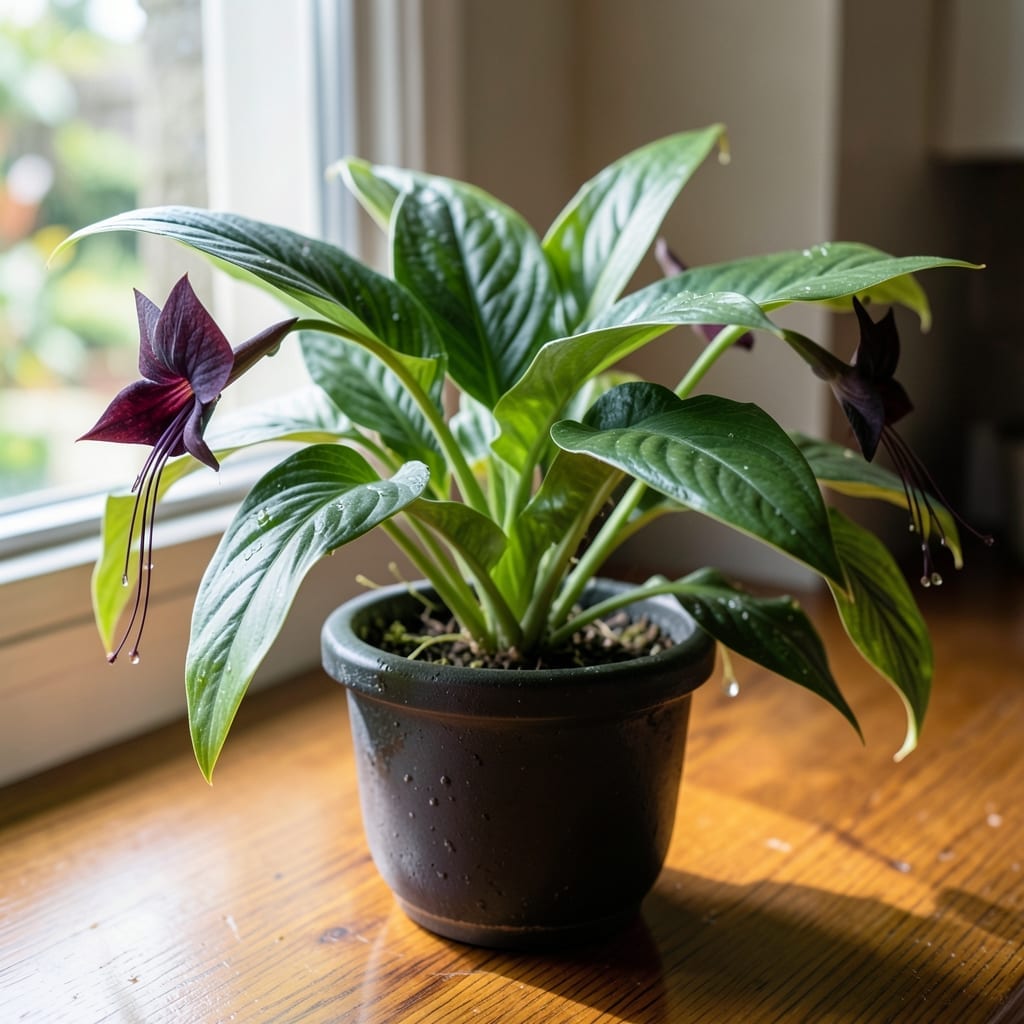
The black bat flower belongs to the genus Tacca and is scientifically known as Tacca chantrieri, a striking tropical plant with unique dark blooms resembling bats in flight.
This exotic species thrives in humid, shaded environments, originally hailing from Southeast Asia. 🌿 I find its unusual appearance particularly fascinating—the deep purple to black petals and long, whisker-like filaments give it a dramatic, almost otherworldly presence. Gardeners often seek it out for its rare beauty, though it does require consistent moisture and well-draining soil to flourish.
💡 In This Article
The genus name Tacca originates from an Arabic word meaning “to stitch,” referencing the plant’s thread-like floral bracts. Meanwhile, chantrieri honors French botanist J. Chantereau, who first documented this species in the 19th century. This taxonomic classification places it in the Dioscoreaceae family, alongside yams. 🔥
Physically, Tacca chantrieri stands out with its near-black, bat-shaped blooms that can reach 12 inches across. The flowers feature long, whisker-like filaments called bracts that can extend up to 28 inches, creating a dramatic, almost otherworldly display.
Its glossy, dark green leaves are broadly oval and can grow 1-2 feet long, adding to its tropical allure.
Native to the humid, shaded forests of Southeast Asia, particularly Thailand, Malaysia, and southern China, this plant thrives in environments with 70-90% humidity and temperatures between 65-85°F.
The scientific name reflects both its unique morphology and the botanist who cataloged it, while its common name comes from the striking resemblance of its flowers to bats in flight. ✨
What makes Tacca chantrieri particularly fascinating is its pollination strategy. The dark coloration and shape of its flowers attract specific pollinators in its native habitat, while the long bracts help guide these insects to the plant’s reproductive structures. This specialized adaptation highlights the intricate relationship between the plant and its ecosystem. 💫
In cultivation, the black bat flower’s scientific classification helps growers understand its needs. Being part of the Dioscoreaceae family, it shares some care requirements with other tropical plants in this group, such as a preference for well-draining soil rich in organic matter and consistent moisture without waterlogging.
This botanical knowledge is crucial for successfully growing this exotic species outside its native range. ⚡
The name Tacca chantrieri honors French botanist J. Chantereau. The genus Tacca comes from an Arabic word meaning “to stitch,” referencing its thread-like floral bracts that can grow up to 28 inches long.
Yes, with bright, indirect light and 70-90% humidity. Use a well-draining mix of 50% peat moss and 50% perlite. Keep temperatures between 65-85°F for best results.
Water when the top 1-2 inches of soil feels dry. Avoid waterlogging to prevent rhizome rot. During active growth, fertilize every 2-3 weeks with balanced liquid fertilizer.
Divide rhizomes in early spring, planting offsets with at least one growth node 1-2 inches deep. New growth may take 4-6 weeks to appear. Be patient—this tropical beauty is worth the wait!