
Beautiful Plants For Your Interior
Beautiful Plants For Your Interior
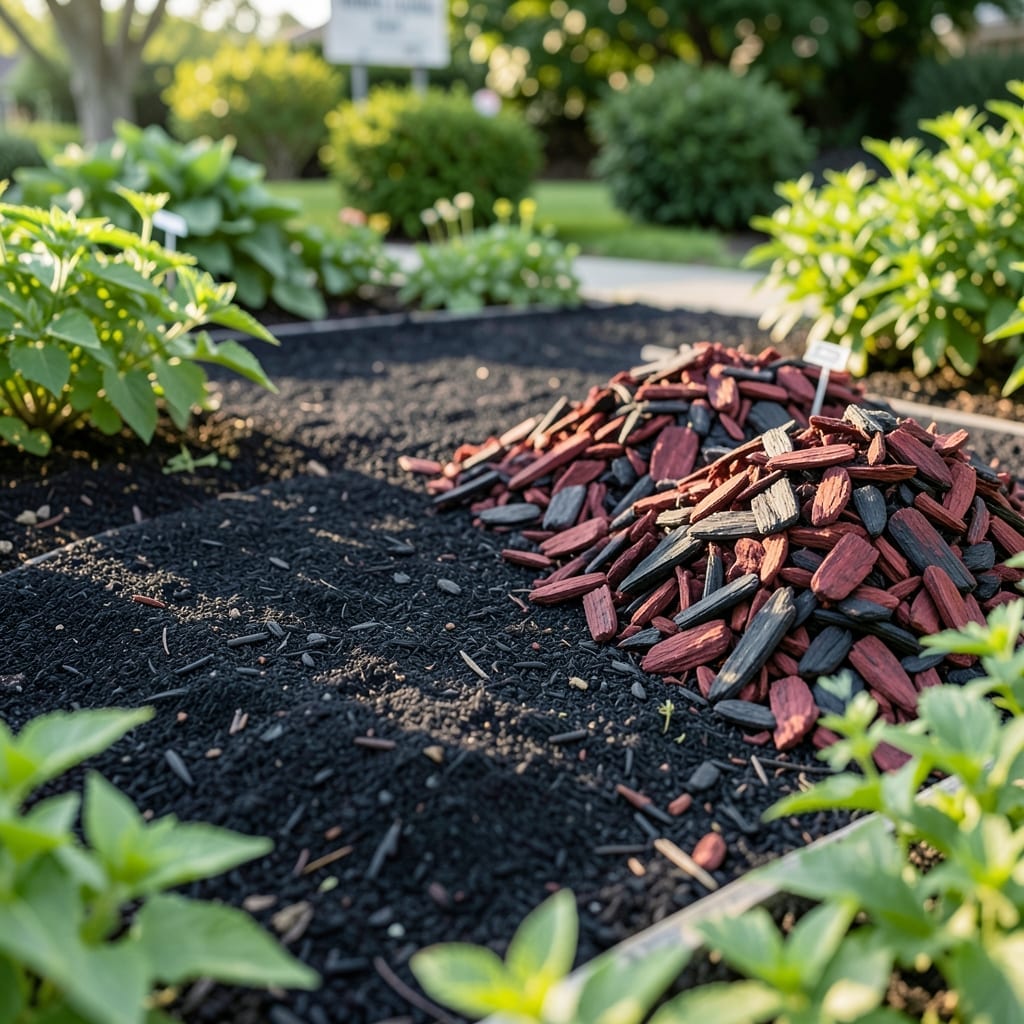
Mixing black and red mulch creates a bold, high-contrast landscape design that highlights plants and garden borders while adding depth and visual interest to outdoor spaces.
This color pairing works because dark mulch makes vibrant flowers and foliage pop, while the red adds warmth and draws attention to key areas. 🔥 I’ve used this combo around fire pits and along walkways—it creates a professional look that’s surprisingly easy to maintain. The contrast also helps define separate planting zones without physical barriers.
💡 In This Article
The contrast between black and red mulch activates the principle of simultaneous contrast in color theory. Your eyes perceive the red as more vibrant when placed next to black, creating a dynamic visual effect that naturally draws attention. This works because black absorbs all light wavelengths, making adjacent colors appear more saturated and intense. 🔥
Seasonal changes enhance this effect. In spring and summer, the red mulch complements green foliage and bright flowers, while the black mulch makes white or yellow blooms appear almost luminous. In fall, the red blends with autumn tones, and the black provides a stark contrast to orange and yellow leaves.
The psychological impact is equally powerful—black conveys sophistication, while red adds energy and warmth.
The texture of the mulch matters too. Black mulch, often made from hardwood, has a finer, darker appearance that creates a sleek base. Red mulch, typically pine or cedar, has a slightly coarser texture and a richer hue. When mixed, these differences add depth to your landscape, making it look more three-dimensional.
This combination can even make small gardens appear larger by creating visual layers.
Lighting plays a crucial role in how these colors interact. In direct sunlight, red mulch can appear brighter and more vivid, while black mulch stays consistently dark. In shaded areas, the red may look more subdued, but the black will still provide a strong contrast.
This adaptability makes the combo work in almost any lighting condition, from full sun to deep shade. ✨
What most people don’t realize is that this color pairing also affects how you perceive the plants themselves. The high contrast makes green foliage look more vibrant, and flowers appear more colorful. It’s like giving your garden a natural filter that enhances every element.
This is why professional landscapers often use this technique in high-end designs.
It shines in modern and contemporary designs but can adapt to others. Use more black for traditional gardens, or go bold with equal parts for eclectic styles. The key is balance and placement.
Use a physical barrier like landscape edging or create a 6-12 inch buffer zone between colors. This maintains clean lines and prevents mixing over time.
White, silver, and purple foliage pop dramatically. Try hostas, lamb’s ear, or purple heuchera. Avoid red blooms near red mulch as they’ll compete visually.
Yes, red typically fades faster than black. Plan to refresh the red mulch annually while black may last 2-3 years. Use UV-resistant dyes for longer lasting color.