
Beautiful Plants For Your Interior
Beautiful Plants For Your Interior
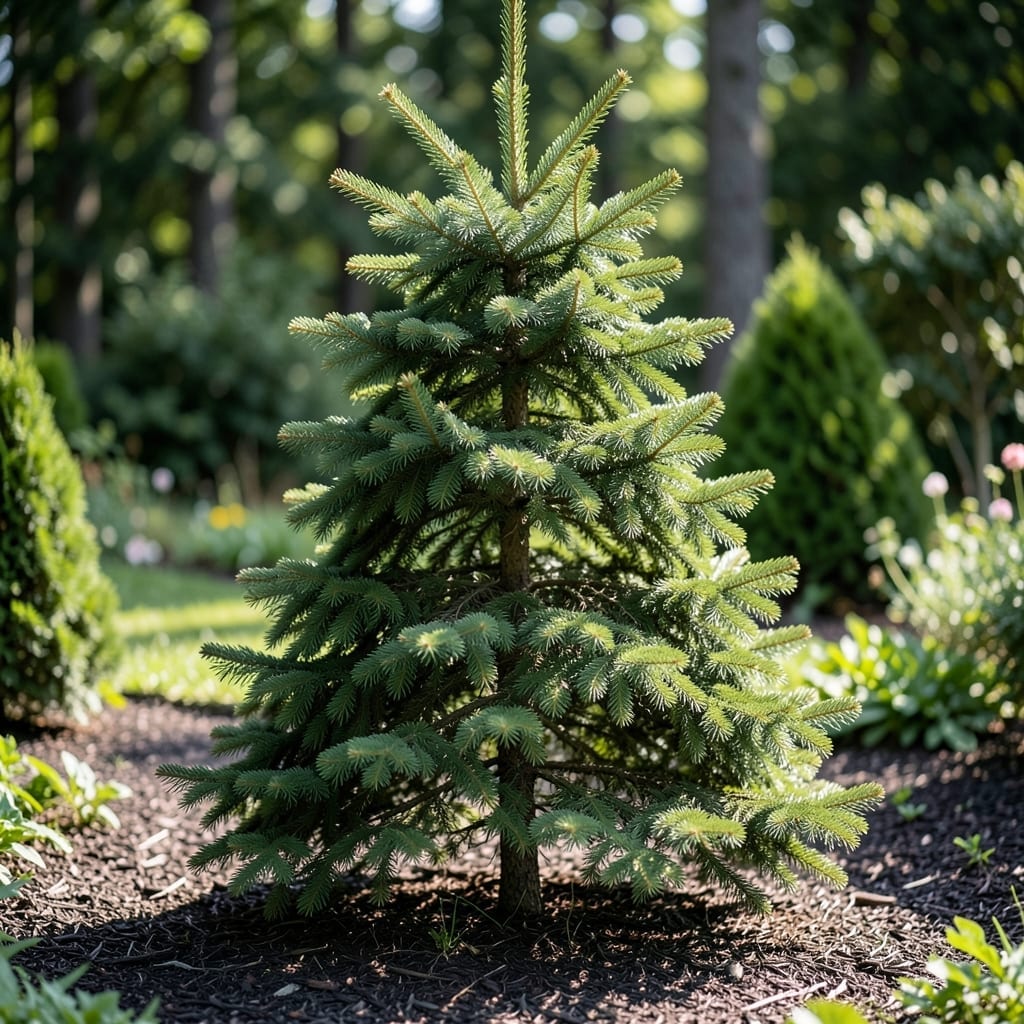
The bird’s nest Norway spruce is a dwarf evergreen with a dense, nest-like depression at the center. It grows slowly, reaching 3-5 feet tall, and thrives in full sun to partial shade with well-drained soil.
This compact spruce stands out in landscapes due to its unique growth pattern, forming a natural indentation that resembles a bird’s nest. I love how its dark green needles maintain color year-round, providing consistent visual interest. Its slow growth makes it perfect for small gardens or container planting, and it requires minimal maintenance once established. 🌟
For best results, plant it in a spot with good air circulation and avoid waterlogged soil, as this can lead to root rot. Its adaptability to various climates adds to its appeal for many gardeners.
💡 In This Article
The signature depression at the center forms naturally as the tree matures. This unique growth pattern occurs because the inner branches grow more slowly than the outer ones, creating that distinctive nest-like appearance.
The needles are 1/2 to 1 inch long, dark green with a slightly bluish tint, and have a sharp point that’s characteristic of spruce species. 🌟
What sets this cultivar apart is its perfectly symmetrical, rounded shape. While standard Norway spruces can reach 40-60 feet tall, this dwarf variety stays compact at 3-5 feet tall and 5-7 feet wide at maturity.
The branches are densely packed, creating a full, bushy appearance that’s ideal for foundation plantings or as a specimen in rock gardens.
Seasonal changes bring subtle but beautiful variations. In spring, new growth emerges as bright green tips that contrast with the darker mature needles. Come winter, the foliage may develop a slight bronzing, especially in exposed locations. This color change is completely normal and adds interesting dimension to winter landscapes. ⚡
The bark starts smooth and grayish-brown when young, gradually developing a scaly texture as the tree ages. Cones are rare on these dwarf cultivars, but when they do appear, they’re typically 3-6 inches long and hang downward, starting green and maturing to brown.
The tree’s overall texture is fine to medium, making it an excellent choice for adding structure to garden designs.
This spruce maintains its neat, rounded form without pruning, though light shaping can enhance its natural symmetry. Its slow growth rate of about 2-4 inches per year means it won’t outgrow its space quickly, making it a low-maintenance option for busy gardeners.
The dense foliage also provides excellent year-round screening and wind protection for smaller garden creatures. ✨
It grows very slowly at about 2-4 inches per year. This makes it ideal for small spaces where you want a compact, low-maintenance evergreen. Its mature size of 3-5 feet tall is reached over many years.
It prefers at least 6 hours of sunlight daily but tolerates partial shade. Full sun produces the densest growth and best color, while too much shade can cause sparse foliage.
Well-draining soil is essential to prevent root rot. It adapts to various soil types but thrives in slightly acidic to neutral pH. Avoid heavy clay or waterlogged areas.
Water young plants 1-2 times weekly for the first year, providing about 1 inch of water each time. Once established, it’s quite drought-tolerant and needs less frequent watering.
No, it maintains its natural shape without pruning. Only remove dead or diseased branches as needed. If shaping is desired, do it in early spring before new growth appears.