
Beautiful Plants For Your Interior
Beautiful Plants For Your Interior
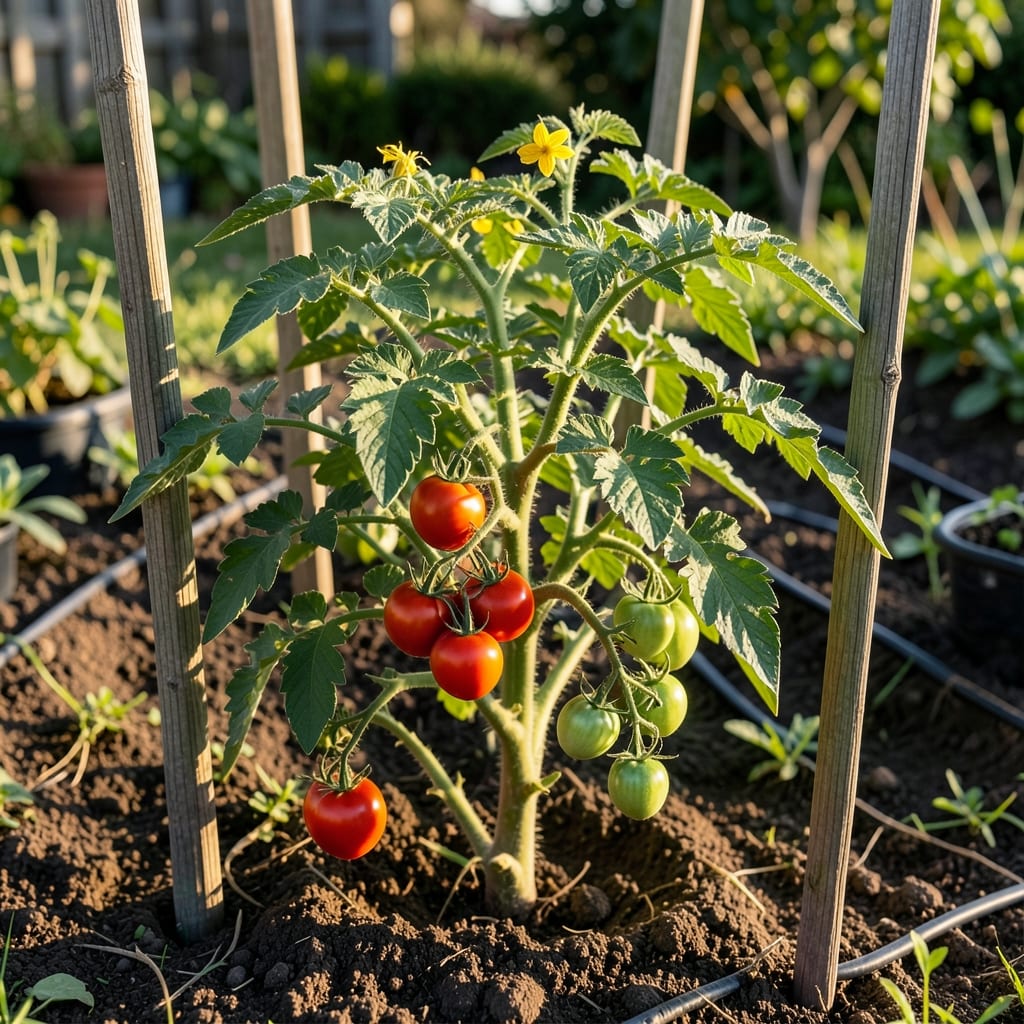
Top tomato varieties include ‘Cherry’ for snacking, ‘Roma’ for sauces, ‘Beefsteak’ for slicing, and ‘Early Girl’ for quick harvests. Choose disease-resistant types like ‘Mountain Merit’ for reliable yields.
I love how each variety serves a distinct purpose in the kitchen and garden. Cherry types excel in containers, while Roma thrives in hot climates for paste production. Disease resistance matters most in humid regions, where Mountain Merit consistently outperforms others. ⚡
Your climate and space will guide your best choices. 💫
💡 In This Article
Tomatoes fall into two main growth categories: determinate and indeterminate. Determinate varieties, like Roma, grow to a fixed size (usually 3-4 feet) and produce fruit all at once—ideal for canning. Indeterminate types, such as Beefsteak, keep growing and fruiting until frost, often reaching 6-12 feet with proper support.
This difference dramatically affects pruning, staking, and harvest timing. ⚡
Flavor profiles vary widely by type and ripeness. Cherry tomatoes burst with sweetness (Brix values of 8-12%) due to higher sugar concentrations. Heirloom beefsteaks offer complex, tangy notes from their lower acidity (0.3-0.5% vs. 0.6-0.8% in hybrids). The Roma’s meaty texture comes from fewer seed cavities and thicker walls, perfect for sauces. 🌟
Climate adaptation separates the winners from the struggles. Early Girl thrives in cooler regions with its 55-65 day maturity, while heat-tolerant varieties like Solar Fire produce in 90°F+ temperatures. Humid climates demand disease-resistant types such as Mountain Merit, which fights off common fungi without chemical treatments. ✨
Growth habits directly impact garden planning. Bush-type determinates need no staking but require 2-3 feet of spacing. Vining indeterminates demand trellises or cages and 18-24 inches between plants. The Sungold cherry variety can produce 100+ fruits per plant in ideal conditions, while a single Brandywine beefsteak plant might yield 10-15 pounds of fruit. 🔥
Water and nutrient needs differ too. Paste tomatoes like San Marzano benefit from consistent moisture to prevent blossom-end rot, requiring 1-2 inches weekly. Dwarf varieties (under 2 feet) excel in containers with 5-gallon minimum soil volume. Leafy indeterminates need more nitrogen early, switching to potassium-heavy feeds during fruiting. 💫
Start with Cherry or Early Girl varieties. They’re forgiving, produce abundantly, and adapt well to containers. Both resist common diseases and thrive with minimal fuss.
Tiny Tim or Patio Princess stay compact (2-3 feet) and excel in 5-gallon pots. These determinate types don’t need staking, making them perfect for balconies.
Pick heat-tolerant types like Solar Fire or Heatmaster. They produce reliably in 90°F+ and resist sun scald. Keep soil moist to prevent stress.
Yes! Siberian or Stupice tolerate 4-6 hours of sun. Expect slightly smaller yields but still flavorful fruit. Ensure good airflow to prevent disease.
Roma or San Marzano are ideal. Their meaty texture and low moisture content create rich, thick sauces. Plant 6-8 for a season’s worth of preserves.