
Beautiful Plants For Your Interior
Beautiful Plants For Your Interior
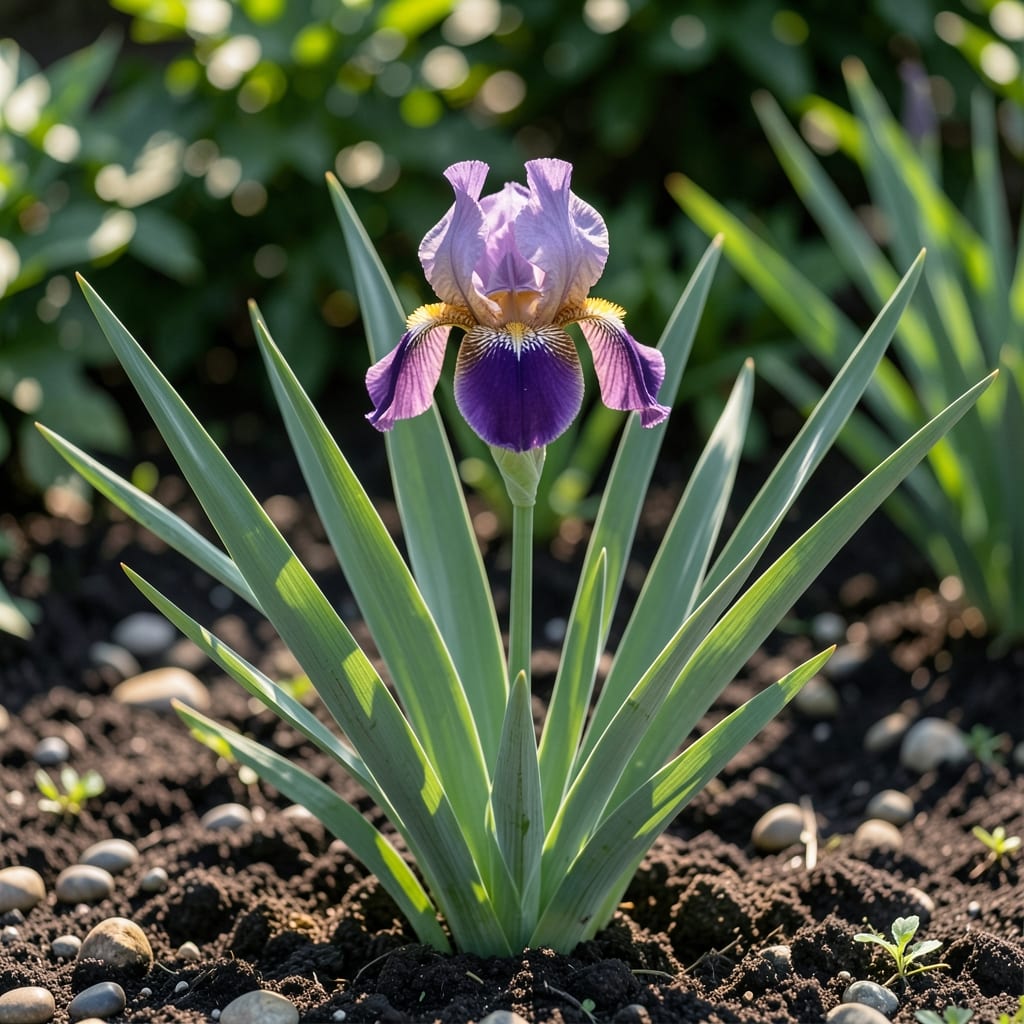
The bearded iris belongs to the Iris germanica species, though many hybrids fall under the broader Iris × germanica classification in the Iridaceae family.
This classification is key for gardeners because Iris germanica represents the classic bearded varieties we love in landscapes. 🌟 What’s fascinating is how the Iridaceae family includes over 300 species, with bearded irises standing out for their distinctive fuzzy lower petals. I’ve found that understanding these botanical names helps when selecting plants for specific growing conditions or design aesthetics.
💡 In This Article
The Iridaceae family contains over 300 species, with bearded irises occupying a special place. The genus Iris is divided into bearded and beardless groups, with Iris germanica serving as the type species for the bearded category. This classification dates back to 1753, when Carl Linnaeus first described it in his Species Plantarum. 🌟
What distinguishes Iris germanica is its thick, fleshy rhizomes that store nutrients and water. These horizontal stems grow just below the soil surface, producing both roots and shoots. The species name “germanica” is somewhat misleading, as the plant is native to southern Europe and the Mediterranean, not Germany.
Hybrid cultivars are denoted with the × symbol before germanica to indicate their crossbred origin.
The bearded iris gets its name from the soft, hair-like structures on its lower petals, called falls. These specialized parts aren’t just decorative—they guide pollinators to the flower’s reproductive parts. The standards (upper petals) typically stand upright or slightly curve backward, creating the classic iris silhouette that gardeners adore. ✨
Within the Iridaceae family, bearded irises share traits with other members like crocuses and gladiolus. However, they’re unique in their growth habit and flower structure. The American Iris Society recognizes over 30,000 registered bearded iris cultivars, all tracing their lineage back to Iris germanica and a few other wild species.
This incredible diversity comes from careful selective breeding over centuries.
Understanding this taxonomy helps gardeners make informed choices. For example, Iris germanica prefers well-drained soil and full sun, while some hybrid cultivars may tolerate partial shade. The botanical name also helps when researching specific care requirements or disease resistance for particular varieties. 💫
The name Iris germanica was assigned by Linnaeus in 1753 based on early botanical records. Despite the name, it’s native to southern Europe and the Mediterranean region.
The × indicates a hybrid origin, meaning it’s a cross between different species. Most modern bearded irises are hybrids, hence the Iris × germanica classification.
Bearded irises have fuzzy lower petals called falls, while beardless types have smooth falls. Iris germanica is the primary species for bearded varieties, with distinct growth habits.
Yes, wild Iris germanica grows in parts of southern Europe. However, most garden varieties are cultivated hybrids with enhanced colors and forms.
Knowing it’s Iris germanica helps you research care needs, disease resistance, and compatibility with other plants in your garden.