
Beautiful Plants For Your Interior
Beautiful Plants For Your Interior
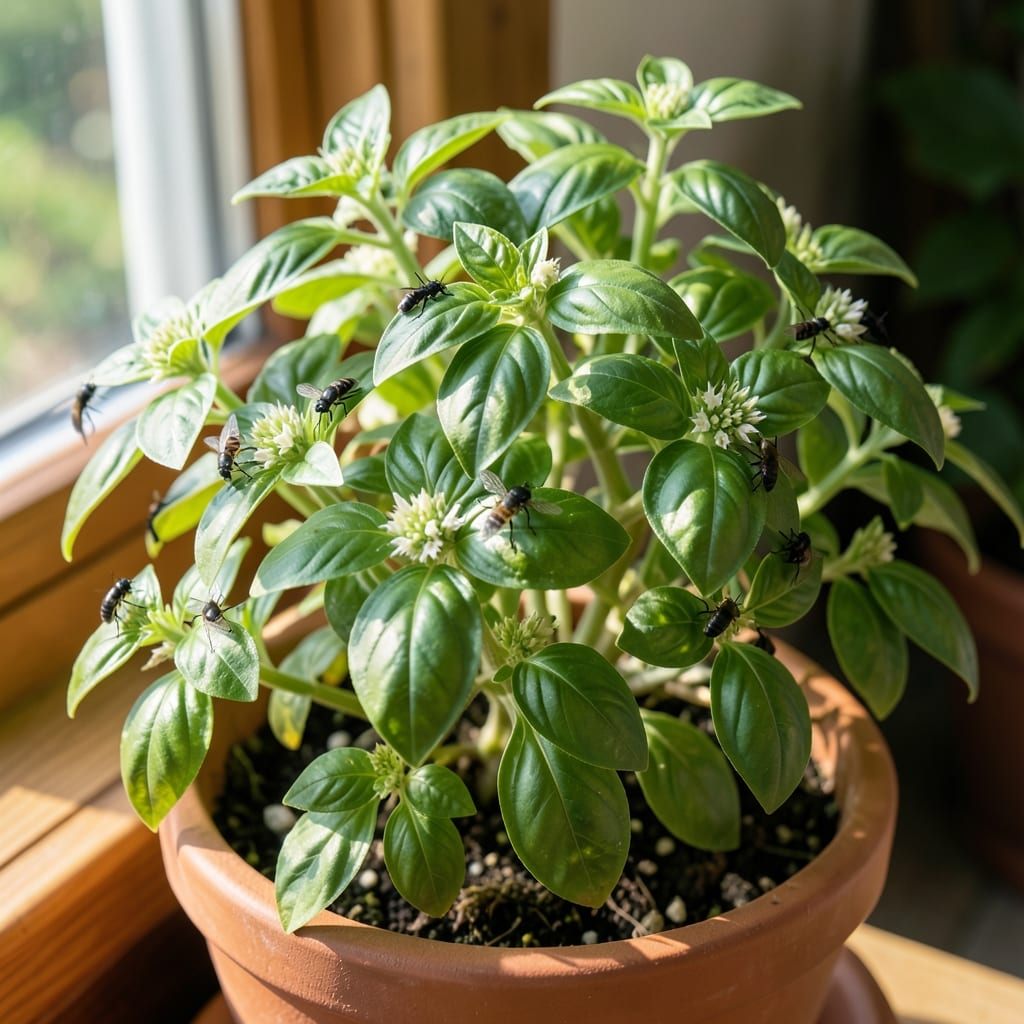
Basil emits a strong scent that naturally repels flies due to its essential oils like eugenol and citronellol. Placing potted basil near entryways or windows can deter these pests effectively.
I’ve tested this firsthand and found the aromatic compounds in basil disrupt flies’ ability to detect food sources. The plant’s natural oils create an invisible barrier that’s particularly effective in kitchens or patio areas. For best results, I recommend using fresh, healthy plants with plenty of foliage to maximize the scent’s reach. ✨
💡 In This Article
The magic lies in basil’s volatile organic compounds, particularly eugenol, linalool, and citronellol. These molecules evaporate at room temperature, creating a fragrant vapor that flies find overwhelming. Studies show eugenol disrupts the olfactory receptors flies use to detect food and mates, effectively masking attractive scents.
Flies possess highly sensitive antennae with odorant receptors tuned to specific chemical signatures. Basil’s 1.8-cineole and methyl chavicol compounds trigger these receptors in a way that signals danger. This isn’t just masking—it actively repels by creating a sensory overload, similar to how peppermint oil deters spiders.
What most people don’t realize is the concentration matters. Fresh basil leaves contain up to 0.5-1.0% essential oils by weight, with the highest concentrations in mature leaves. Crushed leaves release up to 50% more volatiles, which is why bruising the foliage enhances the effect. The scent’s reach extends about 3-5 feet in still air.
The effectiveness varies by basil variety. Sweet basil contains the highest eugenol levels at 60-70% of its oil profile, while lemon basil has more citronellol. Thai basil, with its anise-like scent, combines methyl chavicol with eugenol for a double deterrent effect. 🔥
Environmental factors play a role too. The oils evaporate faster in warm, dry conditions (70-80°F), creating a stronger repellent effect. This is why basil works better outdoors in summer than in air-conditioned indoor spaces. The volatile compounds also break down in direct sunlight, so partial shade maintains potency longer.
Interestingly, flies don’t develop resistance to basil’s scent because it’s not a chemical insecticide. Instead, it works by overwhelming their natural navigation systems. This makes basil a sustainable, long-term solution unlike synthetic repellents that pests can adapt to over time. ✨
For a standard kitchen, 2-3 potted basil plants near windows or entry points should provide adequate coverage. The scent reaches about 3-5 feet, so space them accordingly.
Yes! Sweet basil has the highest fly-repelling compounds, while lemon and Thai basil also work well. Choose varieties with strong aromas for best results.
For maximum effectiveness, replace every 2-3 months or when foliage thins. Older plants lose their potency and scent strength over time.
Fresh plants work best, but dried basil in sachets can help in small spaces. However, it loses 50% of its volatile oils when dried, reducing effectiveness.