
Beautiful Plants For Your Interior
Beautiful Plants For Your Interior
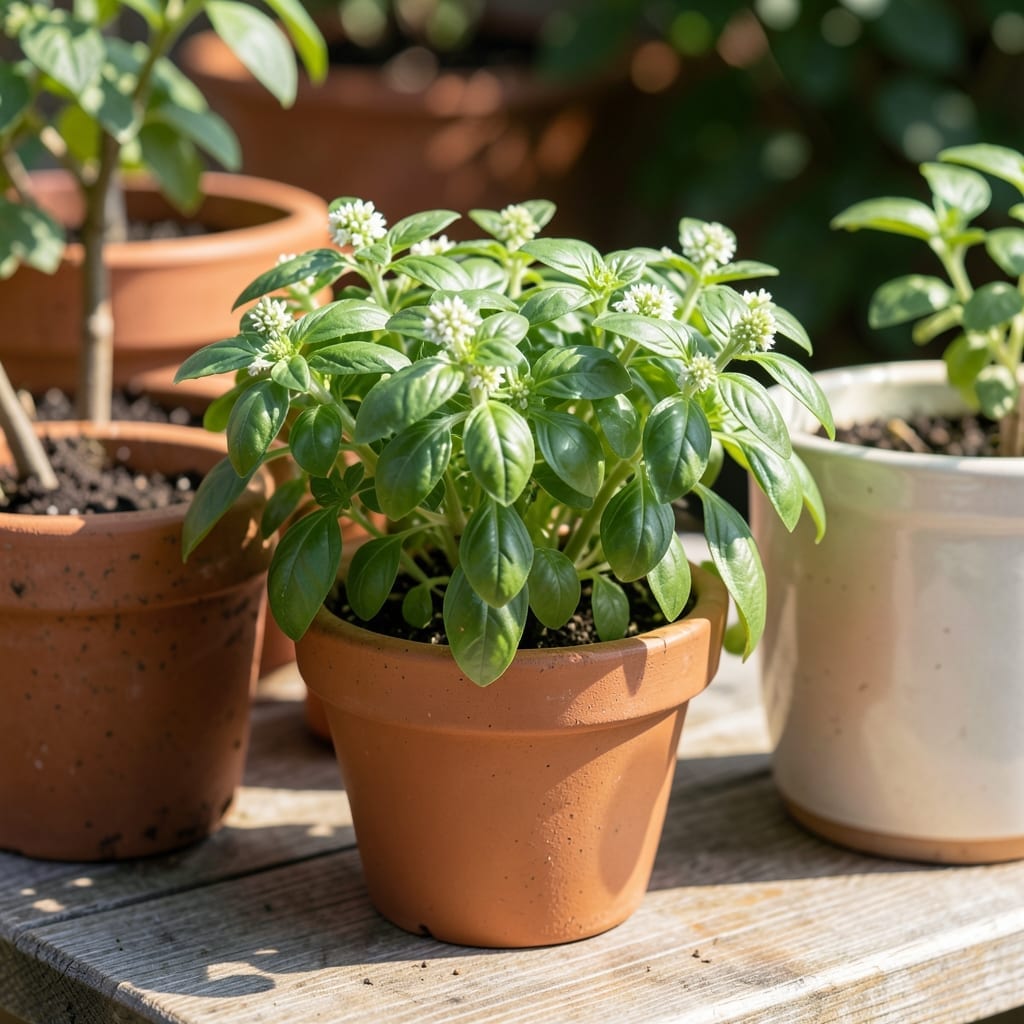
Choosing the right container size for your 🌿 Basil can mean the difference between a thriving herb garden and a wilting disappointment. Healthy root growth starts with proper depth and space.
Get this wrong, and even the hardiest Basil varieties will struggle to reach their full potential. I’ve seen too many gardeners make this simple mistake.
What if I told you the ideal container could boost your Basil’s growth by 50%? It’s not magic—just science and a bit of know-how.
Discover how to pick the perfect home for your Basil, ensuring lush leaves and robust flavor all season long.


Choosing the right basil plant container size is crucial for healthy root development. I always recommend a minimum depth of 6-8 inches to accommodate the root system of most basil varieties like Genovese or Thai. Shallow pots restrict growth and lead to stress. 🌱
Width matters too—aim for at least 8-10 inches in diameter per plant. This gives roots room to spread while ensuring proper air circulation and moisture distribution. Overcrowding can cause stunted growth and disease. 🌿
| Requirement | Specification |
|---|---|
| Minimum Depth | 6-8 inches |
| Minimum Width | 8-10 inches per plant |
| Drainage | Essential (drainage holes required) |
| Material | Plastic, ceramic, or fabric |
| Varieties | Genovese, Thai, Purple |
Drainage is non-negotiable for basil. Without drainage holes, water pools at the bottom, causing root rot. I’ve seen even the healthiest basil wilt in a week from poor drainage. Always check for holes or drill them yourself.
For dwarf basil varieties, you can downsize slightly to 6-inch depth and 6-inch width. But remember, smaller containers dry out faster, so daily watering may be needed in hot weather. ☀️
Material choice affects moisture retention. Terracotta pots dry out quickly but breathe well, while plastic containers retain moisture longer. Fabric pots offer excellent root aeration but require frequent watering.
If you’re growing multiple basil plants, space them 6-8 inches apart in a larger container. This prevents competition for nutrients and water. I’ve had success with 3 basil plants in a 12-inch wide pot.
For indoor basil, ensure your container fits on a sunny windowsill. South-facing windows are ideal, providing the 6+ hours of sunlight basil craves. If natural light is limited, supplement with grow lights.
Self-watering pots can be a game-changer for basil, especially if you travel often. They maintain consistent soil moisture without waterlogging. Just monitor the reservoir to avoid overwatering. 💧
Remember, basil grows quickly. If roots start circling the bottom or poking through drainage holes, it’s time to upsize your container. This usually happens within 2-3 months for mature plants.
Finally, always use well-draining potting mix in your containers. Garden soil compacts too much in pots, suffocating roots. A mix with perlite or vermiculite works wonders for basil’s delicate roots. 🌱
Even experienced gardeners sometimes pick the wrong basil container. I’ve seen shallow pots lead to stunted root systems, while oversized ones can drown plants with excess moisture. The key is balance.
Another frequent error is ignoring drainage holes. Without them, root rot sets in quickly, especially for Thai basil or Genovese varieties that prefer consistent but not soggy soil.
Avoid terracotta pots in hot climates—they dry out too fast for basil’s needs. Also, no drainage means dead plants within weeks.
I’ve also noticed that hanging baskets without proper depth restrict root growth. Basil needs at least 6-8 inches of soil depth to thrive, so shallow baskets won’t cut it.
Using non-porous materials like plastic can trap moisture. While this works for some herbs, basil prefers breathable containers to prevent fungal issues in humid conditions.
Lastly, don’t overcrowd multiple basil plants in one pot. Each needs 4-6 inches of space to avoid competition for nutrients and sunlight.
By avoiding these pitfalls, you’ll give your basil the best shot at lush, healthy growth and a bountiful harvest all season long 🌿