
Beautiful Plants For Your Interior
Beautiful Plants For Your Interior
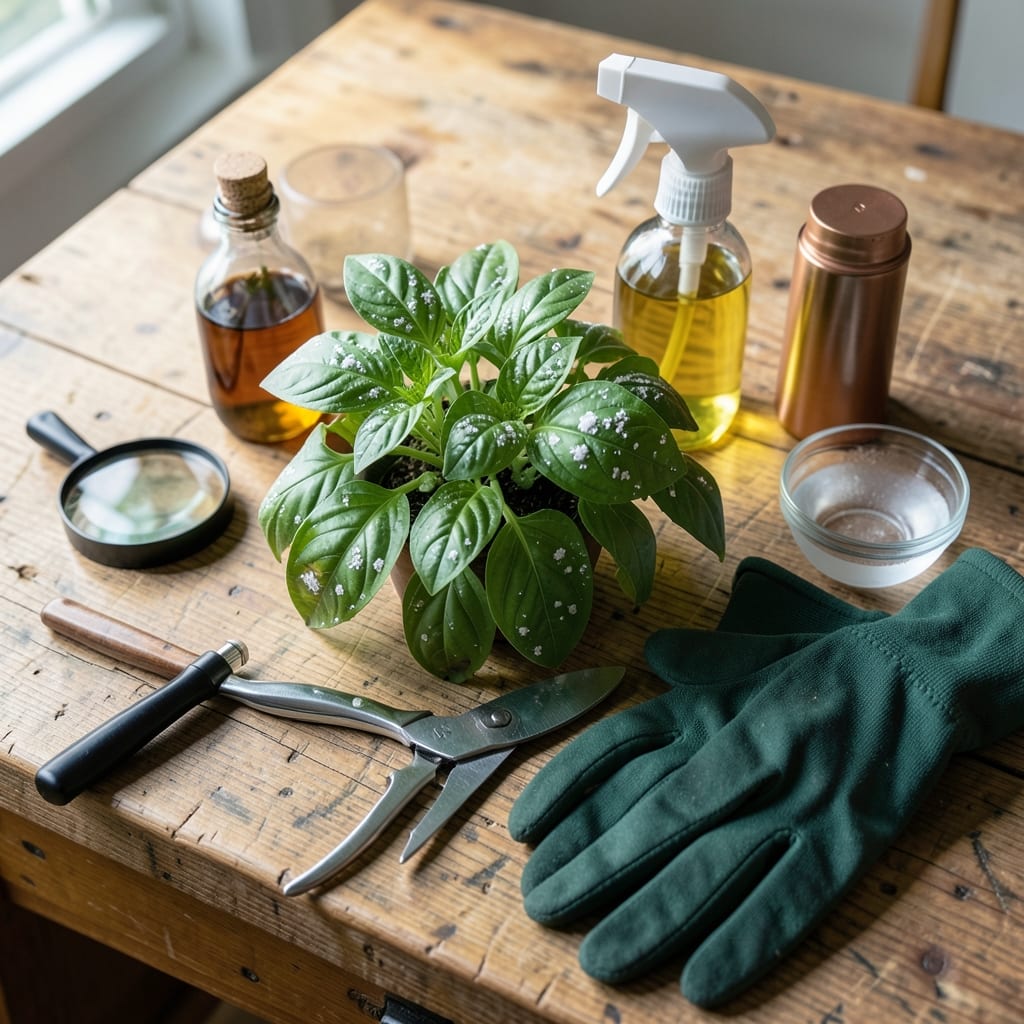
White spots on basil leaves aren’t just unsightly—they’re a warning sign. I’ve seen this issue wipe out entire plants in 48 hours if ignored.
These spots can signal fungal infections, pest infestations, or environmental stress. The good news? Identifying the cause early means you can save your plant and prevent future outbreaks. Here’s how to pinpoint the problem.
Quick grab from the shed or garden center. Most of this you likely own.
| Ingredient | Amount | Notes |
|---|---|---|
| Magnifying Glass 🔍 | 1 piece | 10x magnification for close inspection |
| Neem Oil Spray 💧 | 1 piece | Organic fungal treatment |
| Pruning Shears ✂️ | 1 piece | Sterilized with rubbing alcohol |
| Copper Fungicide 🧪 | 1 bottle | Preventative application |
| Garden Gloves 🧤 | 1 piece | Protective nitrile or latex |
| Isopropyl Alcohol 💧 | 1 bottle | 70% concentration for sterilization |
| Spray Bottle 💦 | 1 piece | For treatment application |
| Compost Bin 🌾 | 1 piece | For disposing infected leaves |
[recipeingredientscaler]
A 10x magnifying glass is essential for spotting early fungal spores—dollar stores often carry basic ones. Neem oil and copper fungicide are sold at most garden centers; I prefer Bonide brand for reliability. Sterilization is key, so keep isopropyl alcohol on hand for tools (the good stuff, not the diluted version).
No magnifier? A phone camera zoom can work in a pinch. For treatment, baking soda spray (1 tbsp per gallon of water) substitutes for fungicide temporarily. Plastic grocery bags can isolate infected plants if you lack a compost bin (or whatever sealed container you’ve got).
Store neem oil and fungicide in a cool, dark place—they last 2-3 years unopened. Keep pruning shears clean and dry to prevent rust. I label my treatments with purchase dates so I know when to replace them.
Here’s the method I use to identify and treat fungal issues on basil without spreading the problem further.
Put on the garden gloves to avoid transferring spores to healthy plants. Use the magnifying glass to examine the white spots closely. Fungal spores often appear as powdery or downy growth, while insect damage looks more irregular and chewed.
Check the undersides too—that’s where many fungal infections start. If the spots look fuzzy or have a grayish tint, you’re dealing with a fungal issue. This step takes 5-10 minutes but prevents misdiagnosis that wastes treatment time.
Dip the pruning shears in the isopropyl alcohol for 30 seconds to sterilize before each cut. Remove every leaf showing white spots, cutting at the stem base to prevent regrowth. Never compost these leaves—place them directly in the compost bin for disposal.
Work from the outside in to avoid brushing against healthy foliage. I always make clean cuts at a 45-degree angle to help the plant heal faster. After finishing, re-sterilize the shears before putting them away to prevent cross-contamination.
Fill the spray bottle with the copper fungicide according to package instructions. Lightly mist all remaining leaves, focusing on the undersides where fungal spores often hide. Apply in the early morning when temperatures are below 85°F to prevent leaf burn.
This creates a protective barrier that stops spores from germinating. I’ve found that weekly applications for 3-4 weeks breaks the fungal lifecycle completely. Always spray until the liquid just begins to drip from the leaves for full coverage.
Between copper fungicide treatments, use the neem oil spray as a maintenance measure. Shake the bottle well before each use, as the oil separates. Spray all leaf surfaces thoroughly, including the stems, every 5-7 days.
Neem oil disrupts fungal growth at multiple stages and also deters pests that can spread infections. I apply it in the evening to avoid direct sun exposure, which can cause phytotoxicity. The oil works best when applied consistently over 2-3 weeks.
White spots on basil are often caused by powdery mildew, a fungal disease thriving in high humidity and poor air circulation. It appears as a white, powdery coating on leaves.
Quick Fix: Remove infected leaves, improve airflow, and apply a baking soda solution (1 tsp baking soda + 1 quart water + a few drops of dish soap).
Downy mildew causes yellowing leaves with white or grayish fuzzy spots underneath. It spreads quickly in damp, cool conditions and can devastate your basil if untreated.
Quick Fix: Remove affected leaves immediately. Use a copper-based fungicide and ensure proper spacing between plants for better ventilation.
Whiteflies leave behind white eggs or nymphs on the undersides of leaves, which can resemble spots. They also secrete sticky honeydew, attracting sooty mold.
Quick Fix: Spray plants with insecticidal soap or neem oil. Introduce beneficial insects like ladybugs to control whitefly populations naturally.
Excess moisture can lead to fungal growth, including white spots. Overwatered basil also develops weak roots, making it more susceptible to diseases.
Quick Fix: Water only when the top inch of soil is dry. Ensure pots have drainage holes, and use well-draining soil to prevent waterlogging.
