
Beautiful Plants For Your Interior
Beautiful Plants For Your Interior
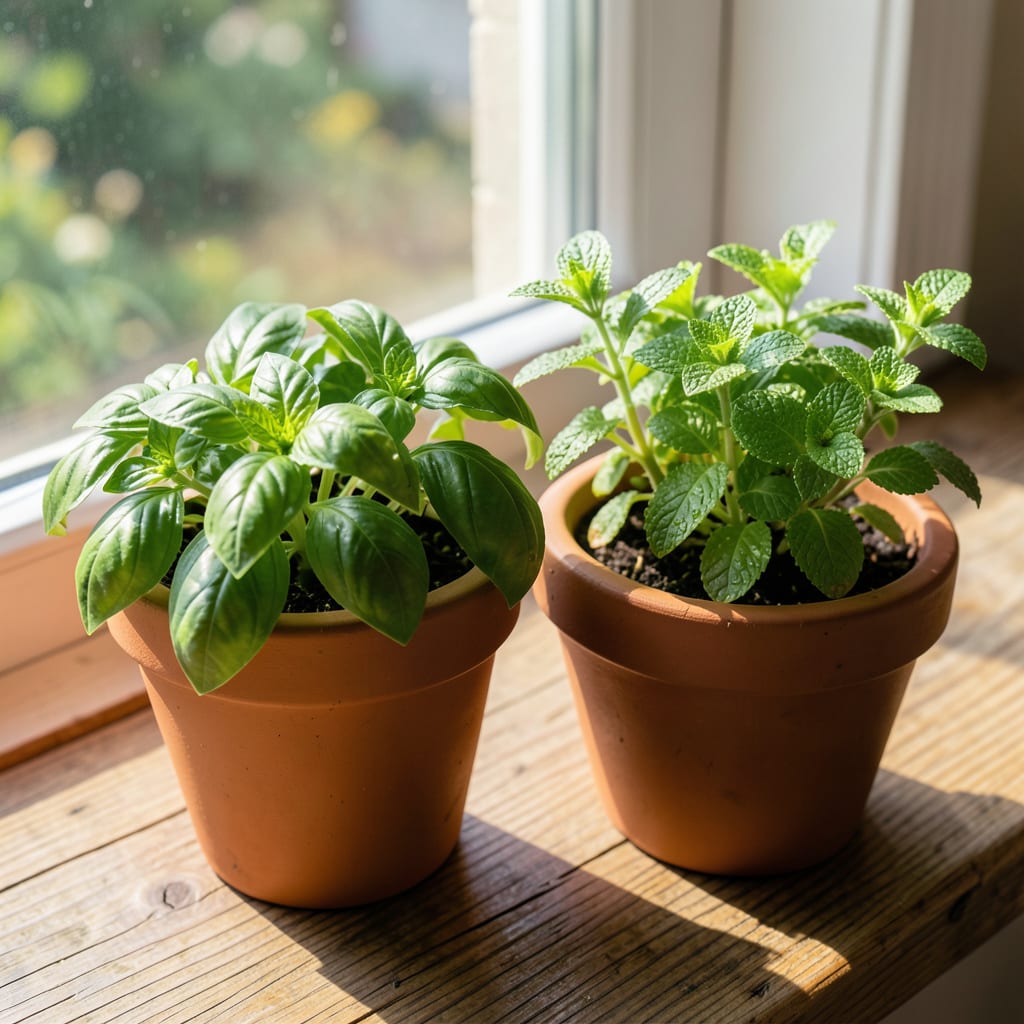
This fragrant pair transforms any garden space. I’ve grown basil and mint together for years, and their complementary scents and growth habits make them a perfect match for containers or garden beds.
With minimal care, you’ll harvest fresh leaves all season—basil thrives in full sun while mint tolerates some shade. Both reward you with bold flavors and a steady supply for teas, garnishes, or pesto.
📚 In This Guide
Here’s the method I rely on to keep both herbs thriving in harmony all season long.
Use separate 12-inch diameter containers for each herb—mint spreads aggressively and will overpower basil if planted together. I prefer unglazed terra cotta for its breathability, which prevents root rot in these moisture-loving plants.
Position the pots in a spot receiving 6-8 hours of full sun daily. A south-facing windowsill works indoors, while a patio with morning sun and afternoon shade prevents leaf scorch in hotter climates.
Fill each container with a well-draining potting mix enriched with 20% perlite to ensure proper aeration. Both herbs prefer soil with a pH between 6.0-7.0, so test and amend if necessary.
Plant basil seedlings or seeds ¼ inch deep, spacing them 6 inches apart if using a larger container. For mint, plant a single 4-inch nursery start per pot to prevent overcrowding. Water both thoroughly after planting until water drains from the bottom.
Keep the soil consistently moist but not soggy—both herbs wilt dramatically when thirsty. I check the top inch of soil daily; if it feels dry to the touch, it’s time to water. Use room-temperature water to avoid shocking the roots.
Water at the base of the plants to prevent fungal issues on the leaves. Basil and mint both benefit from morning watering, which allows foliage to dry before evening and reduces disease risk.
Begin pruning basil once it reaches 6 inches tall—pinch off the top set of leaves just above a leaf node to encourage branching. This prevents early flowering and keeps the plant compact and productive.
For mint, trim back the stems by one-third every 3-4 weeks to maintain shape and prevent legginess. Always use clean, sharp scissors to make precise cuts, and remove any yellowing or damaged leaves immediately.
Start harvesting basil when the plant has 3-4 sets of true leaves. Pick individual leaves or snip entire stems just above a leaf pair. Regular harvesting stimulates new growth and extends the plant’s productivity.
Mint can be harvested once stems reach 4-6 inches long. Cut stems just above a leaf node, and avoid removing more than one-third of the plant at a time. Both herbs respond well to frequent, light harvesting, ensuring a steady supply for culinary use.
These insights will help you avoid common pitfalls while growing this fragrant duo.
Container Selection: Always use separate 12-inch diameter containers as specified in Step 1. Mint’s aggressive growth will choke out basil if they share space. I learned this the hard way after losing two basil plants to overzealous mint.
Sunlight Strategy: The 6-8 hours of full sun daily mentioned in Step 1 is non-negotiable for optimal growth. In hotter climates, position pots to get morning sun and afternoon shade to prevent leaf scorch, as the instructions suggest.
Pruning Precision: When following Step 4, begin pruning basil at exactly 6 inches tall and trim mint back by one-third every 3-4 weeks. This timing is critical for maintaining bushiness and preventing legginess.
Harvesting Technique: In Step 5, the guidance to harvest basil with 3-4 sets of true leaves and mint at 4-6 inches is spot-on. Never remove more than one-third of the plant at once, as this can stress the herbs and reduce future yield.
While possible, it’s not ideal. Mint is invasive and can overpower basil. Use separate containers or plant mint in the ground where it can spread freely.
Keep the soil moist but not soggy. Water basil every 2-3 days and mint every 3-4 days, adjusting based on climate and soil drainage.
For basil, try oregano or thyme. For mint, use parsley or cilantro in a pinch, though flavors will differ slightly.
Overwatering, poor drainage, or nutrient deficiencies are common causes. Check soil moisture and ensure proper drainage to revive your plant.
