
Beautiful Plants For Your Interior
Beautiful Plants For Your Interior
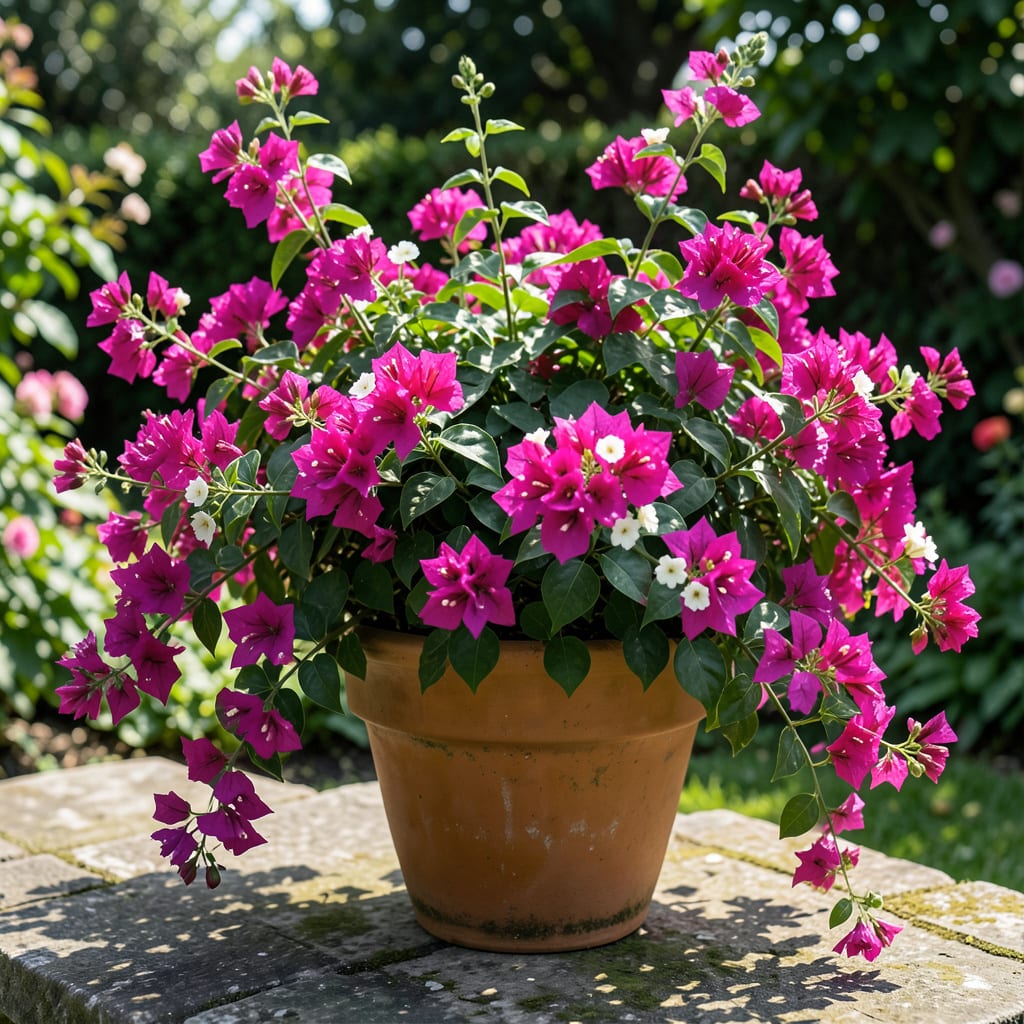
Barbara Karst bougainvillea laughs at drought and heat. I planted mine in full sun with well-draining soil, and it rewarded me with months of vibrant color.
This variety needs minimal water once established and thrives on neglect. Give it 6+ hours of sunlight and watch it explode with blooms all season long.
📚 In This Guide
This method ensures vibrant blooms and resilient growth, even in the toughest summer conditions.
Barbara Karst bougainvillea thrives in full sun—a minimum of 6-8 hours of direct sunlight daily is non-negotiable. Choose a south or west-facing spot where the plant won’t be shaded by structures or taller trees. I’ve learned the hard way that even partial shade drastically reduces flowering.
Ensure the site has well-draining soil, as this variety despises soggy roots. If your soil is heavy clay, amend it with compost or coarse sand to improve drainage. A slight slope can also help prevent water from pooling around the base.
Dig a hole that’s twice as wide and just as deep as the root ball of your bougainvillea. This gives the roots room to spread out without sitting too deep, which can lead to rot. Loosen the soil at the sides of the hole to encourage outward root growth.
If your soil is poor, mix in a handful of slow-release fertilizer or organic matter. Avoid fresh manure—it’s too high in nitrogen and can burn young roots. I’ve found that a light application of bone meal at this stage promotes strong early growth.
Gently remove the bougainvillea from its container and loosen any tightly bound roots. Place it in the hole so the top of the root ball sits 1-2 inches above the surrounding soil. This accounts for settling and ensures the base doesn’t end up buried too deep.
Backfill with the native soil you removed, pressing lightly to eliminate air pockets. Water deeply immediately after planting to help the soil settle around the roots. I always create a small soil berm around the edge of the hole to help direct water toward the roots during the first few weeks.
For the first 2-3 weeks, water your bougainvillea 2-3 times per week, keeping the soil consistently moist but not waterlogged. After that, cut back to once a week—this variety is drought-tolerant once established, and overwatering is a common mistake that leads to poor blooming.
Apply a 2-3 inch layer of mulch around the base (but not touching the stem) to retain moisture and suppress weeds. I use gravel or bark mulch to avoid trapping excess moisture against the trunk, which can cause rot in this heat-loving plant.
Prune lightly after the first flush of blooms to shape the plant and encourage bushier growth. Barbara Karst responds well to pruning, and this helps maintain its vibrant, compact form.
Small details make the difference between struggling plants and a thriving, bloom-covered specimen.
Sunlight Requirement: The 6-8 hours of direct sunlight daily isn’t just a suggestion—it’s essential for vibrant blooming. I’ve seen plants in partial shade produce sparse, lackluster flowers. South or west-facing spots are ideal, and remember that afternoon sun is particularly valuable for this heat-loving variety.
Soil Preparation Secret: When amending heavy clay soil in Step 1, use compost rather than fine sand. Coarse sand can actually create a concrete-like texture when mixed with clay. The compost improves both drainage and nutrient content, giving your bougainvillea the perfect start.
Planting Height Tip: That 1-2 inches above surrounding soil in Step 3 is critical. I learned this after losing several plants to root rot. The slight elevation prevents water from pooling at the base and accounts for natural settling. Press the soil firmly around the root ball to eliminate air pockets that could dry out roots.
Watering Wisdom: During the initial 2-3 weeks, that 2-3 times per week watering schedule needs to be precise. The soil should feel like a wrung-out sponge—moist but not soggy. Overwatering is the most common mistake I see with new plantings, and it’s far more damaging than slight underwatering for this drought-tolerant variety.
Plant in spring or early summer when temperatures are consistently above 60°F. This gives roots time to establish before winter. Avoid planting in frost-prone months.
This drought-tolerant beauty thrives in full sun (6+ hours daily). Less light may reduce blooming, so choose a south-facing spot for vibrant, prolific flowers.
Yes! Use a large, well-draining pot (12–16 inches) with cactus/succulent mix. Containers are great for cold climates—just move indoors when temps drop below 40°F.
Common causes: overwatering, insufficient light, or too much nitrogen. Prune lightly to encourage blooms, and fertilize with a low-nitrogen, high-phosphorus formula in spring.
