
Beautiful Plants For Your Interior
Beautiful Plants For Your Interior
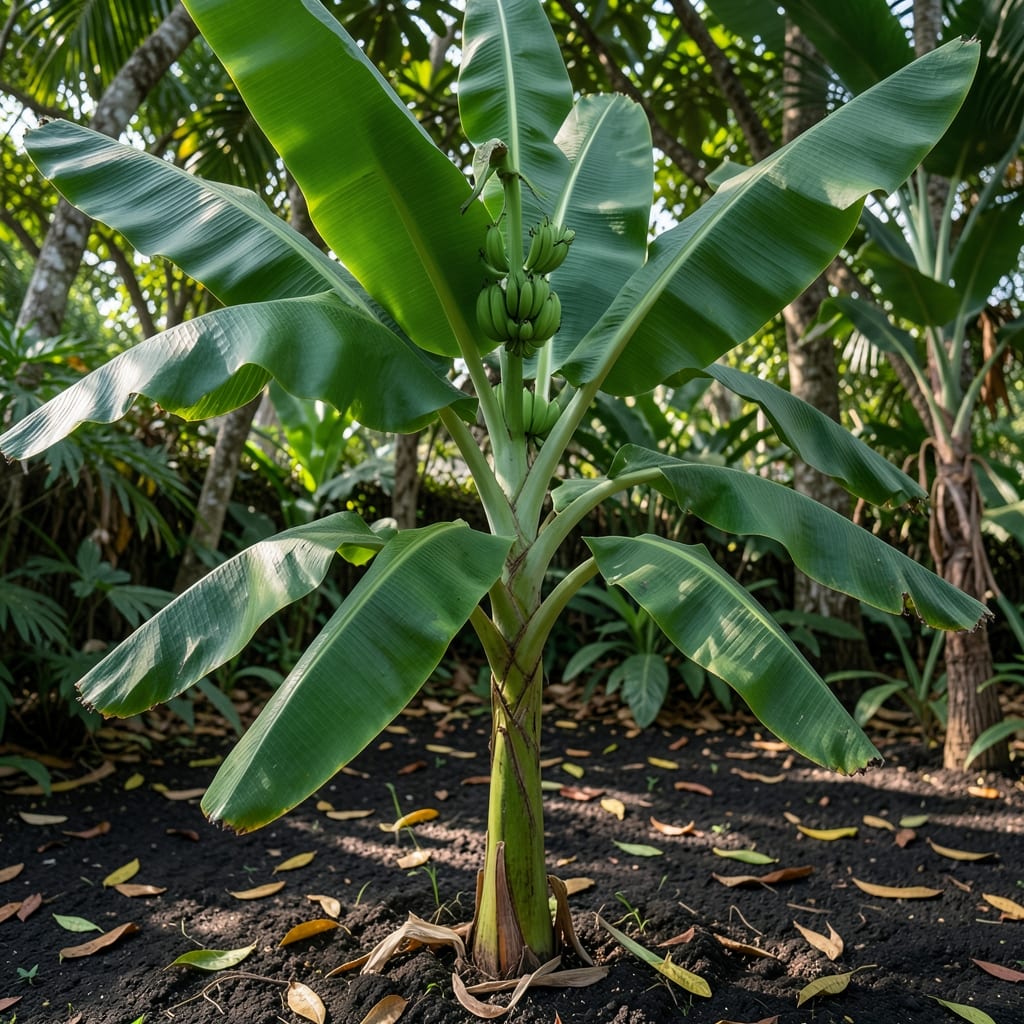
Banana leaf fruit refers to the edible fruit of the banana plant, typically the sweet, starchy produce we call bananas, grown in tropical climates on large, leafy herbaceous plants.
I love how these plants produce fruit in hanging clusters called hands, with each cluster containing 50 to 150 individual bananas. These grow from a flower that emerges from the plant’s heart, and the fruit itself is technically classified as a berry by botanists. 🔥
In tropical regions, they’re not just eaten fresh but also used in cooking, baking, and even as natural wrappers for steaming foods. The leaves themselves are often repurposed in traditional cuisine for their aromatic qualities.
💡 In This Article
Banana plants belong to the Musaceae family, with the edible varieties primarily from the Musa acuminata and Musa balbisiana species. These aren’t trees but giant herbs, with a false stem made of tightly packed leaf bases that can reach 20-25 feet tall. The true stem is a underground corm from which new growth emerges. 🔥
The fruit develops from a large, purple, heart-shaped flower that hangs at the end of the stem. This inflorescence contains both male and female flowers, with the female ones developing into the fruit we eat.
Each cluster, called a “hand,” contains 10-20 bananas, and multiple hands make up a full bunch that can weigh 50-100 pounds. ✨
Botanically, bananas are classified as berries because they develop from a single ovary and contain seeds (though modern cultivated varieties are typically seedless). The fruit’s outer skin protects the starchy, sweet flesh inside, which is 75% water and rich in potassium, vitamin B6, and vitamin C.
The plant’s large leaves, often 6-9 feet long, are also edible and commonly used in cooking. 🌟
What many find surprising is that the banana plant produces fruit only once before dying. However, new shoots called “suckers” emerge from the base, ensuring continuous production. The entire growth cycle from planting to harvest takes about 9-12 months, depending on climate and variety.
The fruit ripens after harvest, with starches converting to sugars as it matures. ⚡
The plant’s rapid growth rate—some varieties can grow 1 foot per week under ideal conditions—makes it one of the fastest-producing fruit crops.
This efficiency, combined with its high yield, has made bananas a staple food in tropical regions for thousands of years, where they’re often cooked green as a starchy vegetable or eaten ripe as a sweet fruit. 💫
Yes, banana leaves are edible and commonly used in many cuisines. They’re often steamed or grilled to wrap foods, adding a subtle aroma. Just ensure they’re fresh and thoroughly cleaned before use.
Most banana plants begin producing fruit in 9-12 months under ideal tropical conditions. The time can vary slightly depending on the variety and growing conditions.
Dwarf varieties like Musa acuminata ‘Dwarf Cavendish’ do well in large containers. They need plenty of sunlight, warmth, and consistent watering to thrive.
Keep them at room temperature for 2-3 days maximum. For longer storage, refrigerate them (the peel will darken but the fruit remains fresh).
This is natural as leaves age, but excessive browning may indicate underwatering or nutrient deficiencies. Regular watering and occasional fertilizing can help maintain their vibrant green color.