
Beautiful Plants For Your Interior
Beautiful Plants For Your Interior
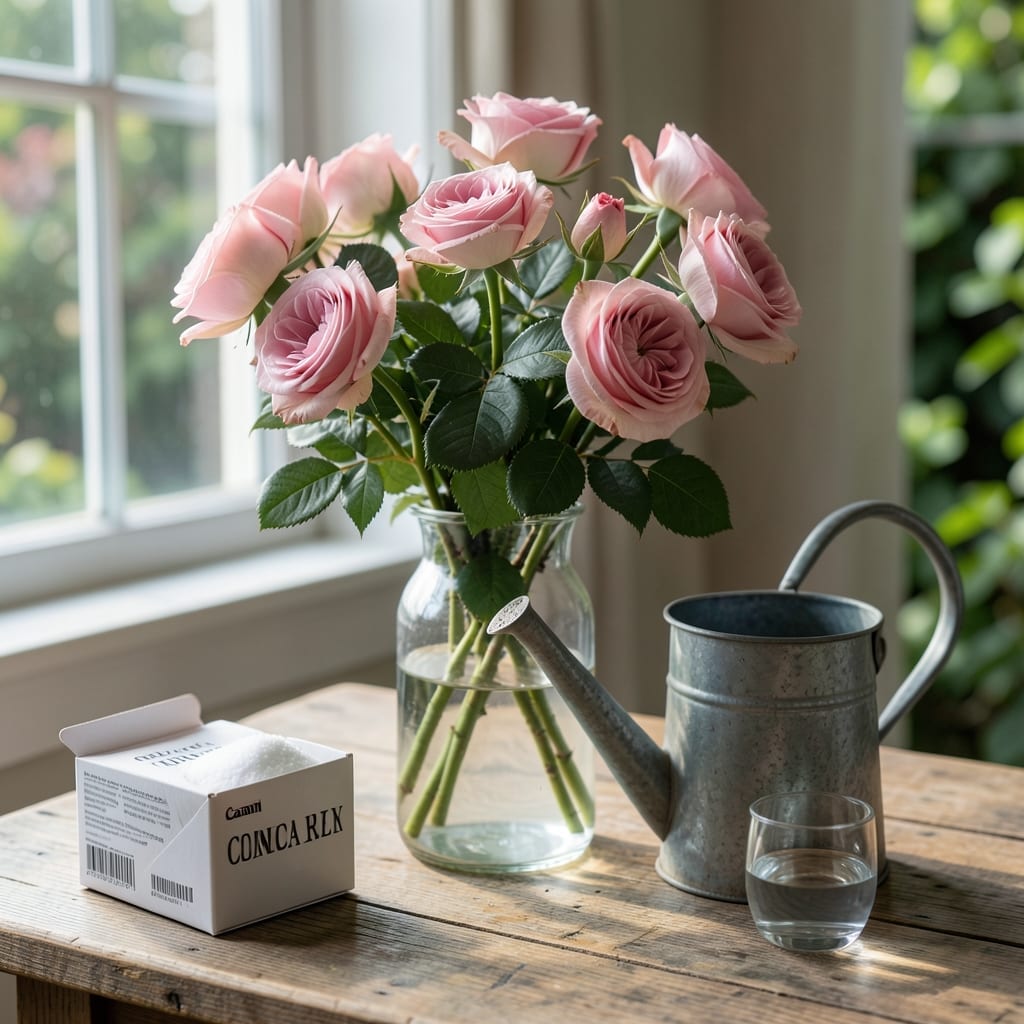
Adding a small amount of baking soda to orchid water can help neutralize acidic conditions and provide trace minerals, but too much may harm roots and disrupt pH balance.
I use this trick to help my orchids thrive when tap water is too acidic for their sensitive roots. 1/4 teaspoon per gallon is my go-to ratio, as it gently buffers pH without overwhelming the plant. Overdoing it can create alkaline conditions that lock out essential nutrients like iron, so I always test my water first. 🔥
💡 In This Article
Baking soda, or sodium bicarbonate, acts as a natural pH buffer in water. When dissolved, it releases bicarbonate ions that neutralize hydrogen ions, gently raising the pH of acidic water. This is particularly useful for orchids, which prefer a slightly acidic to neutral pH range of 5.5-7.0 for optimal nutrient absorption. 🌟
Orchids struggle in highly acidic water because the excess hydrogen ions compete with essential nutrients like calcium and magnesium. Baking soda’s buffering capacity helps create a more stable environment, allowing roots to absorb these minerals more efficiently.
However, orchids are epiphytes—they absorb nutrients through their roots and leaves—so their sensitivity to pH shifts is higher than soil-based plants.
The sodium in baking soda can also provide trace amounts of this mineral, which orchids need in very small quantities. But too much sodium can disrupt the balance of other nutrients, particularly potassium and calcium.
This is why precise dosing is critical—even 1/2 teaspoon per gallon can push sodium levels too high for delicate orchid roots. ✨
What many don’t realize is that baking soda also introduces carbonates, which can react with calcium and magnesium in water to form insoluble compounds. While this might sound harmful, in controlled amounts, it can actually help remove excess hardness from water, making it gentler on orchid roots. Still, this chemical dance requires careful monitoring.
Orchids like Phalaenopsis or Cattleya, which are commonly grown indoors, are especially responsive to these pH adjustments. Their thin, velamen-covered roots are designed to absorb water and nutrients quickly, but they’re also highly sensitive to chemical imbalances.
This is why I always recommend testing water pH before and after adding baking soda to ensure it stays within that 5.5-7.0 sweet spot. 💫
It’s best for orchids and other acid-sensitive plants. Other flowers may have different pH needs, so always check their specific requirements first. Too much alkalinity can harm some species.
Use it no more than once every 2 weeks during growth. For dormant plants, reduce to once a month. Overuse can lead to sodium buildup in the roots.
Excess baking soda can raise pH too high, locking out nutrients like iron. You may see yellowing leaves or white crust on roots. Flush with plain water immediately.
Avoid mixing with other additives until you know how your plant responds. Test combinations on a small scale first to prevent chemical reactions that could harm roots.
Distilled or rainwater is ideal to avoid mineral interactions. If using tap water, test its pH first and adjust the baking soda amount accordingly.