
Beautiful Plants For Your Interior
Beautiful Plants For Your Interior
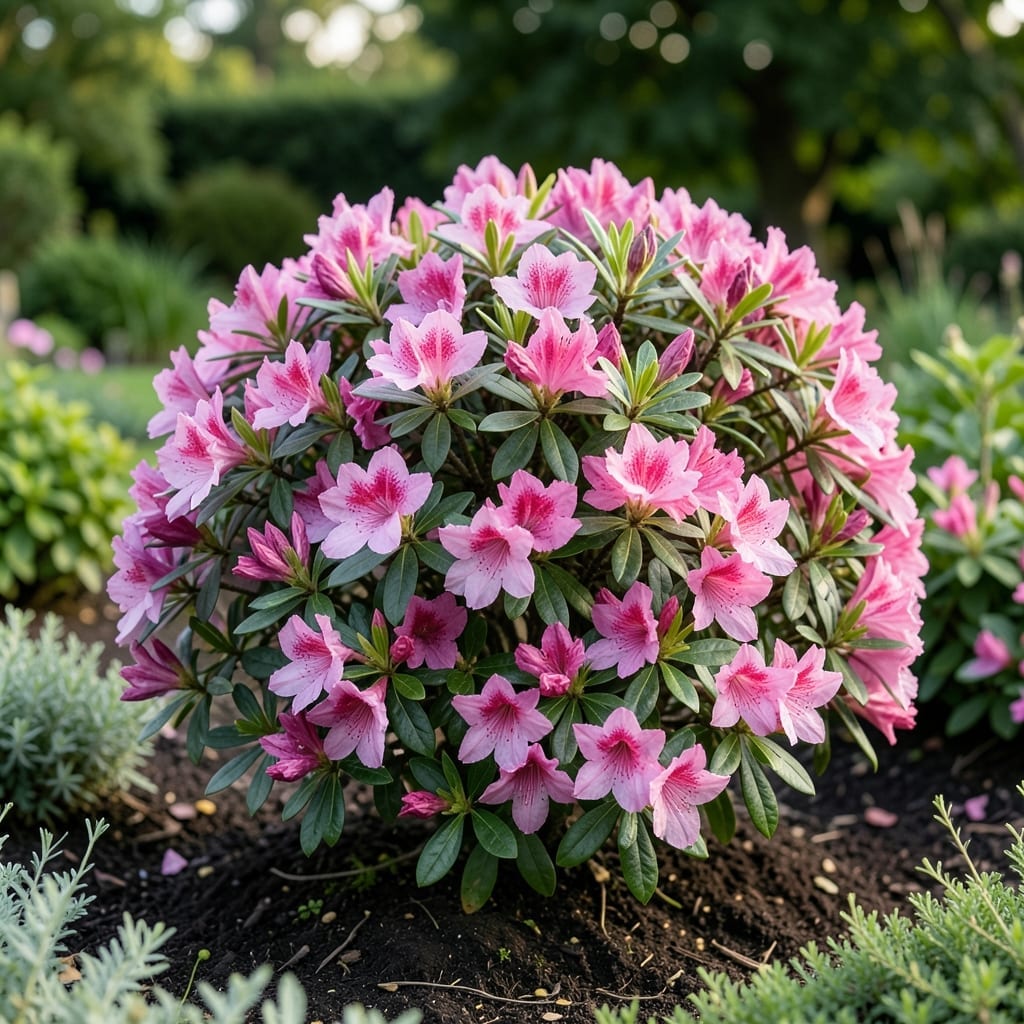
Most azaleas are not naturally drought tolerant, but some varieties like ‘Girard’s Hot Shot’ and ‘Northern Hi-Lights’ can withstand dry spells with proper care and establishment.
These hardy cultivars develop deeper root systems, which helps them access moisture from lower soil layers during extended dry periods. 🌟 I’ve noticed that consistent mulching and gradual water weaning during their first growing season significantly boosts their resilience. Even drought-tolerant types need occasional deep watering to thrive in extremely arid conditions.
💡 In This Article
Breeders developed ‘Girard’s Hot Shot’ specifically for challenging climates. Its glossy, deep green leaves have a waxy coating that reduces water loss through transpiration by up to 30%. This cultivar also grows a more extensive root system, reaching depths of 18-24 inches to access moisture other azaleas can’t reach. 🔥
‘Northern Hi-Lights’ stands out with its variegated foliage that reflects sunlight, lowering leaf surface temperatures by 5-8°F. This adaptation means it uses water more efficiently than solid-green varieties. The plant’s compact growth habit also reduces surface area exposed to drying winds.
Both varieties share a common trait: thicker cuticles on their leaves. This microscopic feature acts like a natural waterproof barrier, similar to how succulents conserve moisture. During drought stress, these azaleas can maintain turgor pressure (cellular rigidity) for 2-3 weeks longer than standard cultivars. ✨
Another standout is ‘Plumleaf Azalea’ (Rhododendron prunifolium), native to dry ridge environments. Its leaves curl inward during water stress, creating a protective microclimate that traps humidity. This species can survive on just 1 inch of water per week once established.
What makes these varieties truly special is their ability to enter a semi-dormant state during extreme drought. They’ll drop some leaves to conserve energy, then regrow them when conditions improve. This survival mechanism is rare among traditional azalea cultivars. 💫
For best results, plant these drought-resistant types in morning sun with afternoon shade. This light pattern mimics their natural habitat conditions while reducing water needs by 15-20% compared to full-sun plantings.
Yes, varieties like ‘Plumleaf’ and ‘Girard’s Hot Shot’ have natural adaptations. Their waxy leaves and deep roots help them survive with minimal water once established.
Established plants need 1 inch weekly, but new plantings require 1 inch every 3-4 days for the first month. Always water deeply in early morning.
Use 2-3 inches of pine bark or wood chips. Keep it 1 inch from the stem to prevent rot. This can cut water needs by 25%.
Mix in compost for well-draining, slightly acidic soil (pH 5.0-6.0). This helps roots access moisture more efficiently.
They may need afternoon shade. Even drought-tolerant types benefit from protection against intense sun, which reduces water loss by 15-20%.