
Beautiful Plants For Your Interior
Beautiful Plants For Your Interior
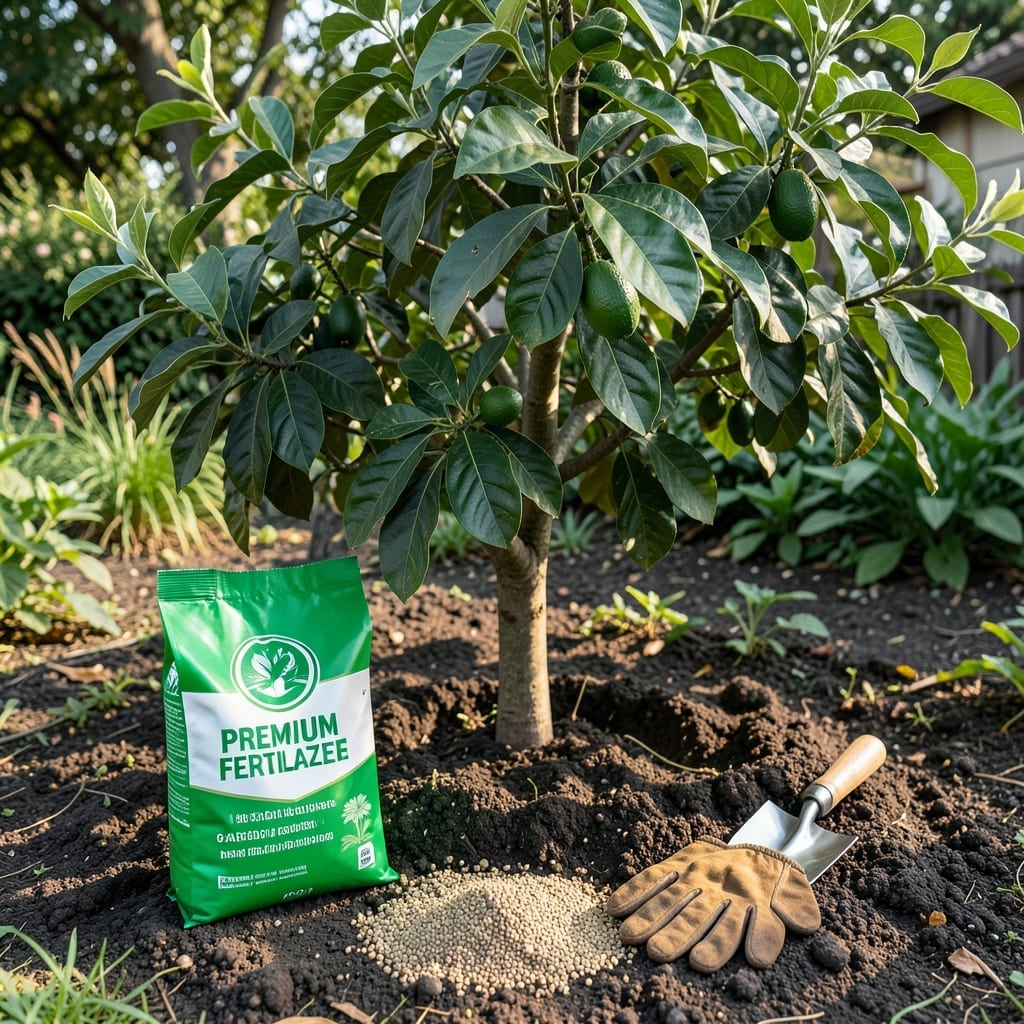
Fertilize avocado trees with balanced nitrogen, phosphorus, and potassium, plus zinc and iron, every 2-3 months during growing season. Use organic mulch and avoid over-fertilizing to prevent salt buildup.
I’ve found that young trees often need more frequent feeding to establish strong root systems, while mature ones thrive with 3-4 applications per year. The key is matching nutrients to growth phases—nitrogen boosts leafy canopies, while potassium supports fruit development. 🌟
Always test soil pH levels first, as avocados prefer slightly acidic conditions for optimal nutrient uptake.
💡 In This Article
Avocado trees are heavy feeders because they produce both foliage and fruit simultaneously. Nitrogen drives leafy growth and vibrant green canopies, while potassium fuels fruit development and disease resistance. Without enough potassium, avocados may produce small, poor-quality fruit despite looking healthy. 🌟
Phosphorus supports root development and energy transfer, but it’s often less needed in mature trees. The real game-changers are micronutrients: zinc prevents leaf yellowing and stunted growth, while iron combats chlorosis (pale leaves) in alkaline soils. These trees extract zinc at 5-10x the rate of other fruit trees. ✨
Soil pH dramatically affects nutrient availability. Avocados thrive in slightly acidic soil (6.0-6.5 pH). Above 7.0 pH, iron and zinc become locked in the soil, causing deficiencies even when present. Test soil every 2-3 years or when leaves show yellowing between veins. 🔥
Deficiency signs appear in specific patterns. Nitrogen shortage shows as uniform pale green leaves. Zinc deficiency creates small, narrow leaves clustered at branch tips. Iron deficiency causes interveinal chlorosis—green veins with yellow tissue—starting on younger leaves first. 💫
Organic matter improves nutrient uptake by 30-40%. Compost or well-rotted manure adds beneficial microbes that convert nutrients into plant-available forms. Mulch maintains soil moisture and temperature, creating ideal conditions for root absorption of these critical elements. ⚡
Early spring is ideal, just as new growth starts. Feed every 6-8 weeks during growing season. Stop by early fall to avoid winter damage to new growth.
Focus on nitrogen for leaves, potassium for fruit, and zinc/iron to prevent deficiencies. Avocados need zinc at 5-10x the rate of other fruit trees.
Pale leaves may indicate nitrogen deficiency. Yellowing between leaf veins suggests iron shortage. Small, narrow leaves often mean zinc deficiency.
Granular lasts longer; liquid works faster. Use granules every 2-3 months and liquids every 4-6 weeks. Both need thorough watering after applying.