
Beautiful Plants For Your Interior
Beautiful Plants For Your Interior
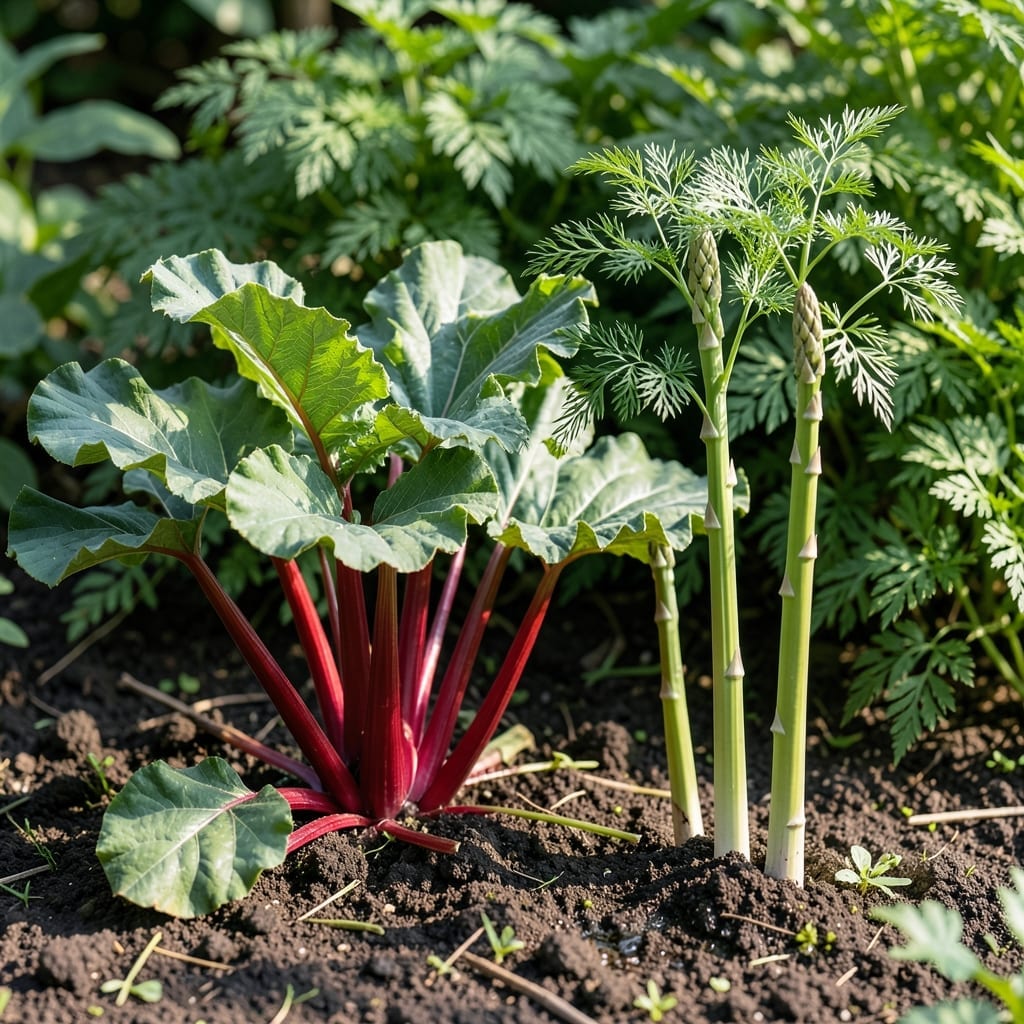
Asparagus and rhubarb can grow together in containers but require careful spacing and soil management since both are heavy feeders with competing root systems.
I’ve found that their root systems demand different depths, with asparagus needing 18-24 inches while rhubarb thrives in 12-18 inches. This means you’ll need a deep, wide container to prevent competition. 🔥
Both plants also prefer slightly acidic soil, but asparagus does best with a pH of 6.0-7.0, while rhubarb favors 5.0-6.0. ✨
💡 In This Article
The competition begins underground, where both plants deploy extensive root networks to absorb nutrients. Asparagus develops deep, fibrous roots that can extend 5-6 feet in ideal conditions, while rhubarb’s thick, fleshy rhizomes spread horizontally. This structural difference creates a battle for nitrogen and phosphorus in confined container spaces. 🔥
Asparagus thrives in soil with a pH of 6.0-7.0, preferring slightly alkaline conditions for optimal nutrient uptake. Rhubarb, however, performs best in more acidic soil, with a pH range of 5.0-6.0. This 1.0 pH difference means you’ll need to carefully amend your container soil to create micro-environments that satisfy both plants.
Both are classified as heavy feeders, requiring soil rich in organic matter. Asparagus particularly benefits from well-composted manure, while rhubarb responds well to annual applications of 5-10-10 fertilizer. The organic matter should constitute at least 30% of your container mix to support their vigorous growth. ✨
Water retention poses another challenge. Asparagus roots need consistent moisture but despise waterlogging, while rhubarb can tolerate slightly wetter conditions. A container with excellent drainage and a mix containing perlite or vermiculite helps balance these needs. The top 6-8 inches of soil should dry slightly between waterings for both plants.
Consider that asparagus is a perennial that may produce for 15-20 years, while rhubarb typically peaks at 8-10 years. This longevity difference means your container must accommodate asparagus’s increasing nutrient demands over time, potentially starving the rhubarb as the asparagus matures. 💫
Not ideally. Asparagus lives 15-20 years while rhubarb peaks at 8-10 years. The asparagus will eventually dominate nutrients and space.
A 36-inch-wide by 24-inch-deep container is the smallest that might work. Separate them to opposite sides to reduce root competition.
Asparagus likes soil to dry slightly between waterings, while rhubarb tolerates consistent moisture. Aim for 2-3 deep waterings weekly.
Yes! Shallow-rooted plants like strawberries or lettuce compete less for nutrients. They pair better with either asparagus or rhubarb alone.