
Beautiful Plants For Your Interior
Beautiful Plants For Your Interior
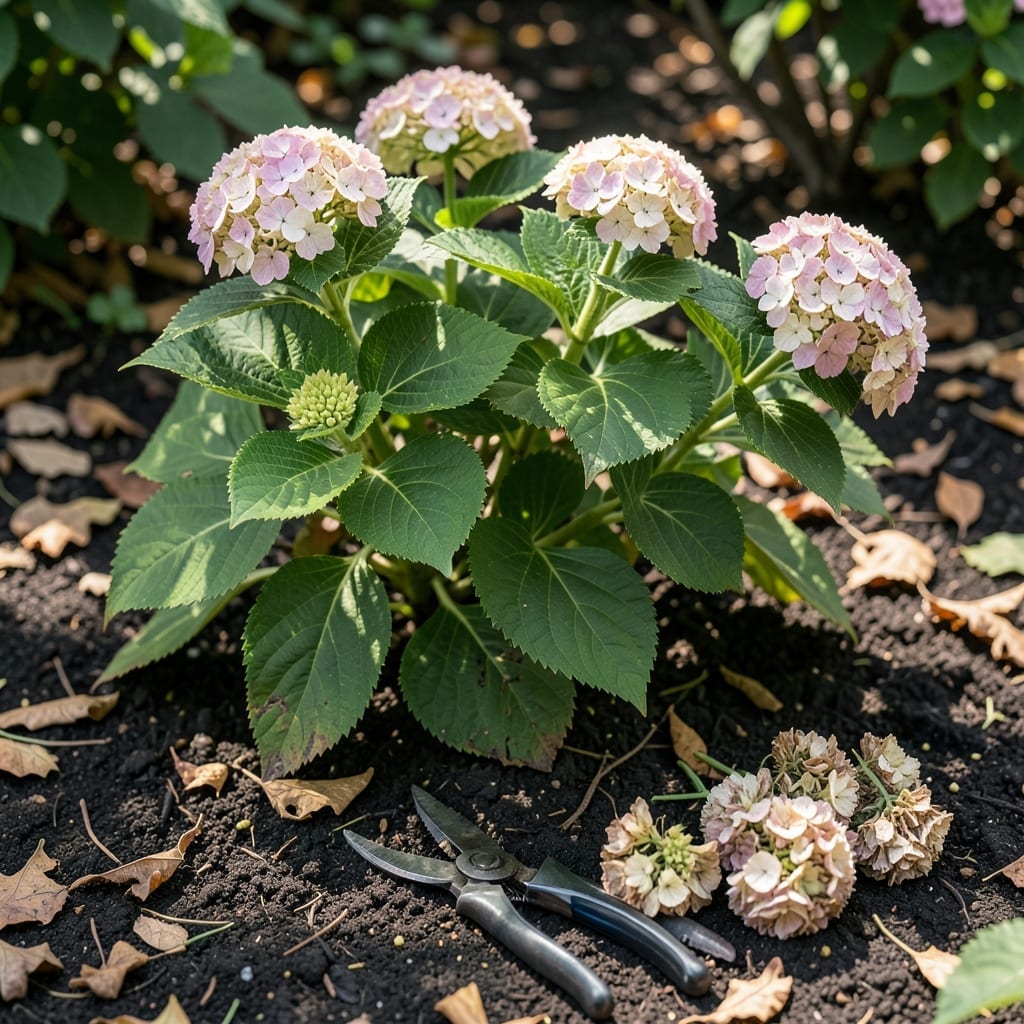
Yes, deadheading hydrangeas encourages new blooms and keeps plants tidy. Remove spent flowers just above a set of healthy leaves or buds, but timing varies by hydrangea type.
I’ve seen firsthand how this simple practice redirects the plant’s energy from seed production to new growth. For bigleaf and mophead varieties, it can trigger a second flush of colorful blooms in the same season. The key is knowing your hydrangea type, as panicle and oakleaf varieties often bloom on new wood and have different needs. ✨
💡 In This Article
Deadheading works by interrupting the plant’s natural seed production cycle. When flowers fade, hydrangeas begin diverting energy toward creating seeds. Removing spent blooms signals the plant to redirect that energy into new growth and potential additional flowers instead. 🌟
At the hormonal level, this process reduces auxin concentrations in the old flower stems. Auxin inhibits new growth, so cutting back spent blooms allows cytokines and gibberellins—growth-promoting hormones—to dominate. Bigleaf hydrangeas respond particularly well, often producing a second wave of blooms within 6-8 weeks of proper deadheading.
Panicle hydrangeas like Hydrangea paniculata benefit differently. Since they bloom on new wood, deadheading encourages larger, more vibrant flower heads the following year. The energy savings from skipping seed production can result in blooms up to 50% bigger in some varieties. Oakleaf types also see improved vigor and more consistent flowering.
The timing of this hormonal shift matters. For old-wood bloomers like mopheads, deadheading immediately after flowering gives the plant maximum time to develop new buds. Waiting too long risks cutting off next year’s potential blooms. The window is typically 2-3 weeks after the first flowers fade.
You’ll notice the difference in plant appearance too. Without deadheading, hydrangeas can look leggy and disheveled as they put energy into seed pods rather than foliage. Regular removal of spent blooms maintains a compact, bushy shape that’s more aesthetically pleasing in garden designs. ✨
Skipping this step means the plant wastes energy on seed production instead of new blooms. Your hydrangea may look leggy and produce fewer, smaller flowers next season.
For old-wood varieties like mopheads, do it right after flowering in early summer. Panicle types can be deadheaded throughout summer until early fall.
Avoid late fall deadheading for old-wood bloomers. This could remove next year’s flower buds. New-wood types like panicles are safer for fall trimming.
Flower buds are round and plump, while leaf buds are flatter and smaller. When unsure, wait to prune—cutting the wrong bud means no flowers.