
Beautiful Plants For Your Interior
Beautiful Plants For Your Interior
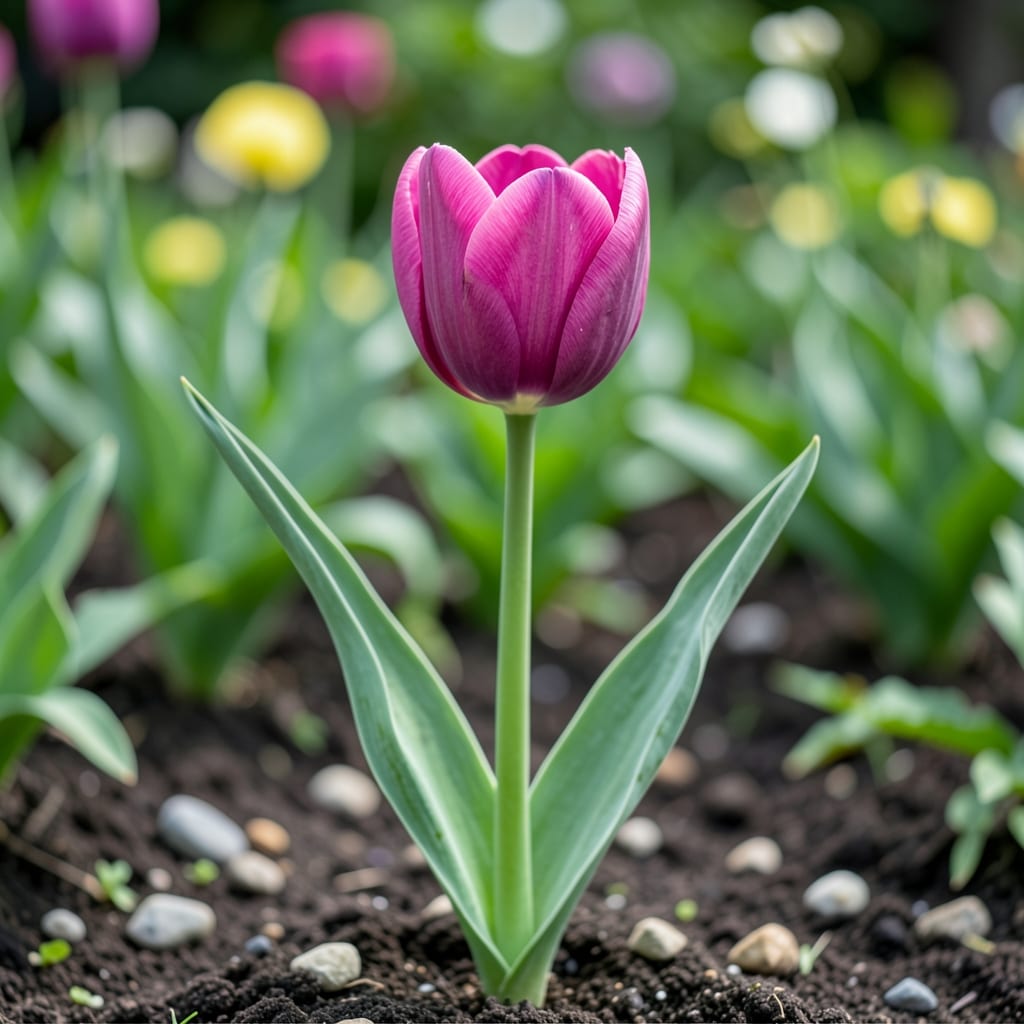
Tulips are technically perennial plants but often behave as annuals in many climates, as their bulbs may not reliably rebloom without ideal growing conditions.
I’ve seen firsthand how tulips can come back for 3-5 years in zones with cold winters and well-drained soil. 🌟 The key is their need for a 12-14 week chilling period at 40-45°F to trigger spring blooming, which many warmer regions simply can’t provide.
Without this cold dormancy, the bulbs exhaust their energy and fail to regenerate. That’s why gardeners in mild climates often treat them as disposable annuals and replant each fall.
💡 In This Article
Tulip bulbs contain all the energy for next year’s growth in their fleshy scales. After blooming, they need to photosynthesize for 6-8 weeks to replenish these reserves. Without this period, the bulb lacks the energy to sprout again, effectively behaving as an annual. 🌟
The critical factor is temperature. Tulips require a 12-16 week chilling period at 40-45°F to break dormancy. This triggers biochemical changes that prepare the bulb for spring growth. In USDA zones 3-7, winter provides this naturally. In warmer zones, bulbs may not get enough chill, causing them to fail the next year.
Soil conditions also play a crucial role. Tulips thrive in well-draining soil with a pH between 6.0-7.0. Waterlogged soil causes bulbs to rot, while overly dry conditions prevent proper nutrient uptake. The ideal is moist but not soggy soil during their active growth phases. ✨
Even with perfect conditions, some tulip varieties are simply less reliable perennials. Darwin Hybrids and Fosteriana tulips tend to naturalize better than Parrot or Double Late types. This genetic variation means that even in the same garden, some tulips may return yearly while others disappear after one season.
Another key factor is bulb depth. Planting too shallow exposes bulbs to temperature fluctuations, while planting too deep (8+ inches) may prevent proper chilling. The sweet spot is 6-8 inches deep, where bulbs stay consistently cool but not frozen solid during winter.
What many don’t realize is that tulips are originally from Central Asia’s mountainous regions. These native conditions—cold winters, well-draining soils, and dry summers—are what modern tulips still crave. Without these conditions, they often revert to annual behavior. 💫
They need a 12-16 week cold period at 40-45°F to rebloom. Without this, bulbs can’t regenerate properly. In warm climates, they often fail to return the next year.
Yes! Dig up bulbs after foliage dies, then chill them in a fridge for 12-14 weeks before replanting. This mimics their required winter dormancy period.
Darwin Hybrids and Fosteriana types naturalize better than others. Parrot and Double Late varieties are less likely to come back each year.
The bulb won’t store enough energy for next year. Always leave foliage until it yellows naturally, which takes about 6-8 weeks after blooming.