
Beautiful Plants For Your Interior
Beautiful Plants For Your Interior
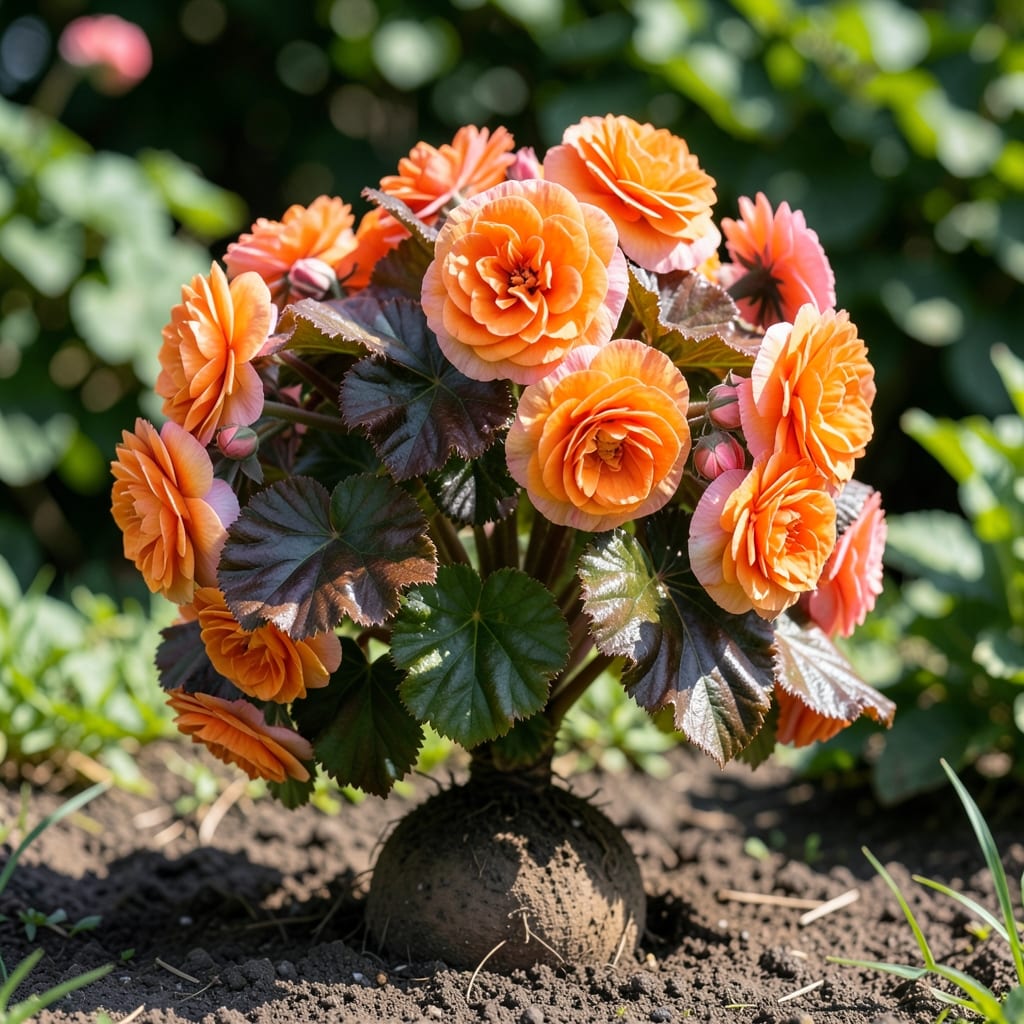
Tuberous begonias are tender perennials in warm climates but typically grown as annuals in colder regions where tubers must be dug up and stored indoors over winter.
I’ve found these plants thrive as true perennials in USDA zones 9-11, where frost never threatens their tubers. Their natural dormancy cycle kicks in during cooler months, allowing them to regrow each spring. 🌟 In my experience, gardeners in colder zones can still enjoy them yearly by carefully overwintering the tubers in a cool, dry place to protect them from freezing temperatures.
💡 In This Article
The perennial nature of tuberous begonias hinges on their tuber’s ability to survive winter. In USDA zones 9-11, where temperatures rarely dip below 20°F, these tubers remain dormant underground and naturally regrow each spring. This dormancy is a survival mechanism, allowing the plant to conserve energy during cooler months.
The tubers store nutrients that fuel new growth when conditions improve. 🌟
In colder climates (zones 8 and below), the tubers cannot endure freezing temperatures. Even a light frost at 32°F can damage or kill them. This is why gardeners in these regions treat them as annuals—unless they intervene.
The tuber’s sensitivity to cold means it requires protection to survive winter, unlike hardy perennials that can withstand subfreezing temperatures without issue.
What triggers this dormancy? As daylight shortens and temperatures drop below 50°F, the plant begins to die back. The foliage yellows and withers, signaling the tuber to enter a resting phase. This process is essential for the plant’s long-term survival, as it prevents the tuber from exhausting its energy reserves during unfavorable conditions. 💫
The tuber itself is a storage organ, much like a potato. It swells with starches and nutrients during the growing season, which the plant draws upon during dormancy and early spring growth. In warm climates, this cycle repeats naturally.
In colder areas, gardeners must replicate this cycle by digging up tubers and storing them in a cool (40-50°F), dry environment until spring.
This climate dependency explains why tuberous begonias are often labeled as “tender perennials.” They possess the biological capacity for perennial growth, but only if environmental conditions—primarily temperature—remain within their tolerance range. Without this, their perennial nature cannot express itself. ✨
Only in USDA zones 9-11 where frost is rare. In colder areas, tubers will die in freezing temps unless dug up and stored indoors.
After the first light frost or when foliage yellows. Let them cure in a dry spot for 1-2 weeks before storing.
Keep tubers in a cool (40-50°F), dark, and dry place surrounded by peat moss or vermiculite. Never use plastic bags.
No, mulch won’t protect them from freezing. Even 32°F can kill tubers, so digging them up is the only reliable method in cold climates.