
Beautiful Plants For Your Interior
Beautiful Plants For Your Interior
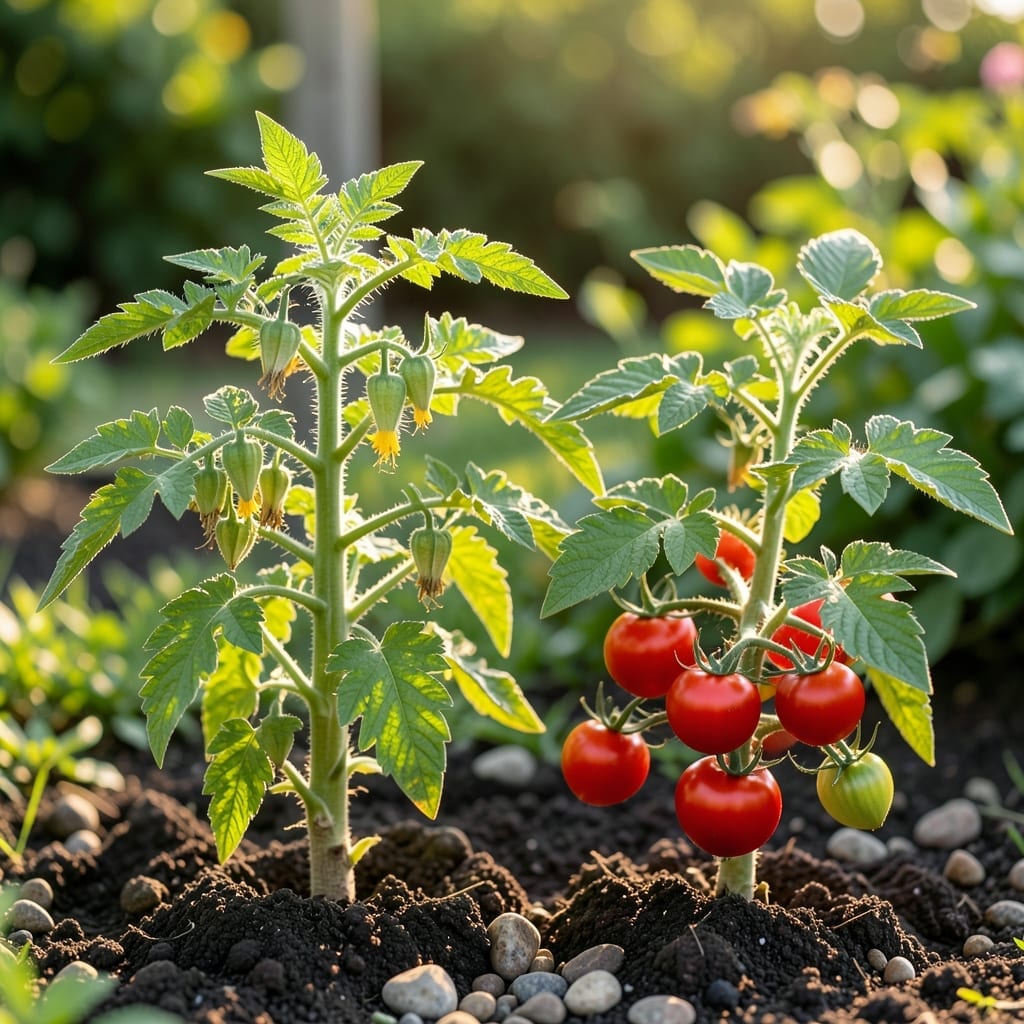
No, tomatillos are not tomatoes. They are both nightshades but belong to different species—tomatillos are Physalis philadelphica, while tomatoes are Solanum lycopersicum.
While they share the nightshade family, these plants have distinct characteristics that set them apart. Tomatillos grow inside a papery husk and have a tart, citrusy flavor, whereas tomatoes are typically sweet and juicy. 🌟 I’ve found that tomatillos add a unique zing to salsas and stews, while tomatoes bring a mellow richness to dishes. Their appearances also differ—tomatillos are usually green or purple, while tomatoes come in a spectrum of reds, yellows, and oranges.
💡 In This Article
Tomatillos belong to the Physalis genus, while tomatoes are part of Solanum. This genetic split happened millions of years ago, creating distinct evolutionary paths. Tomatillos developed their signature papery husk as a protective mechanism against pests, while tomatoes evolved thicker skins to resist environmental stress. 🔥
Their physical structures differ significantly. Tomatillos grow enclosed in a calyx that expands into a lantern-like husk, while tomatoes develop on a stem without this protective covering. The husk isn’t just decorative—it shields the fruit from insects and prevents moisture loss in their native arid climates.
This adaptation gives tomatillos a longer natural shelf life than tomatoes.
The flavor compounds tell another story. Tomatillos contain higher concentrations of citric and malic acids, giving them that signature tartness. In comparison, tomatoes have more fructose and glucose, creating their characteristic sweetness. This chemical difference explains why tomatillos pair so well with chili peppers in salsas, while tomatoes shine in slower-cooked sauces. ✨
Chromosome counts also separate them. Tomatillos are diploid with 24 chromosomes, while cultivated tomatoes are diploid with 24 chromosomes but have undergone different genetic arrangements. This subtle but crucial difference affects how they hybridize—tomatillos can cross with other Physalis species but not with tomatoes.
Growth habits reveal more distinctions. Tomatillo plants tend to be more sprawling, with branches that can reach 3-4 feet in length, while tomato plants grow more upright. The leaf structures also differ—tomatillo leaves are often more serrated and slightly fuzzy compared to the smoother, more uniform tomato leaves.
What most gardeners notice first is the fruiting pattern. Tomatillos often produce fruit in clusters that hang like lanterns, while tomatoes grow in trusses along the stem. This growth pattern affects harvest timing—tomatillos ripen more uniformly in their protective husks, while tomatoes may ripen at different rates on the same plant. 💫
The husk acts as a natural shield, protecting the fruit from pests and preventing moisture loss. This adaptation helps tomatillos thrive in drier climates.
Yes, but expect a tangier result. Tomatillos’ higher acidity works well in salsas and stews, while tomatoes add sweetness to sauces. Adjust seasoning to balance flavors.
They require 3 feet of space between plants and prefer well-draining soil. Unlike tomatoes, tomatillos often need two plants for proper pollination.
Look for a brown, dry husk with a firm, bright green fruit inside. Unlike tomatoes, they ripen uniformly and are ready to harvest all at once.