
Beautiful Plants For Your Interior
Beautiful Plants For Your Interior
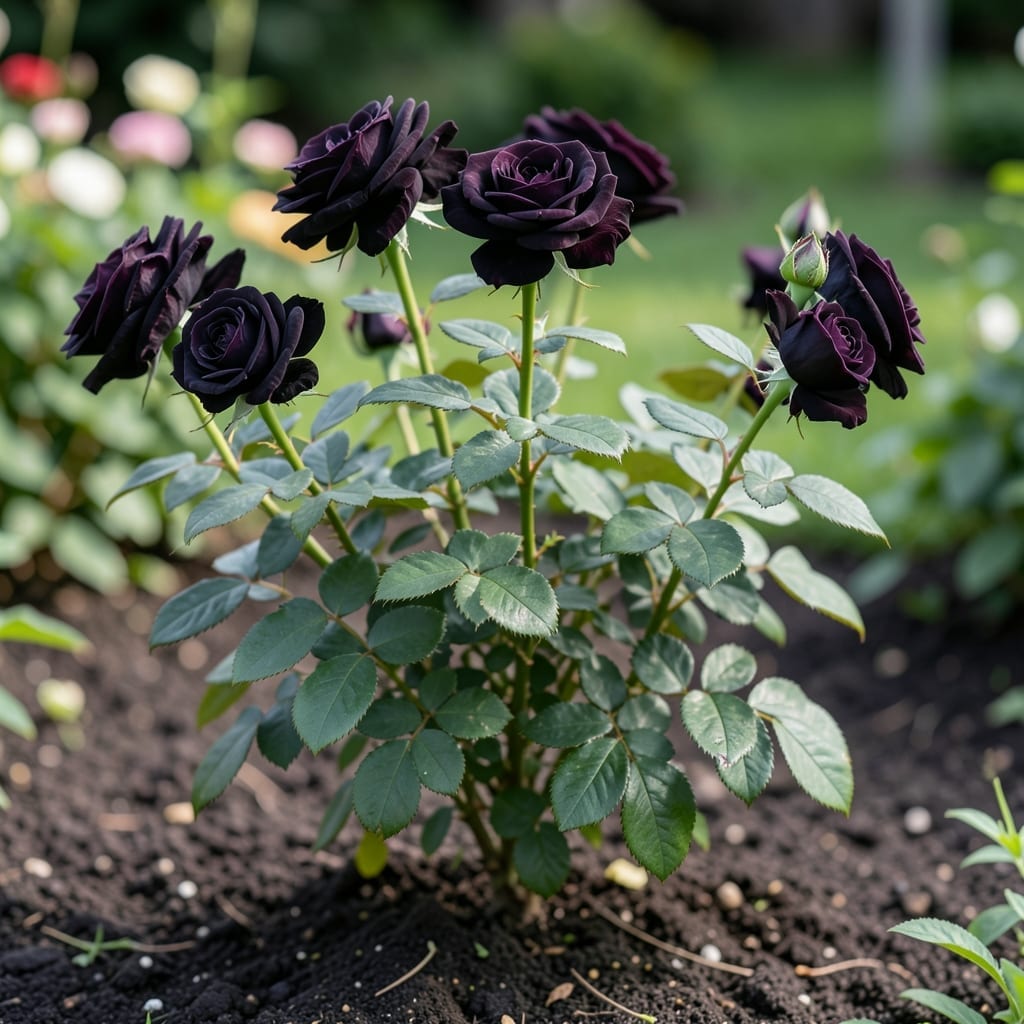
True black roses don’t exist in nature. The darkest varieties are deep purple or maroon, like ‘Black Baccara,’ which appears almost black due to high anthocyanin pigment concentration.
I’ve always been fascinated by how these near-black blooms achieve their dramatic look. It’s all thanks to anthocyanins, the same pigments that give blueberries their deep hue. Breeders have selectively cultivated varieties where these compounds are so concentrated that the petals absorb most light, creating that signature dark appearance. 🌟
Gardeners often choose ‘Black Baccara’ or ‘Queen of Night’ for their striking visual impact, though they require the same care as other roses—plenty of sunlight and well-draining soil.
💡 In This Article
The illusion of black roses stems from extremely high concentrations of anthocyanins, the same pigments that create blue and purple hues in other flowers. These water-soluble compounds absorb light differently based on their chemical structure.
In ‘Black Baccara’ roses, anthocyanins reach up to 500 mg per 100g of petal tissue, far exceeding typical red roses which contain about 20-50 mg. 🌟
What’s fascinating is how pH levels affect the final color. Anthocyanins appear red in acidic environments (pH 3-4) but shift toward deep purple and near-black as the pH increases to 5-6. Breeders manipulate this by selecting rose varieties with naturally higher petal pH, creating the perfect conditions for maximum pigment absorption of light.
The result is a velvety bloom that absorbs nearly all visible light wavelengths.
Genetic factors play a crucial role too. The R2R3-MYB transcription factors in roses regulate anthocyanin production. In near-black varieties, these genes are hyper-expressed, particularly in the outer petal layers where light hits first. This creates a gradient effect, with the outermost petals appearing darker than the inner ones.
The depth of color also depends on the rose’s exposure to sunlight during growth.
Breeders achieve these near-black hues through careful cross-pollination of deep purple and maroon roses. The process takes 7-10 years of selective breeding to stabilize the desired color traits. Environmental factors like temperature and soil composition can also influence the final shade, with cooler growing conditions often producing the darkest blooms. ✨
Interestingly, the darkest roses often have a slightly different texture too. The high pigment concentration makes the petals thicker and more velvety to the touch. This physical change helps the flowers absorb even more light, enhancing the black appearance.
It’s a beautiful example of how plant biology and optics work together to create nature’s most dramatic floral displays. 💫
They appear black due to extremely high concentrations of anthocyanins, pigments that absorb most light. Varieties like ‘Black Baccara’ have up to 500 mg per 100g of petal tissue, creating a deep, velvety look that absorbs nearly all visible light wavelengths.
Varieties like ‘Queen of Night’ thrive in well-draining soil with a pH of 6.0-6.5. They need full sun for 6-8 hours daily and regular watering. Source plants from specialty nurseries for the best results.
Breeders typically spend 7-10 years selectively cross-pollinating deep purple and maroon roses to achieve stable near-black hues. Environmental factors like cooler temperatures can also enhance the dark coloration.
Yes, they can be more susceptible to issues like powdery mildew. Ensure good air circulation, avoid overhead watering, and prune in early spring to keep them healthy. Proper care helps maintain their striking appearance.