
Beautiful Plants For Your Interior
Beautiful Plants For Your Interior
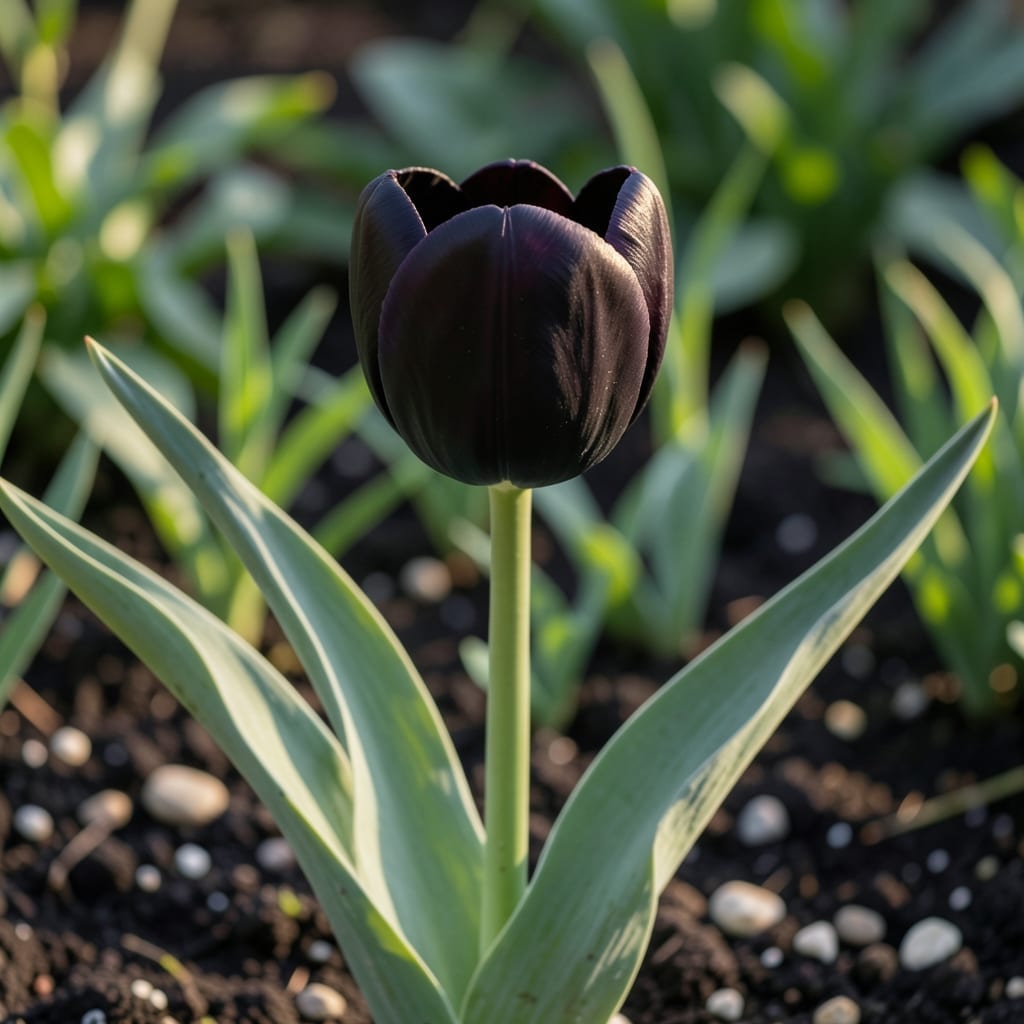
Yes, black tulips exist as deep purple or maroon varieties that appear nearly black. The most famous is ‘Queen of Night,’ a striking heirloom cultivar with velvety, dark blooms.
These dark-hued blooms owe their appearance to high concentrations of anthocyanins, the same pigments found in blueberries and eggplants. I’ve grown ‘Queen of Night’ in my garden, and the almost midnight-black petals create a dramatic contrast against lighter flowers. 🌟
Breeders have spent centuries perfecting these varieties, though true black remains elusive in nature. The deep color intensifies in cooler temperatures, making early spring plantings ideal.
💡 In This Article
The near-black hue comes from extremely high concentrations of anthocyanins, water-soluble pigments that reflect blue and red light while absorbing green. These compounds, also found in blackberries and purple cabbage, intensify in cooler temperatures, which is why early spring blooms appear darkest.
What looks black to our eyes is actually a deep maroon or purple so saturated it absorbs nearly all visible light. The ‘Queen of Night’ cultivar, for example, contains anthocyanin levels 3-4 times higher than typical red tulips.
This saturation tricks our perception into seeing black, similar to how navy blue appears black in dim light. ✨
True black in nature is rare because it requires the absence of all light reflection. Even the darkest tulips reflect some light in the red or blue spectrum. Breeders have spent centuries selectively cultivating varieties with maximum pigment concentration, yet that perfect black remains just out of reach.
Environmental factors play a role too. Cooler growing conditions (50-60°F at night) enhance anthocyanin production, while warmer temperatures dilute the color. This is why tulips planted in partial shade often appear darker than those in full sun. 🌟
The velvety texture of dark tulips also contributes to their appearance. The matte petal surface scatters less light than glossy varieties, creating a deeper visual effect. This texture, combined with the pigment saturation, produces that coveted near-black look gardeners adore.
High concentrations of anthocyanins create the deep maroon or purple hues that appear black. Cooler temperatures enhance this effect, making early spring blooms look darkest.
‘Queen of Night’ is the most famous heirloom cultivar, prized for its velvety, near-black petals. It’s been a garden favorite for over a century.
Yes, but they need pre-chilled bulbs. Plant in partial shade and ensure 50-60°F nighttime temperatures for best color development.
Plant in fall, ideally between September and November. This allows roots to establish before winter dormancy.
True black requires absorbing all light, which is biologically impossible. Even the darkest tulips reflect some light in the red or blue spectrum.