
Beautiful Plants For Your Interior
Beautiful Plants For Your Interior
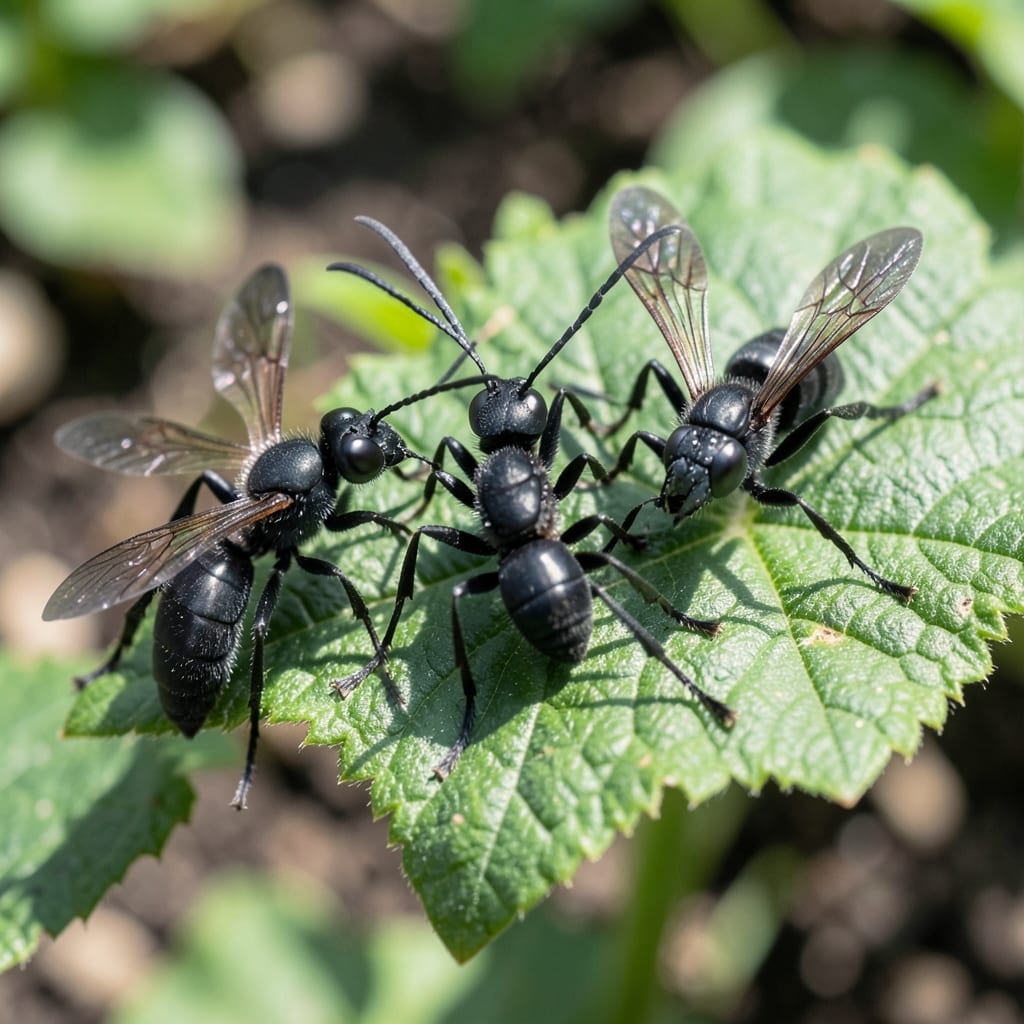
Yes, several hornet species are black, including the European hornet and bald-faced hornet, which have distinctive black and white markings. True all-black hornets are rare but exist in some tropical regions.
I’ve noticed that the bold black-and-white patterns on species like the bald-faced hornet often get mistaken for pure black at first glance. 🔥 In reality, their striking contrast helps with identification in the wild. Meanwhile, solid black variants usually thrive in dense, humid environments where darker pigmentation provides better camouflage.
💡 In This Article
The coloration of hornets stems from melanin and structural coloration in their exoskeletons. European hornets display deep brown-black bodies with yellow bands, while bald-faced hornets showcase a stark black-and-white pattern. These patterns aren’t just aesthetic—they serve as warning signals to predators about their potent venom and aggressive defense mechanisms. 🔥
True all-black hornets, like the Vespa orientalis found in parts of Asia, have evolved darker pigmentation to blend into shadowy forest canopies. Their exoskeletons absorb more light, reducing visibility to both prey and predators. This adaptation is particularly common in tropical regions where dense foliage creates low-light environments. ✨
Size also varies significantly among black hornet species. The European hornet measures 1-1.4 inches long, while tropical black hornets can reach up to 2 inches. The bald-faced hornet, despite its name, is actually a type of wasp and tends to be slightly smaller at 0.75-1 inch in length.
Their wingspans typically range from 1.5 to 2.5 inches, depending on the species. 💫
What’s fascinating is how these color patterns change with age and season. Younger hornets often appear darker, with their distinctive markings becoming more pronounced as they mature. In colder climates, some species develop thicker, darker exoskeletons to absorb more heat from sunlight—a clever survival adaptation. ⚡
For identification, focus on the thorax pattern. European hornets have a distinct brown-black thorax with yellow markings, while bald-faced hornets display a solid black thorax with white facial markings. Tropical black hornets often lack any contrasting colors, making their identification challenging without close observation.
Tropical species like Vespa orientalis have evolved darker exoskeletons for camouflage in dense forests. Their melanin-rich bodies absorb light, making them nearly invisible in shadowy environments. This adaptation helps them avoid predators and ambush prey.
They have a striking black-and-white pattern, not solid black. Their thorax is jet black while their face and abdomen show white markings. This contrast serves as a warning to potential threats about their powerful sting.
Look for their deep brown-black bodies with yellow bands on the abdomen. Their thorax has distinct yellow markings, unlike the solid black thorax of bald-faced hornets. Size also helps – they measure 1-1.4 inches long.
Mid-morning to early afternoon is ideal when they’re actively foraging. Avoid dusk and dawn when they’re more defensive. Always maintain a distance of at least 10-15 feet and avoid sudden movements.