
Beautiful Plants For Your Interior
Beautiful Plants For Your Interior
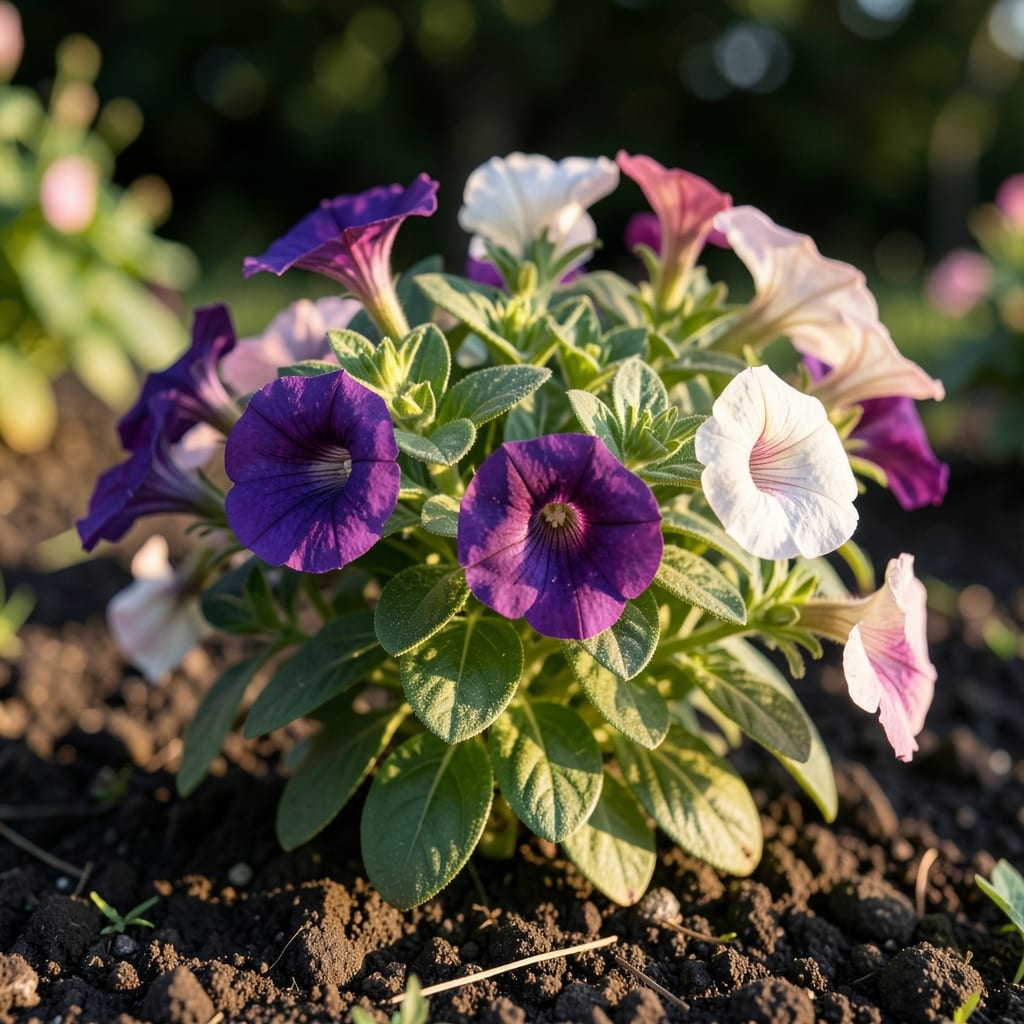
Petunias are typically grown as annuals, but they can be perennials in warm climates where frost doesn’t kill them. Most gardeners treat them as seasonal plants.
I’ve found that these vibrant flowers thrive as perennials in zones 10-11, where winter temperatures stay above 40°F. In cooler areas, their cold sensitivity means they won’t survive frost, so they’re replanted each spring. What’s fascinating is their ability to rebound with proper overwintering care, like bringing them indoors or using mulch protection. ✨
💡 In This Article
The key factor is temperature tolerance. Petunias are native to South America, where they evolved in warm, frost-free environments. Their cellular structure can’t withstand freezing—when temperatures drop below 32°F, ice crystals form within the plant tissues, rupturing cell walls.
This is why they die back in winter across most of the US, behaving as annuals in zones 1-9. 🔥
In their native habitat and similar climates (USDA zones 10-11), petunias thrive year-round. Places like southern Florida, coastal California, and Hawaii provide the consistent warmth they need. Here, established petunia plants can grow for 2-3 years or more, developing woody stems and producing flowers continuously.
The same plant that dies in Chicago’s winter might live for years in Miami’s subtropical climate.
What most gardeners don’t realize is that petunias have a dormant period. Even in warm climates, they may slow growth during cooler months (below 50°F). This isn’t death—it’s survival mode. The plant conserves energy, reducing flower production until temperatures rise again. This adaptation explains why they can bounce back so vigorously when warmth returns. ✨
Microclimates make a difference too. A south-facing wall in zone 8 might create a pocket warm enough for petunias to survive winter. Urban heat islands can extend their growing season by 2-4 weeks. Conversely, high-altitude gardens in zone 10 might experience frost that kills petunias, while lower elevations stay frost-free.
It’s all about the specific conditions, not just the zone number.
The variety matters as well. While most petunias share similar cold sensitivity, some newer hybrids show slightly better cold tolerance. Wave petunias and Supertunias often perform better in marginal climates due to their vigorous growth habit. Yet even these will succumb to hard freezes without protection.
The genetic blueprint remains: petunias are tropical plants at heart. 🌟
Only in frost-free zones 10-11. Below 32°F, they’ll die back. In cooler areas, they’re treated as annuals and replanted each spring.
Dig up plants before frost, trim to 6 inches, and repot. Store indoors at 60-70°F with light watering every 2-3 weeks. Replant after the last frost.
No. Wave petunias and Supertunias tolerate cooler temps better than traditional types. Still, all need protection from hard freezes.
Yes, with care. Use mulch for root insulation and plant in sheltered spots. They may slow growth below 50°F but often rebound in spring.