
Beautiful Plants For Your Interior
Beautiful Plants For Your Interior
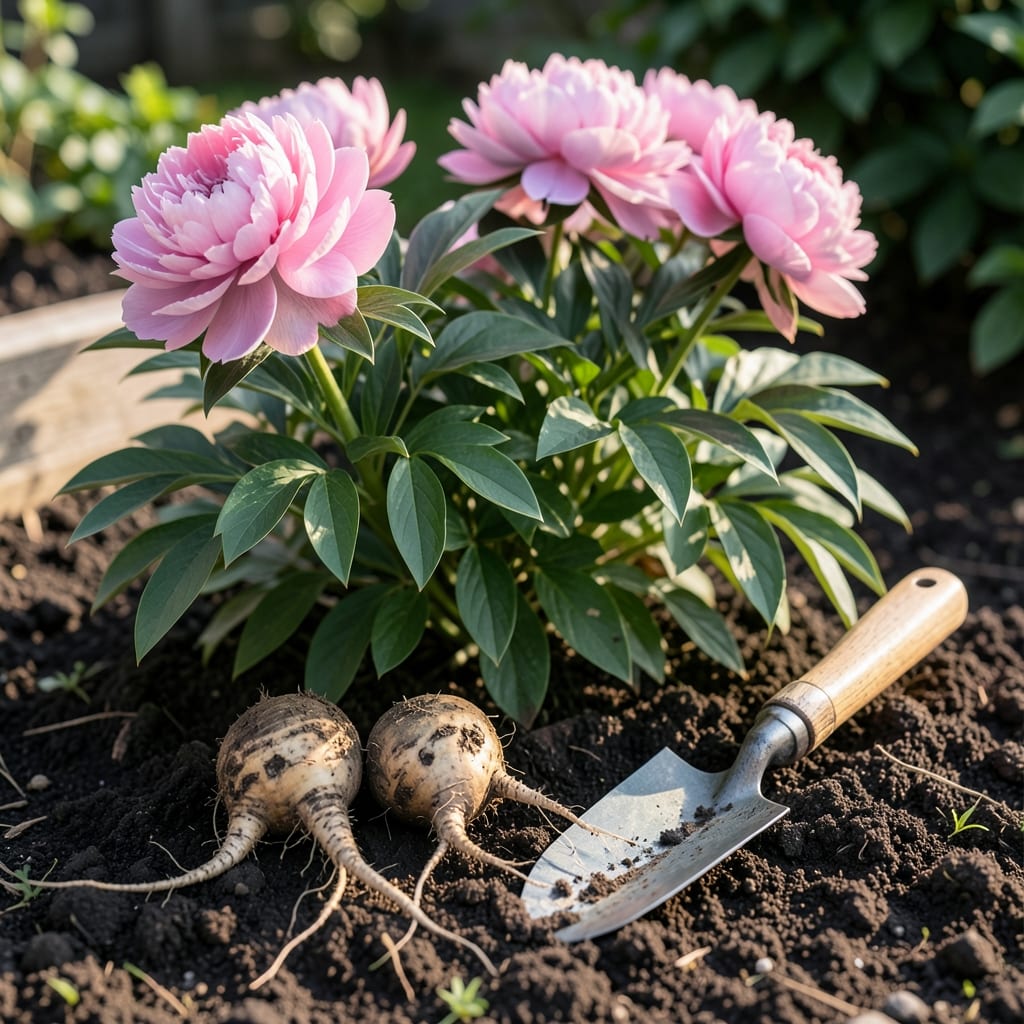
Peonies are not true bulbs but grow from thick, fleshy roots called tuberous roots. These storage organs allow the plant to regrow each year from the same underground structure.
I’ve learned that what sets peonies apart is their perennial nature, thanks to those subterranean powerhouses. 🔥 Unlike bulbs that form complete miniature plants inside, these roots store energy differently, fueling spring’s spectacular blooms. Gardeners often find them easier to divide and transplant than true bulb varieties.
💡 In This Article
True bulbs like tulips have a layered internal structure with all plant parts (shoot, stem, leaves, flower, roots) compressed inside. Peony tuberous roots are solid, with no internal layers. They store starches and sugars to fuel spring growth, similar to how potatoes store energy in their tubers.
These roots grow horizontally just below the soil surface, forming a crown with multiple “eyes” or growth buds. Each eye can produce a new stem, unlike bulbs which typically sprout from a single central point. A mature peony clump might have 3-5 eyes, each capable of growing into a flowering stem the following season. 🌟
Gardeners benefit from this structure because peony roots are more forgiving during division. You can cut between the eyes to propagate new plants, whereas splitting a true bulb often means destroying its carefully organized internal structure. The roots also have a longer lifespan, often thriving for 50+ years in the same location.
The classification matters for planting depth. True bulbs need to be buried at specific depths (like 6-8 inches for tulips) to ensure proper temperature regulation. Peony roots, however, must be planted shallowly with eyes no deeper than 2 inches below the soil surface to ensure they can push through in spring. ⚡
This root system also makes peonies more drought-tolerant than many bulb plants. The extensive network of thick roots can access water from a wider area, storing moisture during dry periods. In contrast, bulb plants often rely on a more concentrated root system directly beneath the bulb.
What’s fascinating is how these roots adapt to cold climates. They contain natural antifreeze proteins that prevent cell damage during winter freezes, allowing the plant to survive temperatures as low as -40°F. This cold hardiness is one reason peonies thrive in USDA zones 3 through 8. ✨
Plant so the top growth eyes are no deeper than 1-2 inches below soil. Too deep and they may not bloom. This shallow planting ensures proper spring emergence.
Yes! Unlike true bulbs, you can cut between the eyes on tuberous roots. Each division needs 3-5 eyes and healthy roots to thrive. Do this in early fall.
Common reasons include planting too deep, not enough sun, or immaturity. New plants may take 2-3 years to bloom. Ensure they get 6-8 hours of sunlight daily.
With proper care, peony roots can thrive for 50+ years in the same spot. They’re remarkably long-lived compared to many perennials.