
Beautiful Plants For Your Interior
Beautiful Plants For Your Interior
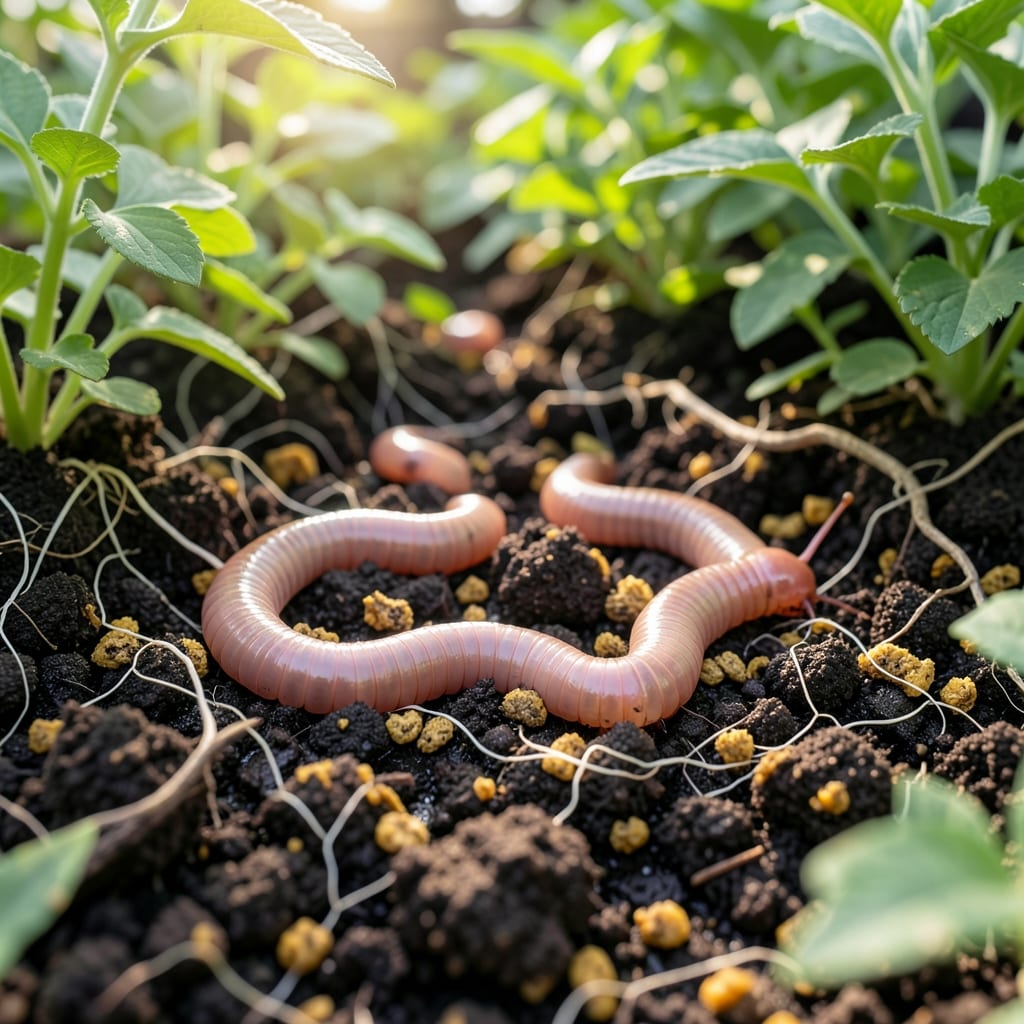
Night crawlers are excellent for gardens as they aerate soil, improve drainage, and break down organic matter into nutrient-rich castings that boost plant health.
I’ve seen firsthand how these earthworms transform compacted soil into a thriving ecosystem. Their burrowing creates natural tunnels that let air and water reach plant roots more effectively, while their castings deliver essential nutrients like nitrogen and phosphorus directly to the soil. This process is a game-changer for vegetable gardens and flower beds alike. ✨
💡 In This Article
As night crawlers move through soil, they create vertical burrows up to 6 feet deep. These tunnels act like natural aeration channels, allowing oxygen to reach plant roots while also improving water infiltration by 30-40%. This burrowing behavior is particularly beneficial in clay soils, where compaction often restricts root growth and water movement. 🔥
The worms consume organic material—leaves, dead roots, and compost—grinding it in their gizzards with the help of tiny stones. Their digestive process breaks down this matter into nutrient-dense castings that contain 5-11 times more nitrogen, phosphorus, and potassium than the surrounding soil. These castings also improve soil’s water-holding capacity by 20-30%. ✨
Each night crawler can process up to 10 times its body weight in organic material daily. For a typical garden with 1 million earthworms per acre, this translates to 10-15 tons of nutrient-rich castings produced annually. The result is soil that’s not just looser and better-draining, but also significantly more fertile without synthetic fertilizers. 🌟
These burrows also create pathways for plant roots to follow, often growing 2-3 times deeper in worm-worked soil. This deeper root penetration means plants access more nutrients and water, making them more drought-resistant. The worms’ mucus secretions, rich in nitrogen, further enhance soil structure by binding soil particles into stable aggregates. ⚡
What most gardeners don’t realize is that night crawlers bring subsoil to the surface through their castings. This mixing action naturally incorporates minerals like calcium and magnesium from deeper layers into the root zone where plants can utilize them, effectively “mining” nutrients that would otherwise remain inaccessible. 💫
Their burrows create natural tunnels up to 6 feet deep, letting roots access air, water, and nutrients more easily. This improves root penetration by 2-3 times in worm-worked soil.
They consume organic matter like leaves, dead roots, and compost. Each worm can process up to 10 times its body weight daily, turning it into nutrient-rich castings.
No, they need consistently damp soil (like a wrung-out sponge). Water deeply 2-3 times per week and add mulch to retain moisture for their survival.
Yes! Their burrowing breaks up compacted clay, improving aeration and drainage by 30-40%. They’re especially beneficial in heavy soils.