
Beautiful Plants For Your Interior
Beautiful Plants For Your Interior
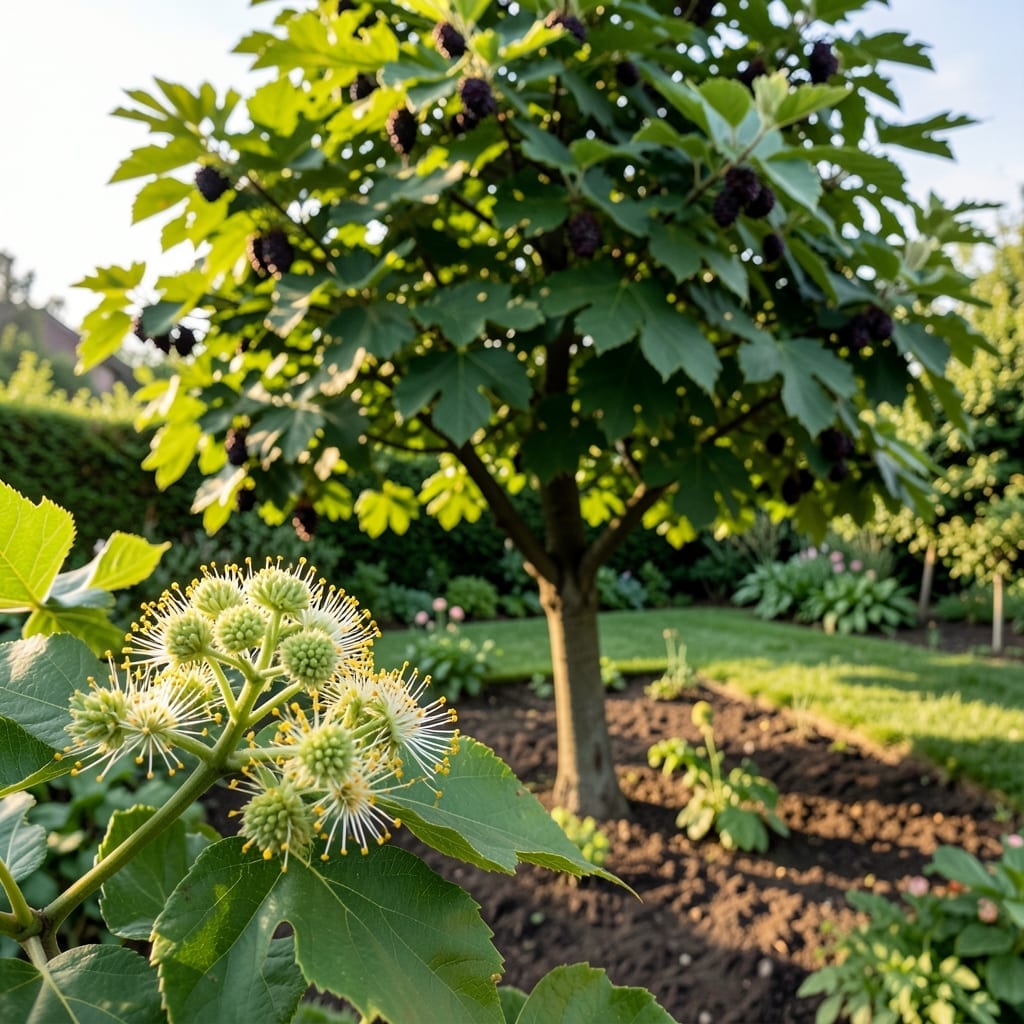
Most mulberry trees are self-pollinating, meaning a single tree can produce fruit without needing another tree nearby. However, some varieties benefit from cross-pollination for better yields.
I’ve found that monoecious mulberry varieties handle self-pollination exceptionally well because they produce both male and female flowers on the same tree. For dioecious types, planting at least two trees ensures better fruit set and larger harvests. Wind typically carries the pollen, but bees can also help boost productivity in many cases. ✨
💡 In This Article
The secret lies in mulberry tree reproductive biology. Most are monoecious, producing both male and female flowers on the same tree. This allows pollen to travel from stamen to pistil without needing another tree. The flowers are actually clusters called catkins, with male catkins releasing abundant pollen that wind carries to female catkins. 🔥
Morus nigra (black mulberry) and Morus alba (white mulberry) are classic examples of self-fertile varieties. Their flowers contain both reproductive structures, enabling self-pollination rates of 80-90% in ideal conditions. The pollen grains are lightweight, averaging 20-30 microns in diameter, perfectly adapted for wind dispersal across short distances on the same tree. ✨
However, dioecious varieties like some Morus rubra (red mulberry) require separate male and female trees. Even with monoecious types, cross-pollination often increases fruit size by 20-30% and yields by 15-25%. Bees and other pollinators can transfer pollen between trees, creating genetic diversity that boosts vigor and disease resistance. 🌟
Environmental factors play a crucial role too. Wind speeds of 5-10 mph optimize pollen distribution, while humidity above 60% helps pollen stick to female flowers. Temperature also matters—pollination works best between 60-75°F. In still air or extreme heat, even self-pollinating trees may see reduced fruit set. ⚡
What most gardeners don’t realize is that flower timing varies between varieties. Some trees produce male flowers 2-3 days before female ones, naturally promoting self-pollination. Others have synchronized blooming that benefits from nearby compatible trees. This timing difference explains why some solo trees thrive while others struggle to set fruit consistently. 💫
Most do, especially monoecious types like black and white mulberries. However, some dioecious varieties, such as red mulberry, require separate male and female trees for fruit production.
Space compatible trees within 50 feet of each other. This ensures pollen can travel between them via wind or insects, improving fruit set and yield.
Yes, if it’s a self-fertile variety. A single monoecious tree can produce fruit on its own, though yields may be smaller without cross-pollination.
Ideal conditions include wind speeds of 5-10 mph, humidity above 60%, and temperatures between 60-75°F. These factors help pollen travel and stick effectively.
You’ll get fruit, but adding a second compatible tree can boost yield by 15-25% and increase fruit size by 20-30%.