
Beautiful Plants For Your Interior
Beautiful Plants For Your Interior
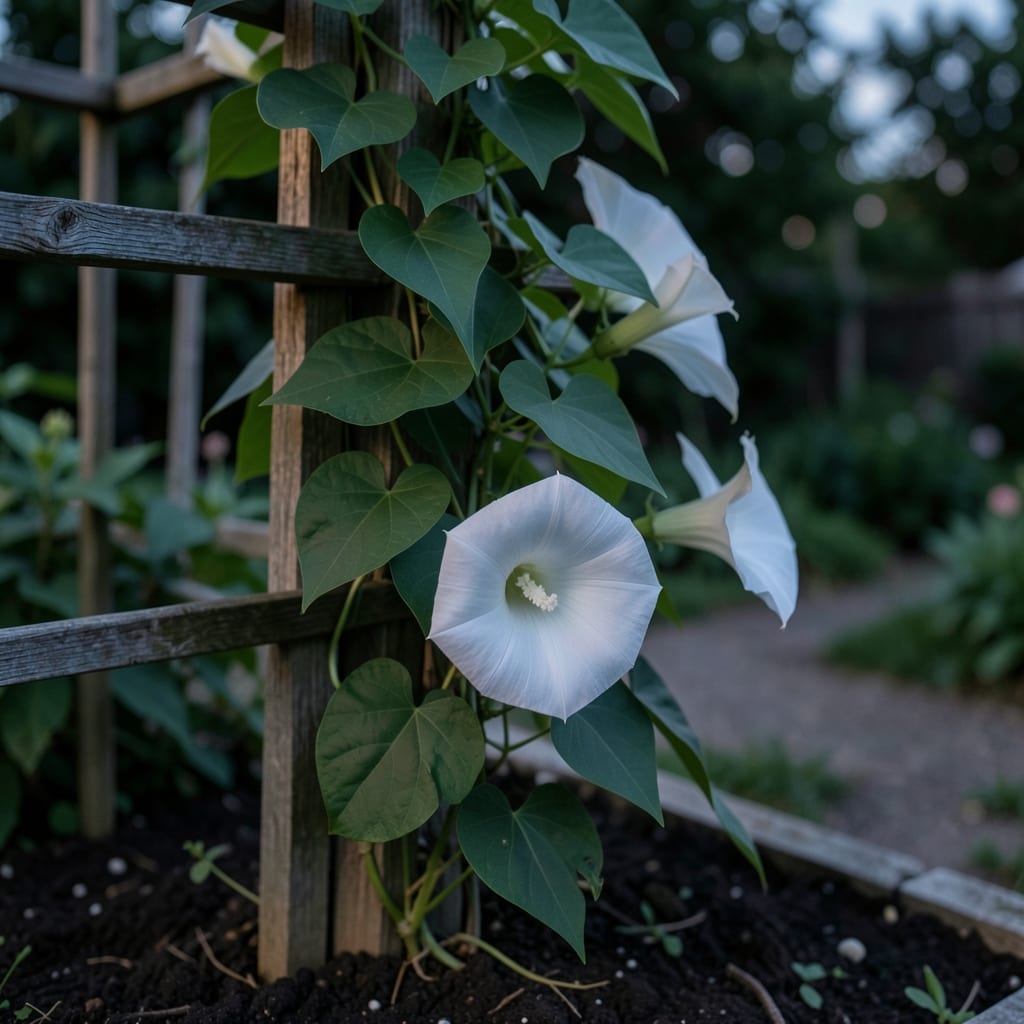
Moonflowers are not typically invasive but can spread aggressively in warm climates through self-seeding and fast-growing vines. They’re often controlled by regular pruning.
What I’ve noticed in my garden is that these vines thrive in USDA zones 10-12, where the long growing season lets them expand rapidly. Their night-blooming nature also means they can produce seeds prolifically if left unchecked. 🌟
For most gardeners, this growth habit is manageable with weekly pruning and removing spent flowers before they set seed.
💡 In This Article
Moonflowers rely on two primary mechanisms for expansion: prolific self-seeding and rapid vine growth. Each plant produces hundreds of seeds that can remain viable in the soil for 2-3 years, germinating when conditions are right.
The vines themselves grow at an astonishing rate of 6-12 inches per day during warm months, quickly covering fences and trellises.
Their spreading tendency is most pronounced in USDA zones 9-11, where frost doesn’t kill back the roots. In these regions, established plants can expand their territory by 10-20 feet annually through both seed dispersal and new shoots emerging from the root system.
🌱 The seeds are dispersed by wind and water, often landing several feet from the parent plant.
What makes moonflowers particularly aggressive is their ability to root at leaf nodes. When vines touch the ground, they can establish new growth points, effectively creating daughter plants. This is why gardeners in tropical climates often find moonflowers appearing in unexpected locations up to 15 feet from the original planting.
The plant’s night-blooming nature aids its spread, as the white, fragrant flowers attract moths and other nocturnal pollinators. These pollinators carry pollen between plants, increasing seed production. Unlike true invasive species, moonflowers don’t typically displace native vegetation, but their vigorous growth can dominate a garden space if left unmanaged. ✨
Soil conditions play a role too. Moonflowers thrive in well-draining, slightly acidic soil with pH between 6.0-6.8. In such ideal conditions, their growth rate accelerates, and they may produce more seeds. The plants are also drought-tolerant once established, which means they can spread even in less-than-ideal watering conditions.
They rarely displace native species but can overwhelm small garden plants. Their fast-growing vines may shade or crowd nearby vegetation if left unchecked. Regular pruning prevents this.
Vines can grow 6-12 inches per day in warm weather. In ideal conditions, they may reach 10-15 feet in a single season. This rapid growth contributes to their spreading tendency.
They expand most aggressively in USDA zones 9-11, where frost doesn’t kill the roots. These warm areas allow year-round growth and prolific self-seeding.
Yes! Use large containers at least 18 inches deep. Deadhead blooms and prune weekly to prevent self-seeding. This keeps growth contained.