
Beautiful Plants For Your Interior
Beautiful Plants For Your Interior
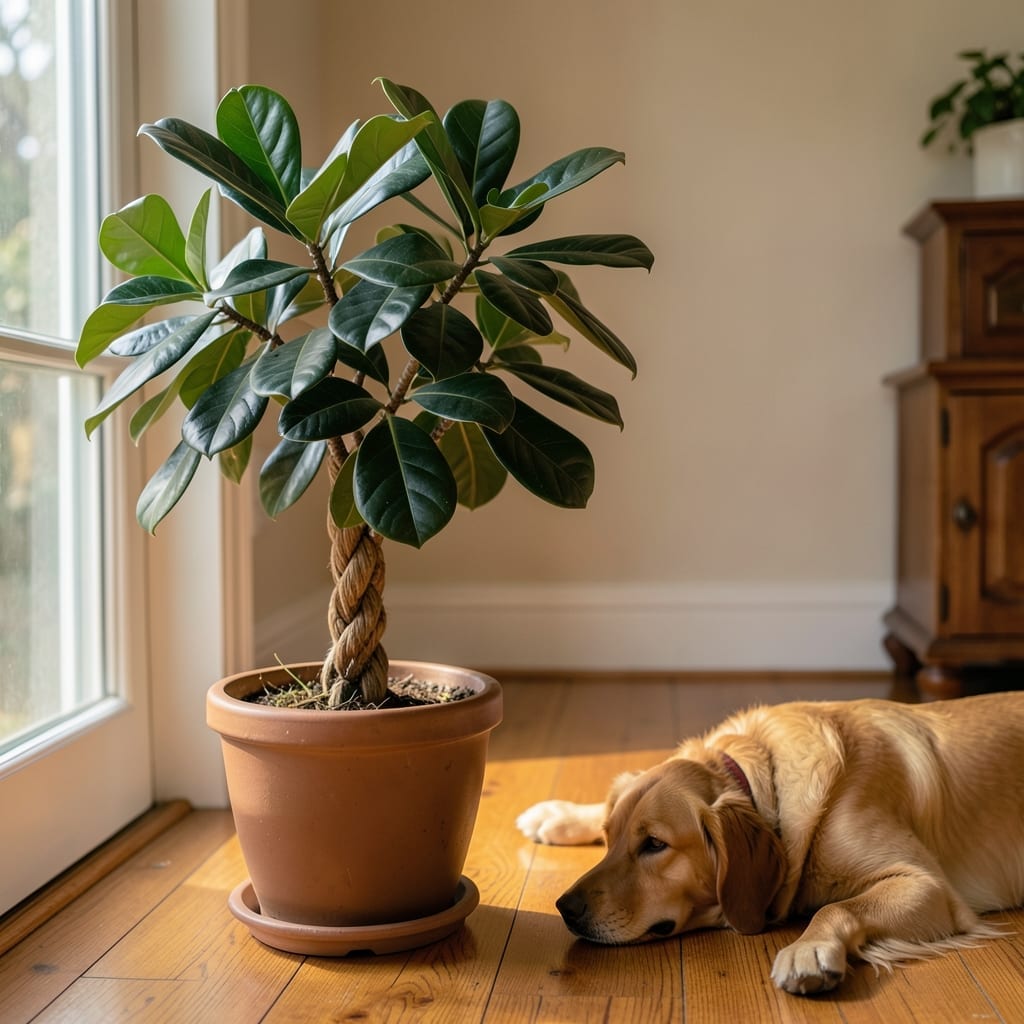
Money trees are considered non-toxic to dogs by the ASPCA, meaning ingestion typically causes mild stomach upset at worst rather than severe poisoning.
As a plant parent with pets, I appreciate that money trees fall into the safer category for curious canines. This classification comes from their lack of highly toxic compounds like those found in lilies or sago palms. Still, I always recommend monitoring your dog after any plant exposure, as individual sensitivities can vary. 🌟
Even non-toxic plants can cause temporary digestive discomfort if consumed in large quantities, so it’s wise to keep them out of paws’ reach whenever possible.
💡 In This Article
The ASPCA’s classification system categorizes plants based on their chemical composition and known effects on animals. Money trees (Pachira aquatica) earn their non-toxic status because they lack the dangerous alkaloids, glycosides, or oxalates found in plants like oleander or dieffenbachia. Instead, they contain mostly harmless plant fibers and trace minerals.
What makes money trees particularly pet-friendly is their chemical simplicity. Unlike sago palms, which contain cycasin—a compound that causes severe liver damage—money trees have no known toxic principles. Their leaves and stems are composed primarily of cellulose (about 40-50% by dry weight) and water, with minimal secondary metabolites that could trigger reactions.
This doesn’t mean they’re completely inert, though. The plant’s sap may contain mild irritants for sensitive dogs, similar to how some humans develop contact dermatitis from certain plants. In practice, most dogs that nibble money tree leaves experience nothing more severe than temporary drooling or mild vomiting, typically resolving within 6-12 hours without intervention. ✨
Veterinary toxicologists note that true toxicity requires either a poisonous compound or a sufficient quantity to overwhelm the body’s detoxification pathways. With money trees, neither condition is met. A 50-pound dog would need to consume an entire mature plant (weighing 10-15 lbs) to potentially cause more than mild gastrointestinal upset.
For comparison, consider that just 2-3 sago palm seeds can be lethal to a dog of the same size. This stark difference highlights why money trees are considered among the safer houseplants for pet owners. Their benign nature is further supported by centuries of cultivation in pet-owning households without reported serious incidents. 🔥
Still, individual dogs may have unique sensitivities. Factors like pre-existing gastrointestinal conditions or medication interactions could theoretically amplify reactions, though such cases remain exceedingly rare with money trees. Monitoring your pet after any plant exposure remains the gold standard of responsible pet ownership.
Remove any plant material from their mouth and rinse with water. Monitor for 6-12 hours for mild symptoms like drooling. No action is needed if they show no signs of distress.
Money trees lack harmful compounds like cycasin or oxalates found in other plants. Their simple chemistry (mostly cellulose and water) makes them safe. Other plants contain toxins that can damage organs.
Yes, but supervision is key. Puppies are more likely to chew plants out of curiosity. Keep the tree elevated and teach them to avoid it early on.
Watch for vomiting, diarrhea, or lethargy. These are rare with money trees but warrant a vet call if they persist beyond 24 hours or seem severe.