
Beautiful Plants For Your Interior
Beautiful Plants For Your Interior
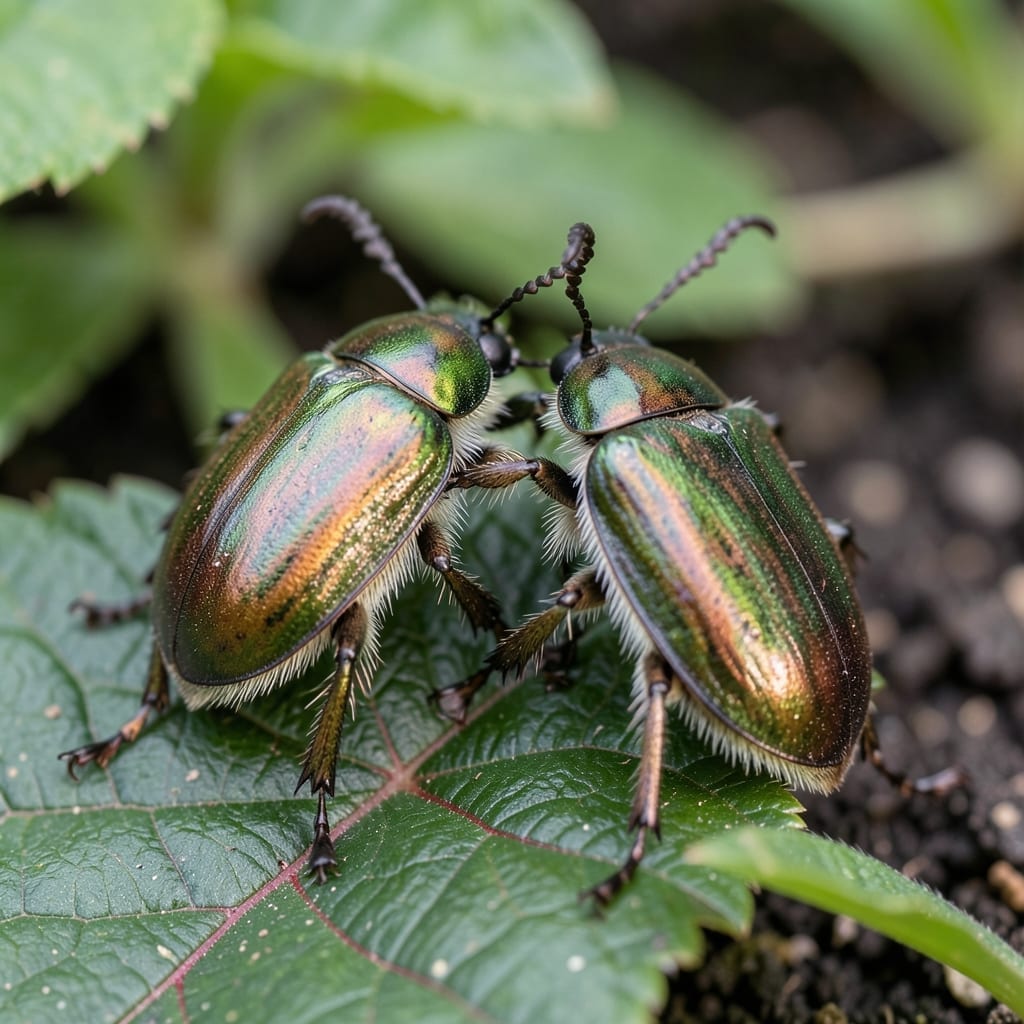
Japanese beetles are harmful garden pests that skeletonize leaves, flowers, and fruits by feeding on over 300 plant species, causing significant damage to roses, grapes, and ornamental plants.
I’ve seen firsthand how these metallic green invaders can defoliate a rose bush in days, leaving behind only lacy leaf veins. 🔥 Their grubs also attack lawns from below, creating brown patches as they chew through grass roots, while adults target the most vulnerable parts of plants during peak summer months.
This dual assault on both roots and foliage makes them uniquely destructive compared to other garden pests. ✨
💡 In This Article
These pests possess powerful chewing mouthparts that strip tissue between leaf veins, creating a characteristic skeletonized appearance. Adults consume 0.5-1 square inch of foliage daily, targeting the softest parts first. Their feeding triggers plant stress responses that can stunt growth and reduce fruiting by up to 30% in severe infestations. 🔥
Below ground, white grubs feed on grass roots for 10-12 months, severing the plants’ ability to absorb water and nutrients. A single square foot of soil can harbor 50-100 grubs, which explains why lawns develop spongy brown patches that roll up like loose carpet.
The damage often appears first in sunny areas where soil temperatures reach 75-85°F. ✨
Certain plants show remarkable vulnerability. Roses lose their aesthetic value within 48-72 hours of heavy feeding, while grape vines can experience 60% yield reduction when beetles target developing fruit clusters. Ornamentals like hibiscus and Japanese maples often suffer complete defoliation, forcing plants to expend energy regrowing leaves instead of blooming. 🌟
What makes this particularly destructive is their synchronized emergence. Adults typically appear in late June through August, with population peaks occurring every 3-4 days as new beetles mature. This wave-like attack pattern prevents plants from recovering between feedings, compounding the damage exponentially. ⚡
The beetles’ feeding also creates entry points for secondary infections. Open wounds on leaves and fruits invite fungal pathogens and bacterial rots that can kill plants even after the beetles move on. This secondary damage often exceeds the direct feeding impact, especially in humid summer conditions. 💫
No, they target specific plants more aggressively. Roses, grapes, and hibiscus suffer the most damage, often losing 60-70% of foliage within days. Less preferred plants like oak or pine typically escape unharmed.
With synchronized emergence, a heavy infestation can skeletonize vulnerable plants in 48-72 hours. Their wave-like attack pattern prevents recovery between feedings, compounding damage exponentially.
Yes, grubs cause hidden damage by feeding on grass roots for 10-12 months. A single square foot may contain 50-100 grubs, creating brown patches that roll up like loose carpet.
Their feeding creates entry points for fungal pathogens and bacterial rots. These secondary infections often kill plants even after the beetles move on, especially in humid conditions.