
Beautiful Plants For Your Interior
Beautiful Plants For Your Interior
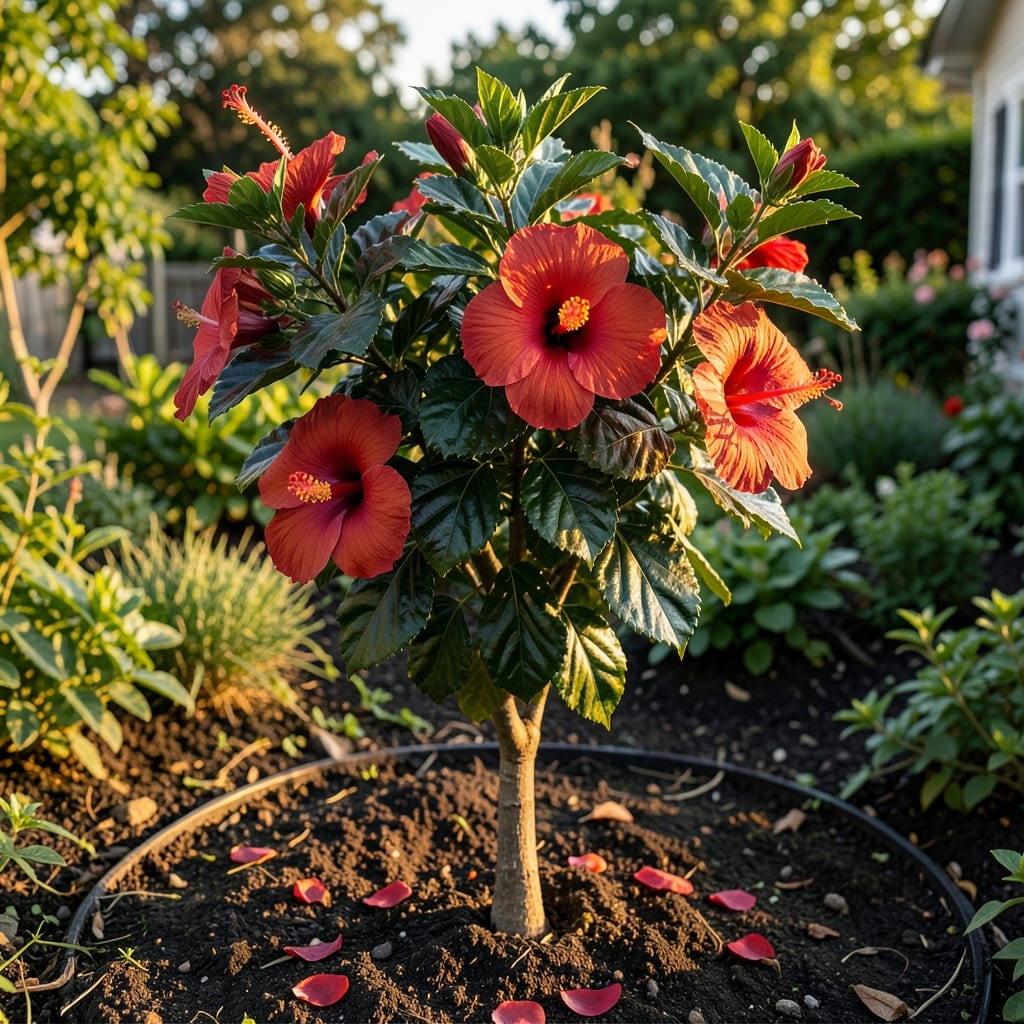
Hibiscus trees are perennials in warm climates, returning yearly, but may act as annuals in colder regions where frost kills them. Tropical varieties thrive as perennials in USDA zones 9-11.
What fascinates me is how these plants adapt to their environment. In zones 9-11, they can live for decades with proper care, but in chillier areas, they’ll only survive until the first hard frost. 🌟 I’ve seen gardeners successfully overwinter them indoors, which lets them enjoy the same plant year after year even in zone 7 or 8.
💡 In This Article
Hibiscus trees thrive as perennials because their tropical origins evolved in consistently warm environments. In USDA zones 9-11, where winter temperatures rarely drop below 25°F, they maintain active growth year-round. Their woody stems store energy reserves that fuel spring regrowth, allowing some varieties to live 20-50 years under ideal conditions. 🌟
The deciding factor is frost exposure. When temperatures dip below 32°F, cellular damage begins in the stems and roots. Tropical hibiscus varieties like Hibiscus rosa-sinensis have no natural frost tolerance, while hardier types such as Hibiscus syriacus can survive brief cold snaps down to 0°F.
This explains why the same plant behaves as a perennial in Florida but dies annually in Minnesota.
Soil temperature matters just as much as air temperature. Even if air stays above freezing, cold soil (40°F or below) slows root activity, reducing nutrient uptake. In containers, this becomes critical—potted hibiscus need protection when soil temps drop, as their roots lack the insulation of in-ground planting.
I’ve seen container-grown specimens survive winters in zone 7 when moved to garages or basements.
Microclimates create fascinating exceptions. Urban heat islands, south-facing walls, or sheltered courtyards can push hardiness boundaries by 5-10°F. A Hibiscus rosa-sinensis that would normally die in zone 8 might survive if planted near a brick wall that absorbs and radiates heat.
Conversely, wind exposure can make a zone 9 location effectively feel like zone 7 during cold snaps.
Growth rate also indicates climate suitability. In their perennial range, hibiscus trees can grow 12-24 inches annually, producing abundant 4-6 inch blooms. In marginal zones, they may only reach 6-8 feet tall before winter dieback, with smaller, less frequent flowers. This visible difference helps gardeners assess whether their climate truly supports perennial growth. ✨
In ideal conditions, hibiscus trees can live 20-50 years as perennials. In warm climates like USDA zones 9-11, they thrive year-round. Cooler zones may shorten their lifespan significantly.
Yes! Move potted plants indoors to a 50-60°F space with bright light. For in-ground plants, protect roots with a 12-inch mulch mound. This works even in zone 6.
Frost below 32°F damages their tropical cells. Varieties like Hibiscus rosa-sinensis have no frost tolerance. Even cold soil (40°F) slows root activity.
Hibiscus syriacus (Rose of Sharon) survives brief dips to 0°F. It’s the best choice for colder zones. Tropical types can’t handle frost at all.