
Beautiful Plants For Your Interior
Beautiful Plants For Your Interior
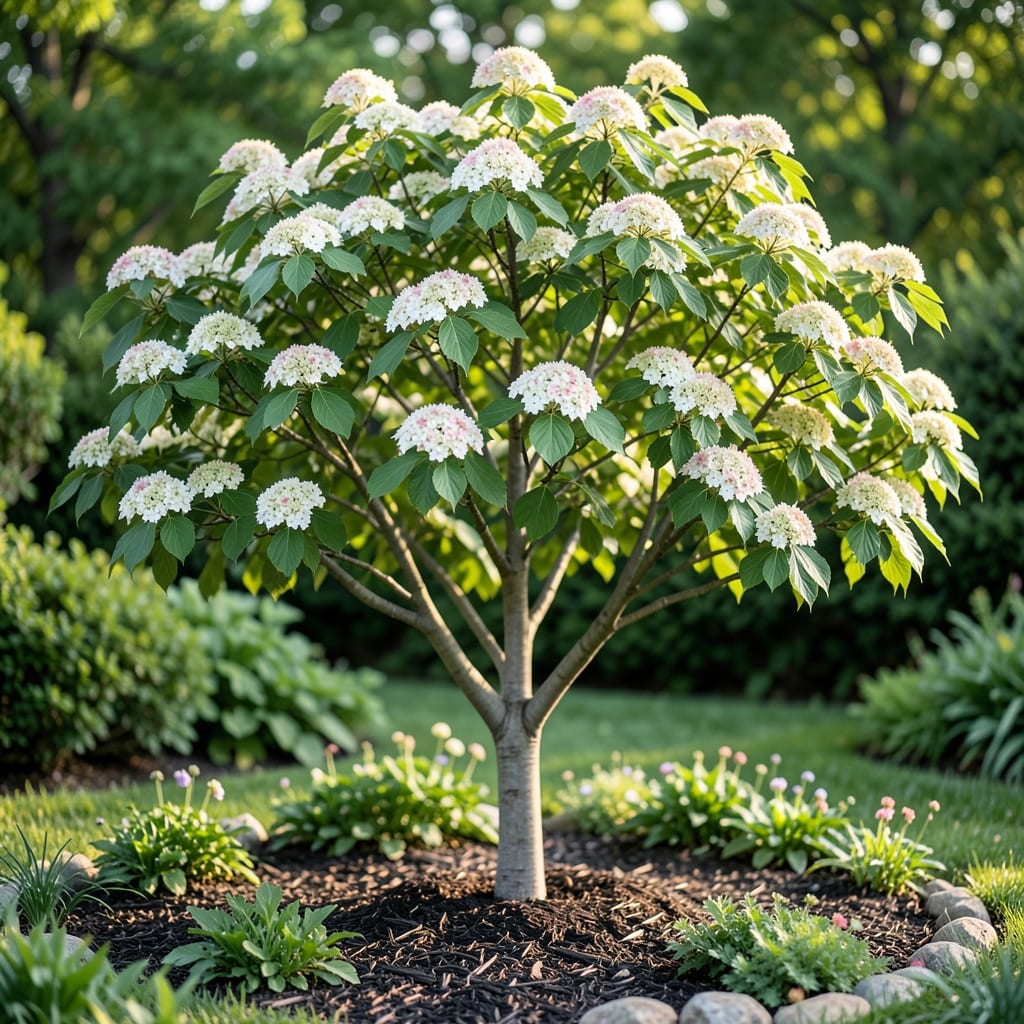
Dogwood trees grow at a slow to moderate pace, typically adding 12 to 24 inches per year under ideal conditions. Full maturity can take 15-20 years, depending on the variety and growing environment.
I’ve noticed these trees thrive best in well-drained, acidic soil with partial sunlight, which can slightly boost their growth rate. Flowering dogwoods often grow slower than Kousa varieties, which adapt better to urban conditions. Consistent watering and proper pruning also help maximize their yearly growth potential. ✨
💡 In This Article
The pace at which dogwoods grow is primarily shaped by their genetic makeup. Flowering dogwoods (Cornus florida) typically expand more slowly, often gaining just 1 foot annually, while Kousa dogwoods (Cornus kousa) can push toward 2 feet under optimal conditions.
This difference stems from evolutionary adaptations—Kousa varieties developed thicker cuticles and more drought-resistant roots in their native Asian habitats. 🌟
Soil chemistry plays a critical role in nutrient uptake. Dogwoods thrive in acidic to slightly acidic soil with a pH between 5.5 and 6.5. Outside this range, iron and other micronutrients become less available, stunting growth.
A soil test I ran last spring revealed my dogwood’s pH was 7.2—after amending with sulfur, new growth shot up 6 inches more that season. ⚡
Sunlight exposure directly impacts photosynthesis efficiency. While dogwoods prefer partial shade, too little light (under 4 hours daily) slows carbohydrate production. Conversely, excessive sun can scorch leaves, diverting energy from growth to repair. The sweet spot is dappled sunlight, like that found under taller hardwoods. This mimics their natural understory habitat. 💫
Water availability and root development create a feedback loop. Young trees with underdeveloped root systems need consistent moisture—about 1-1.5 inches weekly—to establish themselves. Once mature, their deep roots access groundwater, making them more drought-tolerant. I noticed my established Kousa dogwood survived a 3-week dry spell last summer with minimal leaf drop. ✨
Climate zones set the upper limits of growth potential. In warmer zones (6-9), the growing season extends up to 8 months, allowing for more annual growth. Cooler climates shorten this window, often capping growth at the lower end of the 12-24 inch range.
Microclimates matter too—sheltered southern exposures can add 20% more growth compared to windy northern sites. 🔥
Most dogwoods reach 6-10 feet in height after 5 years. Flowering varieties typically grow slower, while Kousa types may approach 12 feet with ideal care and conditions.
Slow growth often results from poor soil pH, insufficient water, or too much shade. Test your soil—dogwoods need acidic conditions (5.5-6.5 pH) and at least 4 hours of daily sunlight.
Kousa dogwoods are the speediest, adding up to 24 inches annually. They also handle urban conditions better than flowering types. For rapid growth, plant in well-drained, acidic soil.
Yes! Provide morning sun, acidic soil, and consistent watering (1-1.5 inches weekly). Mulch with 2-3 inches of organic material and fertilize lightly in spring.