
Beautiful Plants For Your Interior
Beautiful Plants For Your Interior
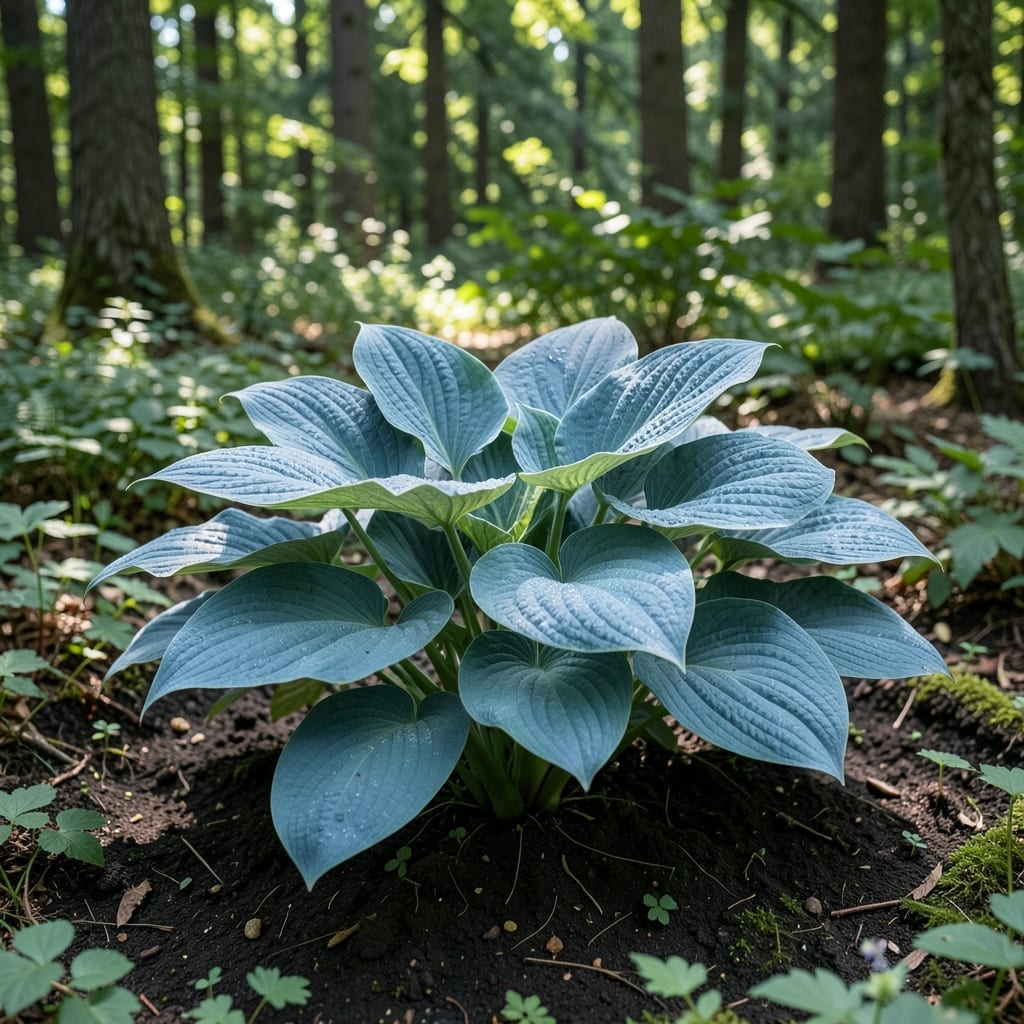
Yes, blue hostas exist as rare varieties with striking blue-green or blue-gray foliage, though their color appears most vivid in shaded conditions with the right soil pH.
I’ve found these unique plants develop their signature hue from a waxy coating that reflects light in a way that creates that cool-toned appearance. 💫 The color intensity often surprises gardeners, as it deepens in partial shade and with slightly acidic soil. What’s fascinating is how breeders select for these traits over generations to produce the most vibrant specimens.
💡 In This Article
The blue color in hostas comes from a natural waxy coating called glaucous bloom on the leaves. This microscopic layer scatters light in a way that creates the cool blue-green appearance, much like how the sky appears blue due to atmospheric scattering.
The effect is most pronounced in varieties like ‘Blue Angel’ or ‘Hadspen Blue’, which have thicker wax layers.
The intensity of the blue hue depends on light conditions. In full sun, the wax can melt, reducing the blue effect. In partial to full shade, the color remains vibrant.
Soil pH also plays a role—slightly acidic to neutral soil (pH 6.0-7.0) enhances the blue tones, while alkaline soil can make the leaves appear more green. 💫
Breeders develop these unique cultivars through careful selection over generations. They look for plants with the thickest wax coatings and most consistent blue coloring. The process can take 5-10 years to stabilize a new variety, as hostas are typically propagated through division rather than seeds to maintain desired traits.
What’s particularly fascinating is that the blue color isn’t actually a pigment. Unlike flowers that get their colors from pigments like anthocyanins, the blue in hostas is purely a structural effect.
This means the color can appear to change slightly depending on the viewing angle and lighting conditions, creating a dynamic visual effect in the garden. ✨
The waxy coating also serves a practical purpose for the plant. It helps reduce water loss through the leaves and provides some protection against pests. This adaptation is particularly valuable in the hosta’s native woodland environments, where moisture conservation is important.
The blue varieties often have thicker leaves, which makes them more resistant to slug damage compared to thinner-leaved hostas.
They develop a natural waxy coating called glaucous bloom that scatters light. This creates the cool blue-green appearance without actual blue pigment.
Partial to full shade preserves the waxy coating. Direct sun can melt it, reducing the blue effect and making leaves appear greener.
Yes! Use a pot with drainage holes and pH 6.0-7.0 soil. Keep in shade and water 1-2 times weekly.
Alkaline soil or too much sun can fade the blue. Test soil pH and move to shadier spots to restore color intensity.