
Beautiful Plants For Your Interior
Beautiful Plants For Your Interior
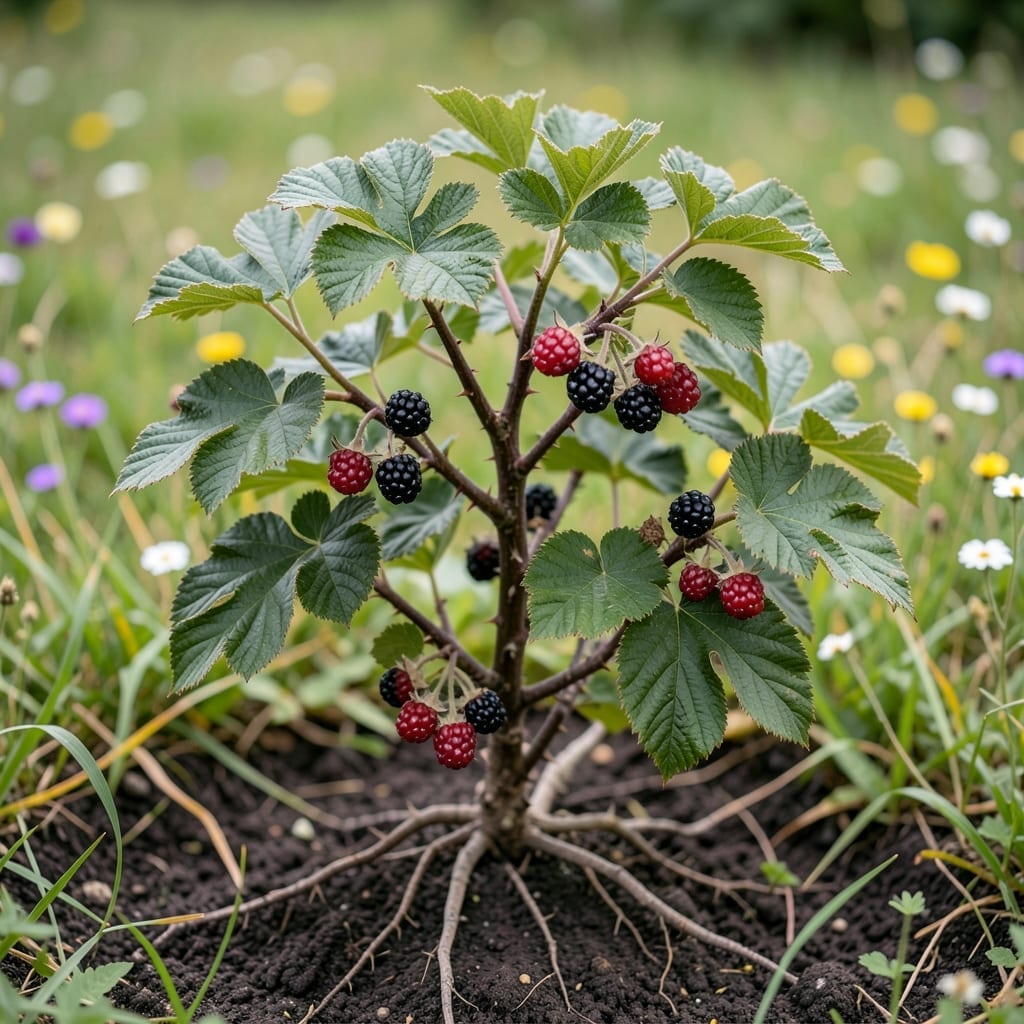
Blackberries start green, turn red as they ripen, and finally deepen to black when fully mature and sweetest for harvest.
I love watching this transformation firsthand in my garden. The color shift signals key changes in sugar content and texture—green berries are tart and hard, while red ones soften but still lack peak sweetness. 🔥
Only at the deep black stage do they develop their signature juiciness and rich flavor, making this the ideal time for picking.
💡 In This Article
The color transformation is driven by anthocyanins, pigments that develop as the fruit matures. These compounds start accumulating when chlorophyll (the green pigment) breaks down, shifting the berry’s hue from green to red.Anthocyanin production ramps up significantly during the final ripening stage.
At the red stage, the berries contain moderate anthocyanin levels, giving them a tart-sweet balance. The cell walls begin softening as pectin breaks down, but the fruit isn’t yet at peak sugar content. This partial ripeness means the flavor is developing but still acidic, with a firmness that gradually yields to gentle pressure.
Only when the berries turn deep black do they reach maximum anthocyanin concentration, typically 100-200 mg per 100g of fruit. This signals full maturity, where sugar content peaks at 8-10% and the texture becomes juicy and tender. The deep color indicates the berry has stopped producing chlorophyll entirely. 🔥
The entire process usually takes 4-6 weeks from flowering to full ripeness, depending on the variety and growing conditions. Temperature plays a key role, with warmer climates accelerating the color change. Each stage serves as a visual indicator of the berry’s internal chemical transformation.
What’s fascinating is that the red phase isn’t just a transition—it’s an active ripening period where the berry is building the compounds that will make it delicious. The black stage represents the culmination of this process, where all flavor and texture elements align perfectly for harvest. ✨
The color shift happens as chlorophyll breaks down and anthocyanins develop. The green fades as these pigments increase, turning the fruit red then black as it matures.
This process takes 4-6 weeks from flower to full ripeness.
Look for a uniform deep black color with no red or green spots. They should pull easily from the vine with just a gentle tug.
Always pick in the early morning after dew dries for best flavor.
Red or green berries will be hard, tart, and lack sweetness. Unlike some fruits, blackberries don’t ripen after picking.
Their texture stays firm and flavor remains underdeveloped.
Yes, all cultivated blackberry varieties transition from green to red to black. Some wild types may have slight variations in hue.
The timing might vary by climate and variety, but the stages remain consistent.