
Beautiful Plants For Your Interior
Beautiful Plants For Your Interior
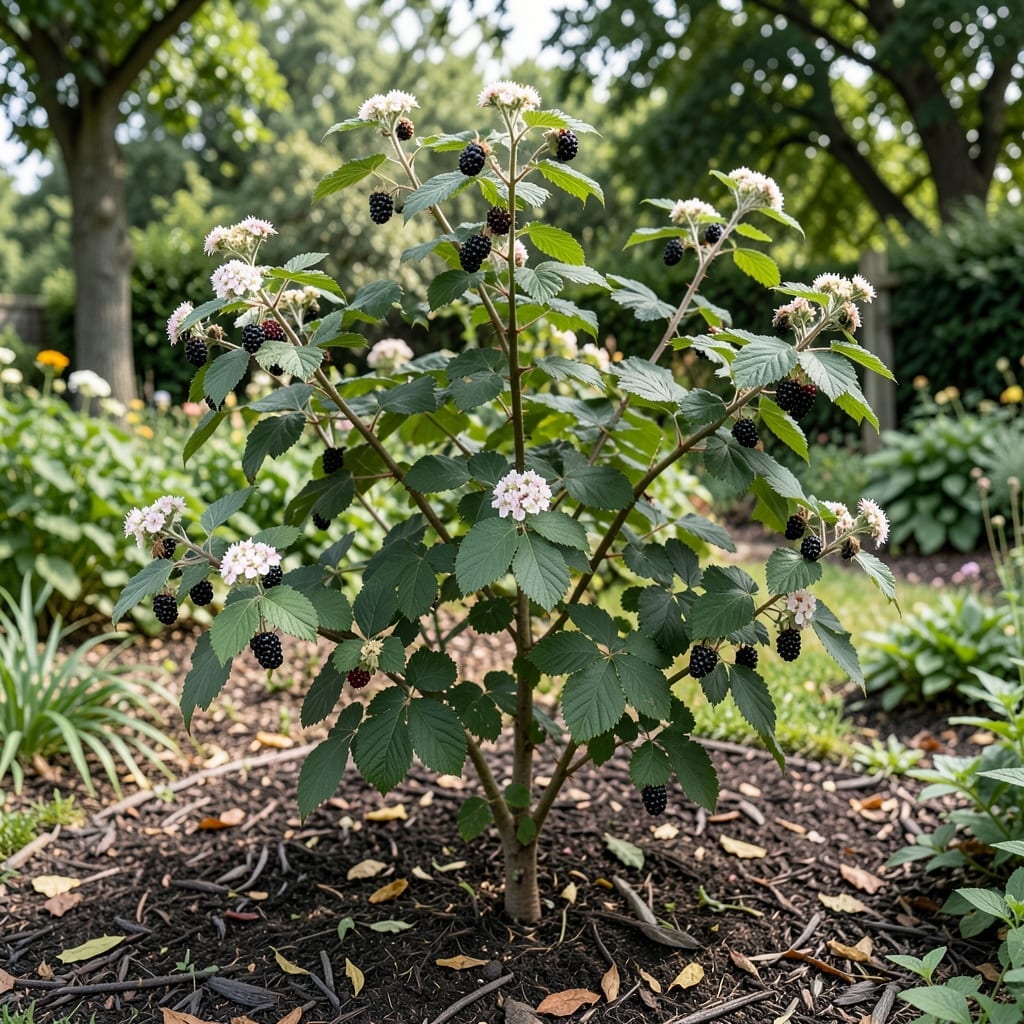
Yes, blackberries are acidic with a pH range of 3.5 to 4.5, primarily due to their organic acid content like citric and malic acid.
This natural tartness comes from compounds that develop as the fruit ripens, giving blackberries their signature bright flavor. I find their acidity works beautifully in both sweet and savory dishes, balancing richness in desserts or adding depth to sauces. For gardeners, understanding this helps explain why blackberries thrive in slightly acidic soil conditions. 💫
💡 In This Article
The tartness you taste in blackberries comes from organic acids, with citric acid making up about 1-2% of the fruit’s composition. Malic acid contributes another layer, creating that sharp, refreshing bite. These compounds develop as the berries ripen, with concentration peaking just before full maturity.
The balance between these acids and natural sugars gives blackberries their complex flavor profile. 🔥
pH measurement captures this acidity on a 0-14 scale, where blackberries score between 3.5 and 4.5. This places them slightly more acidic than strawberries (3.0-3.5) but less so than lemons (2.0-2.5). The variation comes from growing conditions, with warmer climates producing berries at the lower end of the pH range.
Even individual plants show slight differences based on soil composition and water availability. ✨
What makes blackberry acidity fascinating is how it changes during growth. Young, green berries start extremely tart, with pH levels around 2.8-3.2. As they ripen and sugars develop, the pH rises toward that 3.5-4.5 range. This transformation explains why underripe blackberries pucker your mouth while perfectly ripe ones offer a balanced sweet-tart experience. 💫
These acids serve important functions beyond flavor. Citric acid acts as a natural preservative, while malic acid contributes to the fruit’s antioxidant properties. The combination also affects how blackberries interact with other ingredients—their acidity can curdle dairy in unbaked recipes but enhances flavors in jams and sauces.
This chemical behavior makes them particularly versatile in cooking applications. ⚡
The pH level also influences how blackberries respond to preservation methods. Their natural acidity makes them ideal for water bath canning without added acid, as the environment is already inhospitable to many spoilage organisms. This is why blackberry jams and jellies maintain their vibrant color and fresh flavor for extended periods when properly processed. 🌟
Blackberries (pH 3.5-4.5) are less acidic than lemons (2.0-2.5) but more so than strawberries (3.0-3.5). Their tartness falls between these popular fruits.
Moderation is key. While their acidity might trigger symptoms in some, many tolerate them well. Try a small portion first. If symptoms occur, avoid eating them on an empty stomach.
Green berries start very tart (pH 2.8-3.2), while ripe ones reach 3.5-4.5. The sweeter the berry, the less acidic it typically is.
Underripe berries or those grown in cooler climates tend to be more sour. The balance of citric and malic acids creates that sharp flavor when sugars haven’t fully developed.