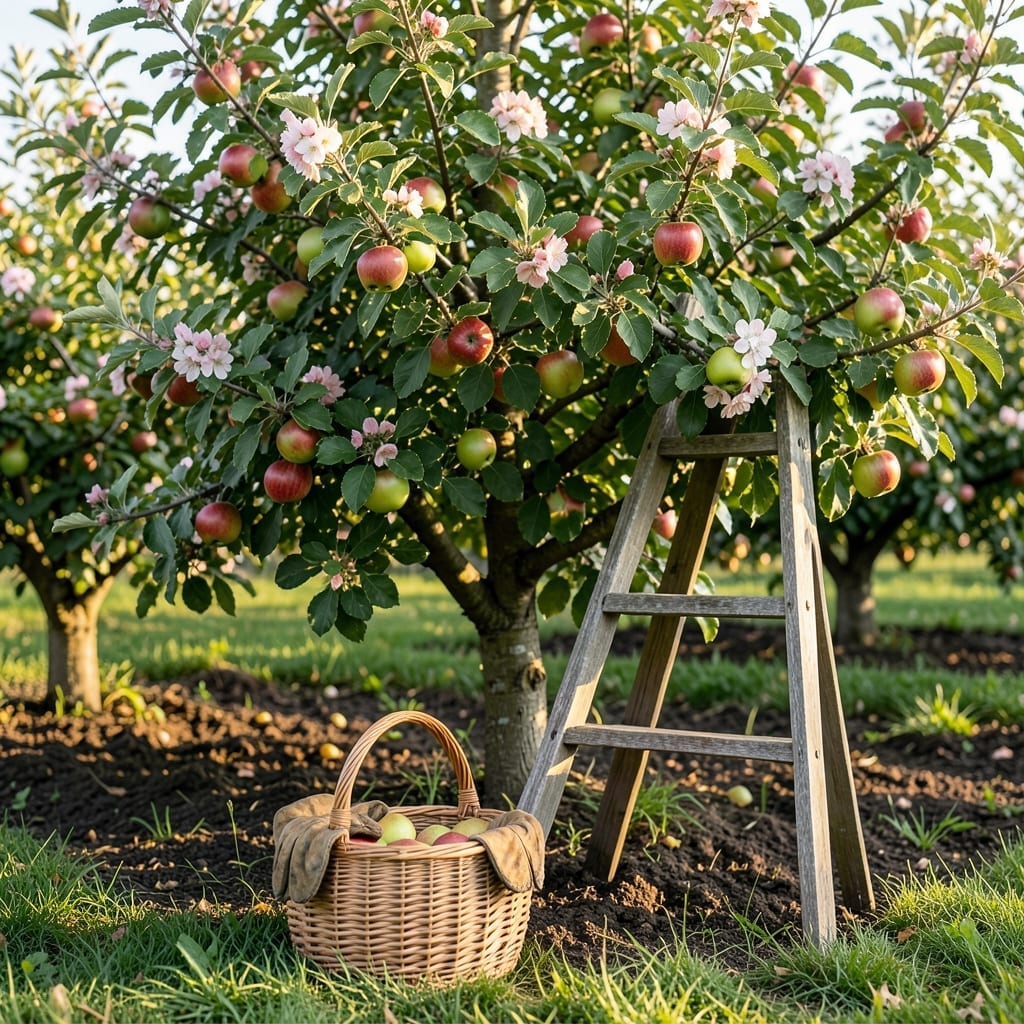
Apple Tree Harvest: Stem Slip and Color Clues for Sweet Picks

Apple Tree Harvest: Stem Slip and Color Clues for Sweet Picks

There’s nothing quite like biting into a perfectly ripe apple straight from your own 🍎 Apple Tree. But knowing when to pick can make all the difference between a tart disappointment and a sweet reward.

I’ve learned that timing your Apple Tree harvest is both an art and a science. The tree might be ready in zones 5-8, but the fruit tells the real story through subtle signs.

Discover how to read your tree’s hints – from color changes to that telltale stem slip. These simple clues will help you pick at peak flavor every time.

Whether you’re a first-time grower or a seasoned orchard enthusiast, mastering these harvest signals will transform your apple-picking game. Let me show you how to get it right.

Style 16: Quick Tips – General
🌅
Morning
Pick early for best flavor & crunch
✂️
Clean Cut
Use scissors, don’t pull or twist
🔄
Check Daily
Ripeness can change overnight!

How to Use Stem Slip to Determine Apple Tree Harvest Readiness

I’ve found the stem slip test is the most reliable way to check if your apple tree fruit is ready. Unlike color, which can be misleading, this method tells you when the apple separates cleanly from the branch.

To perform the test, I gently cup the apple in my hand and give it a slight upward twist. If it comes off easily with the stem attached, it’s at peak ripeness for harvesting apples.

How to Perform the Stem Slip Test

  1. Choose a test apple from the tree’s outer branches.
  2. Hold the apple firmly but gently in your palm.
  3. Twist upward slightly while lifting—don’t pull.
  4. Check separation: If the stem detaches cleanly, it’s ready.
  5. Test multiple apples for consistency across the tree.

I always do this test in the early morning when apples are at their freshest. The cool temperatures help preserve the fruit’s firmness, making it easier to assess ripeness accurately.

If the apple doesn’t separate easily, it’s not ready. Forcing it off can damage the fruit or even the spur wood, which affects next year’s harvest. Patience is key here.

Another pro tip: Stem slip works best for mature apple trees. Younger trees might not show this sign as clearly, so I combine it with color checks for those.

I’ve noticed that different apple varieties can vary slightly in how they slip. For example, Fuji apples often require a bit more twist than Gala apples, which tend to separate more easily.

Remember, harvest timing affects flavor. Apples picked too early can be starchy and tart, while overripe ones may be mealy or soft. The stem slip test helps you hit that perfect window.

After harvesting, I always inspect the stem cavity. A clean break with no torn tissue means you did it right. This also helps the apples store longer without spoiling.

Finally, I make it a habit to test a few apples from different parts of the tree. Ripeness can vary based on sun exposure and branch location, so this ensures a uniform harvest.

This method has never failed me for getting the sweetest, crispiest apples every season ✂️

Apple Color Clues by Variety: When to Pick for Best Flavor

While the stem slip test is my go-to method, I always check apple color too. The background color shifting from green to yellow or cream is a classic sign of ripeness across most varieties.

For red apples like Gala or Fuji, I look for a deep, rich hue. But don’t rely on red alone—check the area near the stem for that telltale yellowing. This combo signals it’s time to harvest.

Apple Variety Color Guide

Variety Ripeness Color Clues
Gala Deep red with yellow background
Fuji Bright red with yellow undertones
Granny Smith Vibrant green, no color change
Golden Delicious Full golden yellow, no green

I’ve learned that Granny Smith apples are the exception—they stay green even when ripe. For these, I rely more on the stem slip test and check if the seeds are brown inside.

With yellow varieties like Golden Delicious, the shift from green to gold is dramatic. I start checking when I notice the first hints of yellow, then confirm with the twist test for accuracy.

For mixed-color varieties like Pink Lady, I watch for the background to turn from green to a creamy hue. The red blush deepens as it ripens, but that background color is the true indicator.

I always check multiple apples on the tree. Sun-exposed fruit often ripens first, while shaded apples may need a few more days. This ensures I don’t miss the perfect harvest window for any part of the tree.

Combining color checks with the stem slip method gives me the most reliable results for peak flavor apples every time 🌳

★★★★★4.7(14 reviews)