
Beautiful Plants For Your Interior
Beautiful Plants For Your Interior
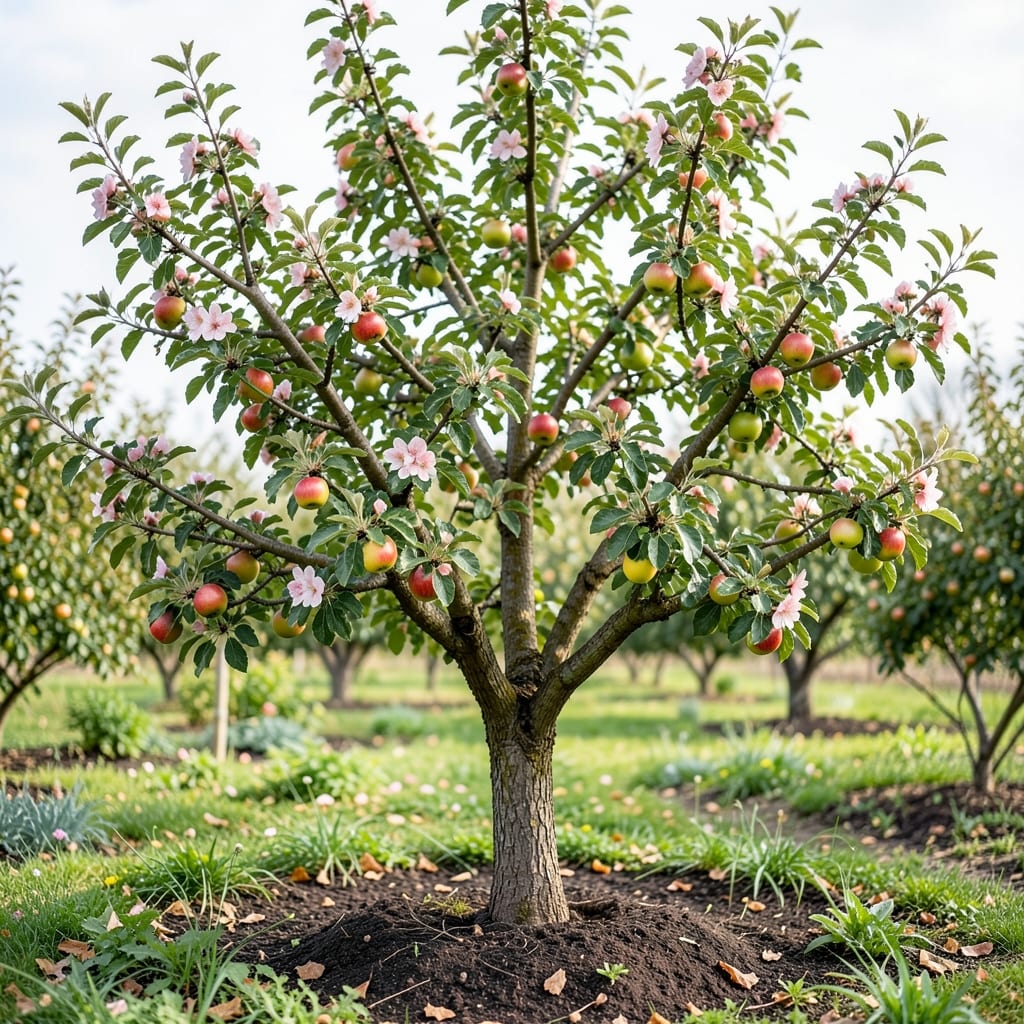
Apple fruit development progresses through five key stages: blossom, fruit set, cell division, fruit expansion, and maturation, typically spanning 100-200 days from bloom to harvest depending on variety and climate.
I’ve noticed these stages follow a fascinating biological rhythm where each phase builds on the last. Early blossoms rely on pollinators, while cell division determines final fruit size. 🌟 Later, sugar accumulation during maturation defines the apple’s sweetness. Climate plays a huge role—warmer regions often see faster progression, but cooler areas may produce more complex flavors.
💡 In This Article
At the blossom stage, pollination triggers a chemical cascade. Bees transfer pollen between flowers, enabling fertilization that signals the ovary to begin developing into fruit. This process relies on auxins, a plant hormone that stimulates cell division and growth. Without successful pollination, the blossoms simply drop without forming fruit. 🌟
During cell division, typically 10-20 days after pollination, the fruit grows rapidly as cells multiply. The apple’s size is largely determined here, with varieties like Honeycrisp undergoing more division cycles than Fuji. Gibberellins, another hormone, work alongside auxins to regulate this phase, ensuring uniform development across the cluster.
The expansion phase involves dramatic physical changes. As cells enlarge, the apple shifts from hard and green to softer and more translucent. This stage lasts 50-70 days and requires consistent water supply—drought here can cause bitter pit or cracked skins.
The fruit’s sugar content begins rising as starches convert to sucrose, a process accelerated by warm days and cool nights.
Maturation is the grand finale, where flavor, color, and aroma develop. Ethylene gas triggers the final ripening, breaking down chlorophyll to reveal red, yellow, or green pigments. A Fuji apple might accumulate 15-18% sugar during this phase, while a Granny Smith develops its signature tartness through malic acid retention.
Timing harvest at peak maturation ensures optimal taste and storage potential. ✨
Temperature plays a critical role throughout. Cool nights during expansion enhance color development, while excessive heat can cause uneven ripening. The entire journey from blossom to harvest typically spans 120-180 days for most commercial varieties, with some heirloom types requiring up to 200 days in cooler climates. 💫
Blossom and fruit set take about 10-20 days total. Cell division lasts 2-3 weeks, while expansion spans 50-70 days. Maturation varies most, from 30-60 days depending on variety.
Insufficient pollination or drought during cell division can stunt growth. Overcrowding from lack of thinning also limits size. Varieties like Honeycrisp naturally undergo more division cycles, producing larger fruit.
Yes, by exposing apples to ethylene gas or storing them with ripe bananas. However, this only works for fruit already in maturation. Warm temperatures accelerate the process, but cool nights enhance flavor development.
Overcrowded clusters lead to small, misshapen fruit with poor color. They also increase disease risk by reducing air circulation. Thin to 1-2 apples per spur for best results.
Apples are ready when they twist easily from the branch with a gentle turn. Color change and sweet aroma are also good indicators. Harvest at peak maturation for optimal taste and storage life.