
Beautiful Plants For Your Interior
Beautiful Plants For Your Interior
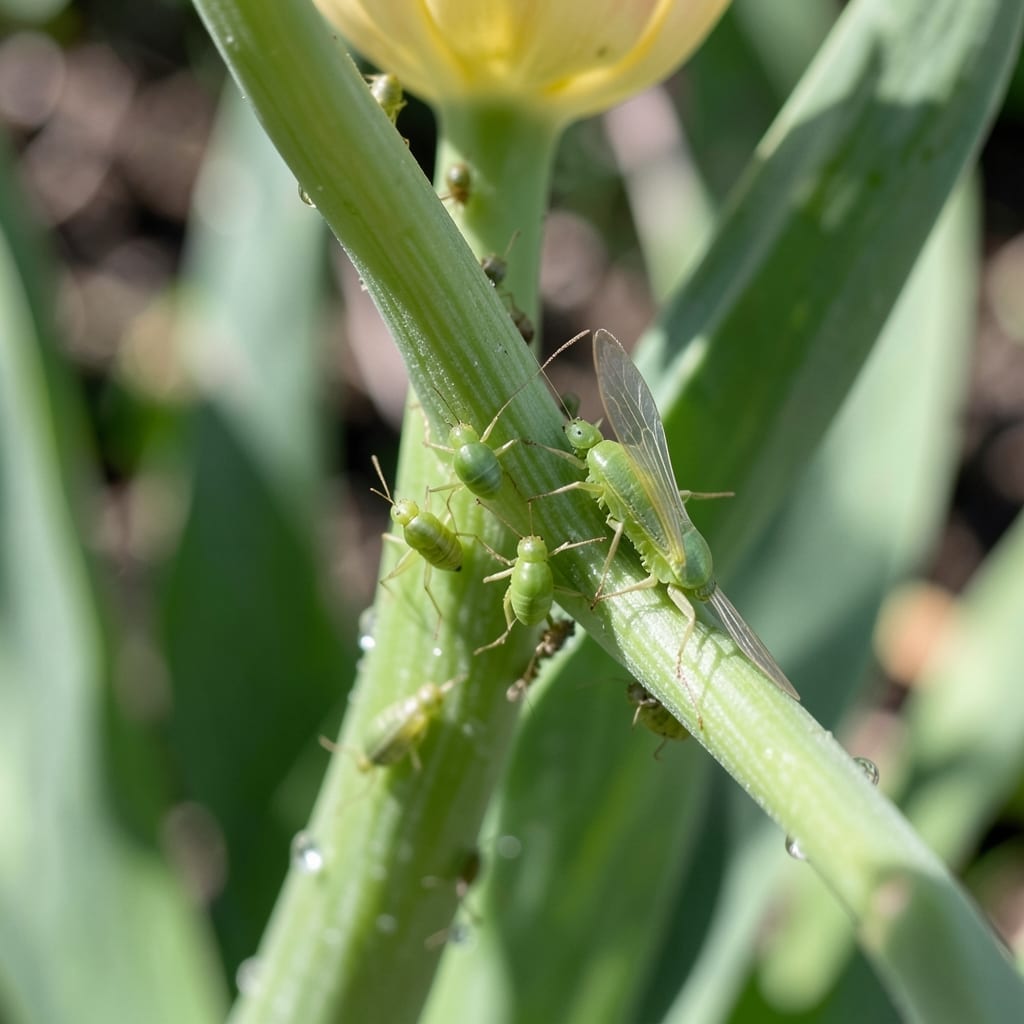
Watching aphids cluster on tulip buds is heartbreaking. I lost half my spring display to these tiny vampires before learning the neem oil trick that saved the rest.
Neem oil disrupts their life cycle without harming bees or ladybugs. One afternoon of treatment and a few follow-up sprays keeps them from returning. The tulips bounce back fast, often blooming stronger the next week.
You’ll spot the difference within 24-48 hours—aphids disappear, leaves regain their color, and buds open normally. No harsh chemicals, just a natural solution that works every time.
Works for potted tulips, garden beds, and cut flowers waiting to open. Here’s how to do it right.
Aphids are drawn to tulips for several biological and environmental reasons. Understanding these causes helps in preventing infestations effectively.
Tulips store high concentrations of sugary sap in their stems and leaves, which is a primary food source for aphids. These pests pierce plant tissues with their needle-like mouthparts to access the nutrient-rich fluid. The softer, new growth of tulips is especially vulnerable, as it provides an easily penetrable and highly nutritious meal.
Aphids thrive in moderate temperatures, typically between 60–75°F (15–24°C), which coincide with tulip blooming seasons. Warm springs accelerate aphid reproduction, leading to rapid population growth. A single aphid can produce dozens of offspring in a week under ideal conditions, quickly overwhelming tulip beds.
In gardens treated with broad-spectrum pesticides, beneficial insects like ladybugs, lacewings, and parasitic wasps—natural aphid predators—are often eliminated. Without these checks, aphid populations explode unchecked. Monoculture planting (e.g., large tulip-only patches) further reduces biodiversity, making it easier for aphids to dominate.
Over-fertilizing tulips with nitrogen-rich products promotes lush, tender foliage—exactly the type of growth aphids prefer. While nitrogen boosts leafy development, it also creates an imbalanced, soft plant structure that’s more susceptible to pest attacks. Balancing fertilization with phosphorus and potassium strengthens plant resistance.
Tackling aphids on your tulips doesn’t have to be complicated. Here’s a straightforward, cause-to-fix guide to restore your garden’s health.
Aphids thrive in dense, humid environments. Thin out overcrowded tulip beds to improve airflow, which discourages aphid colonies. Space bulbs at least 4-6 inches apart when planting to prevent future outbreaks.
Prevention tip: 💡 Rotate planting locations yearly to avoid soil-borne pest buildup.
Stressed tulips attract aphids. Apply a balanced, slow-release fertilizer (10-10-10) in early spring to strengthen plants. Avoid over-fertilizing with nitrogen, which can promote soft growth that aphids love.
Prevention tip: 🌱 Use compost or organic matter to improve soil health naturally.
For immediate action, mix 1 tbsp neem oil + 1 tsp mild soap + 1 quart water. Spray directly on aphids and the undersides of leaves, focusing on new growth. Reapply every 5-7 days until aphids are gone.
Prevention tip: 🎯 Apply neem oil preventatively every 2-3 weeks during growing season.
Encourage natural aphid predators like ladybugs, lacewings, or parasitic wasps. Plant companion flowers (e.g., dill, yarrow, or alyssum) to attract them. Avoid broad-spectrum pesticides that harm these helpers.
Prevention tip: ✨ Create a small water source (like a shallow dish with pebbles) to retain beneficial insects.
Aphids overwinter in garden debris. After blooming, remove dead leaves, spent flowers, and fallen petals. In fall, clear tulip beds completely to eliminate hiding spots.
Prevention tip: 🌡️ Mulch with a thin layer of straw or wood chips to suppress weeds where aphids may hide.
Apply neem oil every 5-7 days during active infestations. For prevention, spray every 2-3 weeks in spring. Consistency is key to breaking the aphid life cycle.
A mild soap solution can kill aphids on contact but won’t prevent new ones. Combine with neem oil for lasting protection. Always spray undersides of leaves where pests hide.
Yes, but spray in early morning or late evening to avoid harming pollinators. Focus on stems and leaves, not open flowers. Neem oil is safe for bees once dry.
They’re likely overwintering in garden debris or nearby weeds. Remove dead foliage in fall and keep the area clean. Introduce ladybugs for natural, long-term control.