
Beautiful Plants For Your Interior
Beautiful Plants For Your Interior
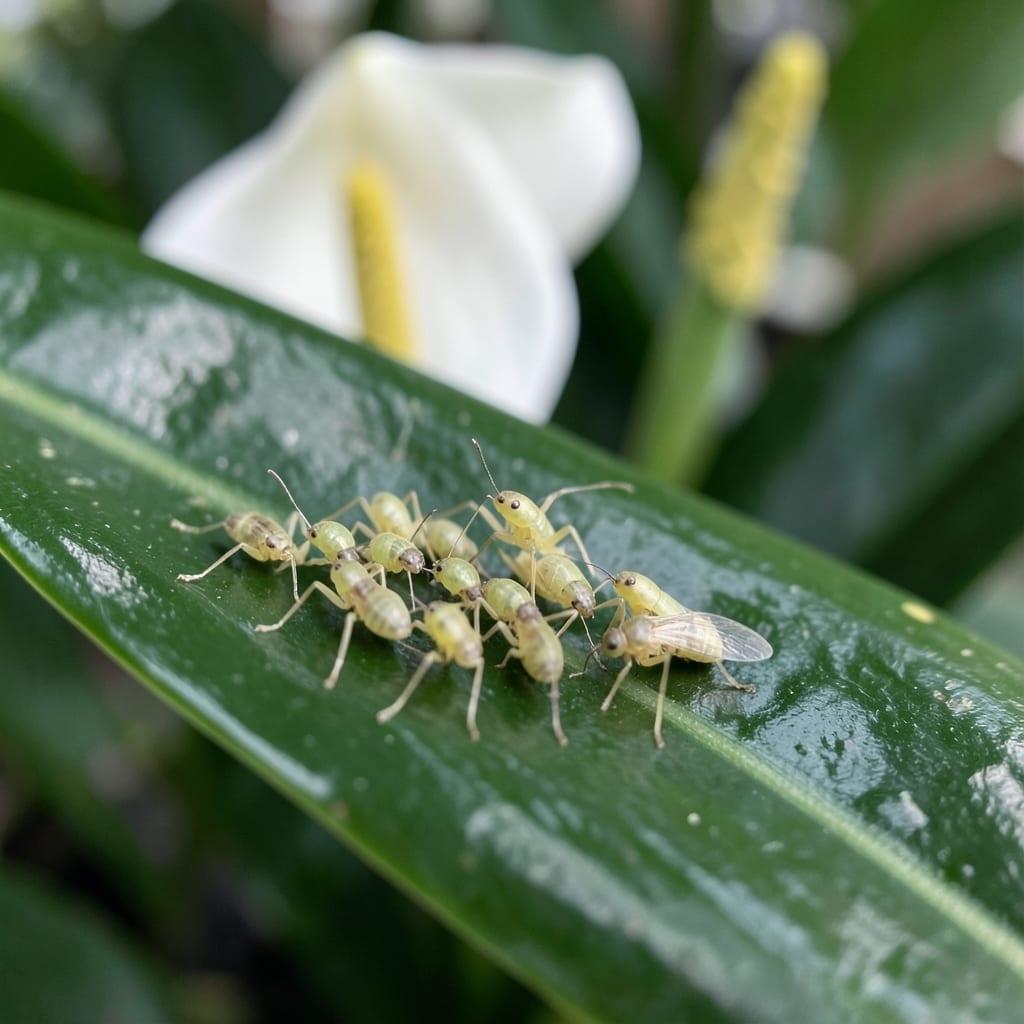
Sticky leaves on your peace lily mean trouble. I spotted my first aphid outbreak when the glossy green turned dull and curled—classic warning signs that these pests had moved in.
These tiny invaders multiply fast, but they’re not hard to beat once you know what to look for. Check the undersides of leaves and new growth where they love to cluster and feed.
With the right approach, you can clear an infestation in a week and keep your plant thriving. The key is catching them early before they spread to other houseplants.
Prevention is simpler than treatment, and a few consistent habits will save you from future headaches. Here’s how to protect your peace lily for good.
Aphids thrive on peace lilies due to a mix of environmental and plant-specific factors. Understanding these causes helps prevent and control outbreaks effectively.
Excess nitrogen from heavy fertilization promotes lush, soft growth—perfect for aphids. These pests are drawn to the high sap content in new shoots, which are easier to pierce and feed on. Reduce fertilizer use and opt for balanced, slow-release options to avoid creating an aphid buffet.
Stagnant air in indoor settings allows aphids to multiply rapidly without natural predators. Peace lilies in crowded spaces or corners with little airflow are especially vulnerable. Improve ventilation with a gentle fan or by spacing plants apart to disrupt aphid clusters.
Aphids reproduce quickly in warm (70–80°F), low-humidity environments—common in heated homes. Dry air weakens the plant’s defenses, making it more susceptible. Increase humidity with a pebble tray or humidifier to deter aphids and strengthen your peace lily.
Indoor peace lilies lack outdoor allies like ladybugs or lacewings that prey on aphids. Without these checks, aphid populations explode. Introduce beneficial insects (e.g., ladybugs) or use neem oil to mimic natural pest control.
Tackling aphids on your peace lily starts with quick, targeted action. Below are practical solutions mapped to common causes, along with tips to keep these pests from returning.
If you spot just a few aphids, start by wiping them off with a damp cloth or a soft brush. A gentle spray of lukewarm water can also dislodge them. Check the undersides of leaves, where aphids love to hide.
For larger outbreaks, mix 1 teaspoon of mild liquid soap (like Castile soap) with 1 quart of water. Spray this solution directly onto the aphids, focusing on affected areas. The soap breaks down their protective coating, causing them to dehydrate. Reapply every 2-3 days until the aphids are gone.
Neem oil is a natural insecticide that disrupts aphids’ life cycles. Mix 1 tablespoon of neem oil with 1 gallon of water and a few drops of dish soap (to help it adhere). Spray the mixture on the plant, especially the leaves’ undersides. Use weekly for prevention or every 3-4 days for active infestations.
💡 Pro tip: Always test sprays on a small section of the plant first to check for sensitivity.
Check leaf undersides and new growth for tiny green, black, or white insects. Sticky residue (honeydew) or curled leaves are also telltale signs.
No, when diluted properly (1 tablespoon per gallon of water). Always test on a small area first and apply in the evening to avoid leaf burn.
Yes, dab 70% isopropyl alcohol on a cotton swab and wipe aphids directly. Avoid spraying it, as this can damage leaves.
Reinfestation often happens from untreated eggs or nearby plants. Isolate your peace lily and repeat treatments every 2-3 days for 2 weeks.