
Beautiful Plants For Your Interior
Beautiful Plants For Your Interior
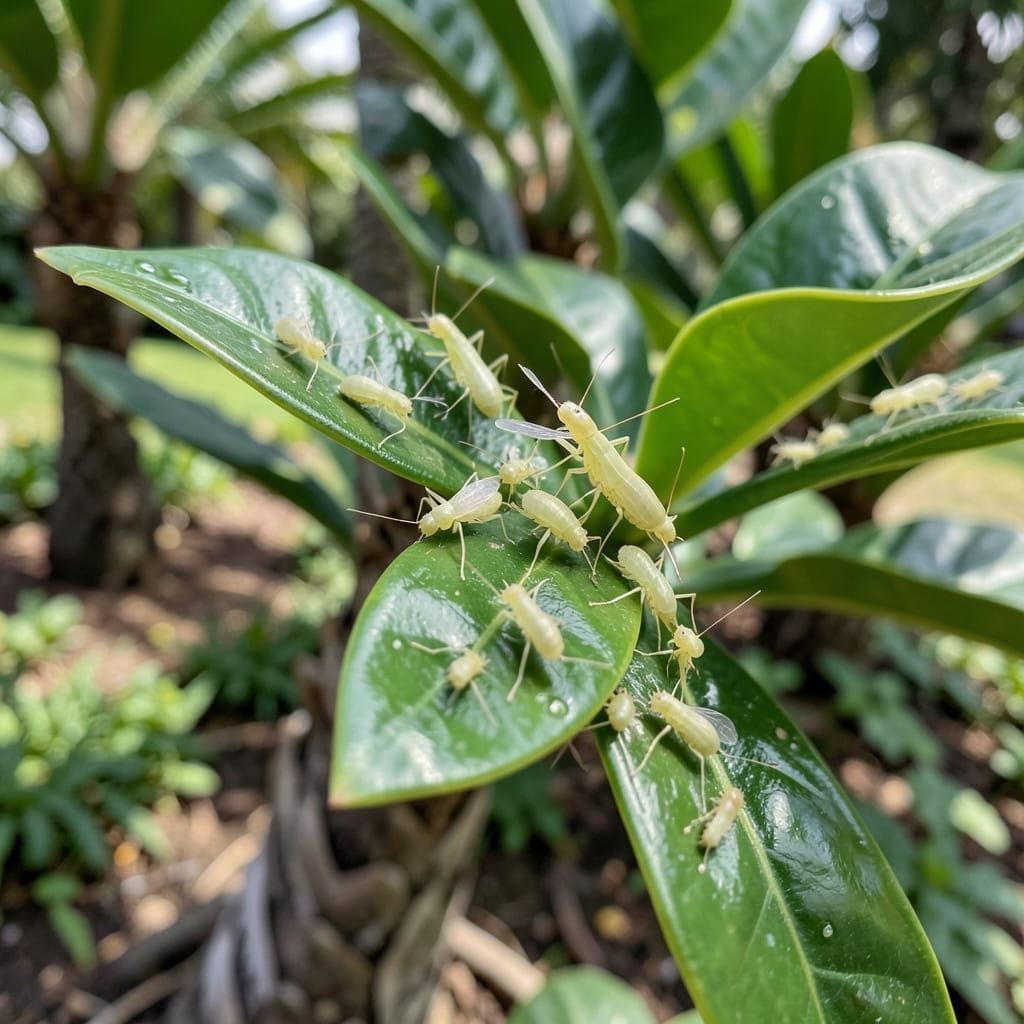
Tiny green invaders on your money tree mean trouble. I first noticed mine when the leaves started curling and turning yellow, then spotted the clustered aphids on the undersides.
These pests multiply fast, but they’re easy to spot if you check regularly. They love the soft new growth at the tips of branches, where they suck sap and leave behind a sticky mess.
Catching them early makes treatment simple. A strong spray of water often knocks them off, and a wipe with soapy water finishes the job. The key is acting before they spread to every leaf.
Your tree will bounce back quickly with the right care, and you’ll prevent future outbreaks by keeping an eye on new growth.
Aphids are drawn to money trees (Pachira aquatica) for specific biological and environmental reasons. Understanding these triggers helps you prevent and address outbreaks effectively. Below are the primary causes:
Excess nitrogen in soil promotes lush, soft new growth—aphids’ favorite food. Money trees fertilized too frequently or with high-nitrogen formulas produce tender leaves rich in amino acids, which attract aphids like a buffet. Action: Use a balanced, slow-release fertilizer and follow label rates to avoid overfeeding.
Stagnant air and humidity above 60% create ideal breeding conditions for aphids. Money trees in crowded spaces or poorly ventilated rooms trap moisture, allowing aphid populations to explode. Action: Improve airflow with a small fan and maintain humidity between 40–50% using a hygrometer.
Weak or stressed money trees emit chemical signals that aphids detect. Common stressors include inconsistent watering (too much or too little), low light, or sudden temperature changes. Action: Keep your plant in bright, indirect light and water only when the top inch of soil is dry.
Aphids often enter your home on newly purchased or repotted plants. They can also travel on gardening tools, hands, or even pets. Action: Isolate new plants for 2–3 weeks and inspect them thoroughly before placing them near your money tree.
If you spot just a few aphids, put on gloves and gently wipe them off with a damp cloth or a soft toothbrush. Focus on the undersides of leaves where they love to hide. Drop them into a bowl of soapy water to ensure they don’t return.
Mix 1 teaspoon of mild dish soap with 1 liter of water in a spray bottle. Lightly mist the entire plant, especially the stems and leaf undersides. Let it sit for 10–15 minutes, then rinse with clean water. Repeat every 2–3 days until the aphids are gone.
Dilute 1 tablespoon of neem oil with 1 liter of water and a few drops of dish soap (to help it stick). Spray evenly over the plant, focusing on infested areas. Neem oil disrupts aphid life cycles, so apply once a week for prevention.
If the infestation is widespread, prune heavily infested leaves with sterilized scissors and dispose of them in a sealed bag. Isolate the money tree to prevent aphids from spreading to other plants. Follow up with a soapy water spray or neem oil treatment.
💡 Prevention Tips:
Check the undersides of leaves for tiny green or black bugs. You may also notice sticky residue or curled leaves.
Yes, they can quickly move to nearby plants. Isolate your money tree and treat all plants in the area to prevent spreading.
A vinegar solution can kill them on contact, but it may also harm your plant. Stick with soapy water or neem oil for safer results.
Inspect your money tree once a week for early signs. Catching them early makes treatment much easier.