
Beautiful Plants For Your Interior
Beautiful Plants For Your Interior
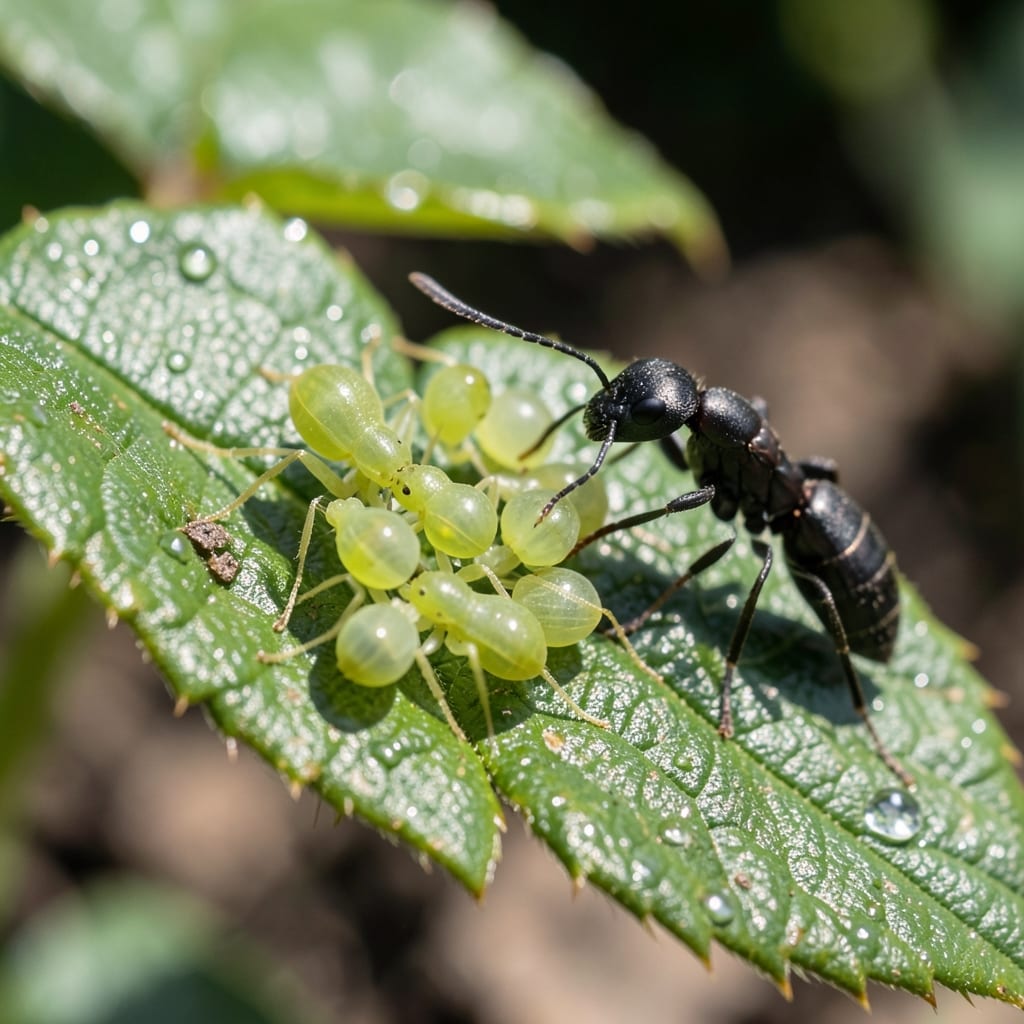
Ants protect aphids from predators in exchange for honeydew, a sugary substance the aphids secrete. This mutualistic relationship benefits both while often harming plants.
I’ve seen this play out in my own garden—the ants act like tiny bodyguards, fending off ladybugs and other natural predators that would otherwise eat the aphids. 🌟 In return, they get a steady supply of honeydew, which is basically the aphids’ version of a sweet reward. This partnership helps aphid populations thrive, but it can spell trouble for your plants, as they become overrun with sap-sucking pests.
💡 In This Article
Aphids pierce plant stems with needle-like mouthparts to extract nutrient-rich sap. Their digestive systems can’t process all the sugars, so they excrete excess as honeydew—a sticky, carbohydrate-packed liquid. Ants detect this using their antennae, which can sense chemical cues from 10 feet away or more. 🔥
This sugar-rich resource provides ants with 50-70% of their carbohydrate needs in some colonies. In return, ants offer protection through physical confrontation or chemical deterrents. Studies show ant-guarded aphid colonies can grow 2-3 times larger than unprotected ones.
The relationship is so precise that some ant species herd aphids like livestock, moving them to optimal feeding spots. ✨
EvolutionaryBiologists note this partnership dates back 50-60 million years, with fossil evidence showing ant-aphid interactions in amber deposits. The ants’ aggressive defense behavior triggers when aphids release alarm pheromones at 0.1 micrograms per milliliter concentrations—undetectable to humans but clear signals for their protectors. 💫
Interestingly, some aphid species have evolved to produce honeydew with customized sugar ratios that match their ant partners’ preferences. This specialization means certain aphid species only thrive when paired with specific ant species, creating obligate mutualism where both organisms cannot survive optimally without each other. ⚡
The ants’ protection extends beyond direct confrontation. They’ve been observed removing aphid parasites and even cleaning honeydew off aphid bodies to prevent fungal growth. This grooming behavior, similar to how some primates pick lice off each other, maintains colony health and productivity. 🌟
Ants guard aphids to access their honeydew, a sugar-rich liquid aphids excrete. This symbiotic exchange provides ants with 50-70% of their carbohydrate needs while aphids gain protection from predators.
Ants use their antennae to sense chemical cues from honeydew up to 10 feet away. This remarkable detection ability helps them locate aphid colonies quickly and efficiently.
Yes, ant-protected aphid colonies can grow 2-3 times larger than unprotected ones. This leads to increased sap-sucking damage, stunted growth, and potential plant death if left unchecked.
Use sticky barriers like Tanglefoot around plant stems to block ant access. Also introduce natural predators like ladybugs to control aphid populations without chemicals.