
Beautiful Plants For Your Interior
Beautiful Plants For Your Interior
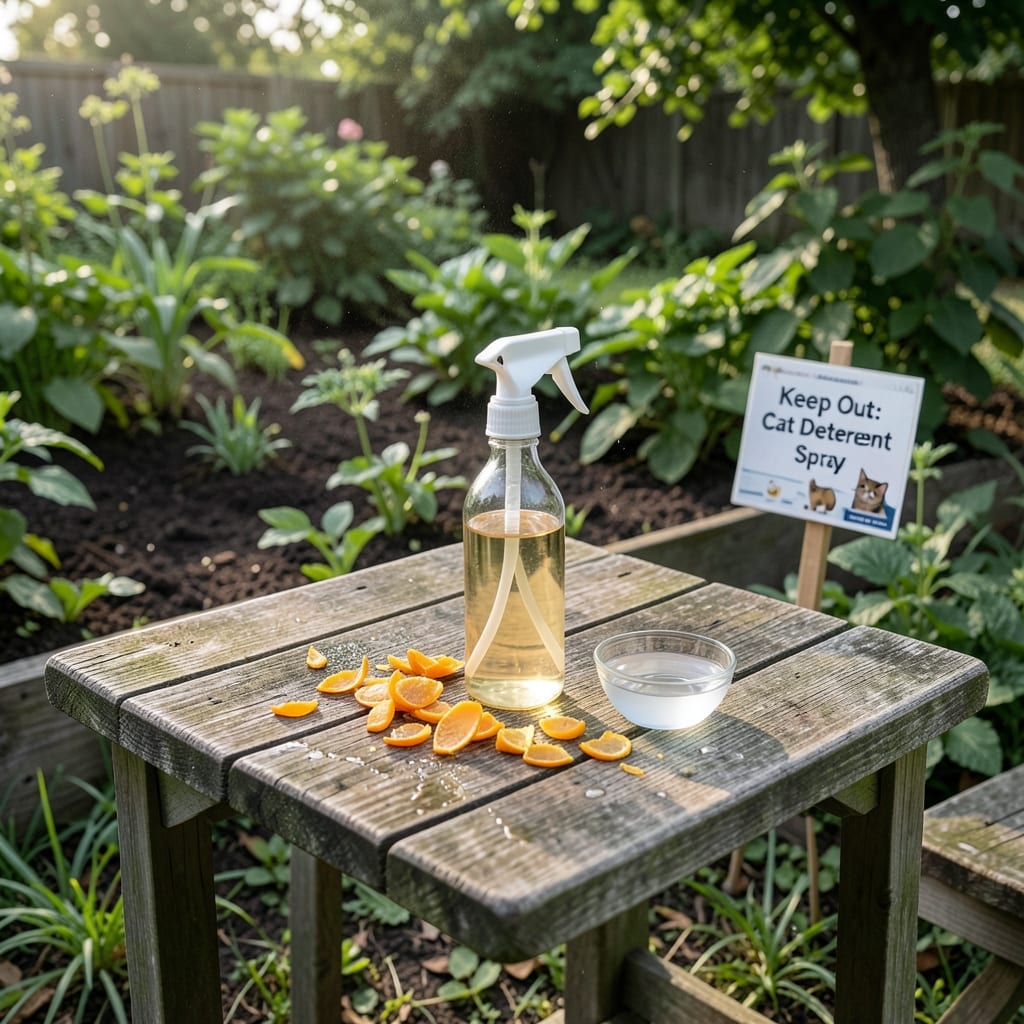
Mix citrus peels or essential oils with water in a spray bottle to create a natural deterrent. Cats dislike strong citrus scents, making this a safe, chemical-free way to keep them away from plants.
I love using citrus-based solutions because they’re non-toxic and easy to make at home. The strong scent overwhelms a cat’s sensitive nose, creating an instant barrier without any harm. You can also experiment with vinegar or rosemary for variety—just reapply after rain. 🔥
💡 In This Article
A cat’s nose contains 200 million scent receptors—14 times more than humans. Citrus compounds like limonene and linalool in oranges, lemons, or grapefruits trigger an overwhelming response in their olfactory system, creating discomfort without pain. This is why they instinctively avoid areas treated with these scents.
The mechanism is purely sensory. When sprayed, volatile organic compounds from citrus evaporate quickly, creating a strong aroma barrier. Cats associate this intensity with danger, even though the ingredients are harmless. Vinegar works similarly, with acetic acid producing a sharp odor that cats find unappealing at concentrations as low as 5%. 🔥
This approach leverages their natural avoidance behaviors. Unlike chemical repellents that may irritate paws or respiratory systems, plant-based solutions simply encourage cats to choose other areas. The effect lasts 2-3 days outdoors before weather degrades the scent, requiring reapplication for consistent protection.
What’s fascinating is how specific this reaction is. While humans might find citrus refreshing, cats perceive it as a threat signal. This evolutionary trait likely developed to help them avoid potentially toxic plants in the wild, making citrus-based sprays effective across virtually all feline breeds and ages.
For maximum impact, apply sprays directly to surfaces cats target, like garden beds or furniture legs. The scent molecules bind to these materials, releasing gradually to maintain deterrence. Just avoid spraying plants directly if they’re sensitive to acidic compounds like vinegar. ✨
Outdoors, reapply every 2-3 days or after rain, as weather breaks down the scents quickly. Indoors, once a week is usually enough unless you notice cats returning sooner.
Most natural sprays like citrus or rosemary are safe, but vinegar can damage sensitive plants. Always test on a small area first and avoid direct application to foliage.
Never apply undiluted essential oils—they can be toxic to cats. Always mix with water (e.g., 10 drops in 1 cup water) and shake well before use.
Citrus contains compounds like limonene that overwhelm their 200 million scent receptors. This creates discomfort without harm, triggering their instinct to avoid the area.
Spray directly on surfaces cats target, like garden beds or furniture legs. Avoid pet food areas and sensitive plants. Reapply consistently for the best results.